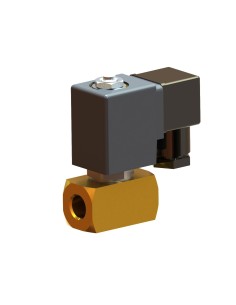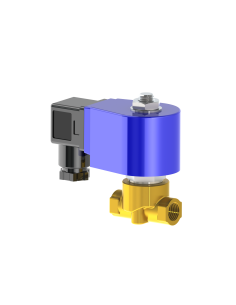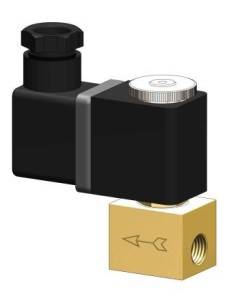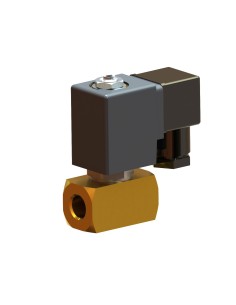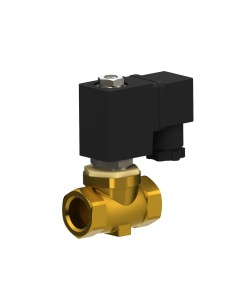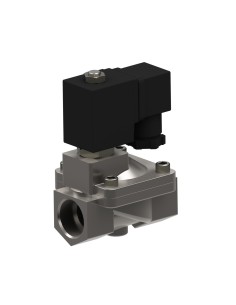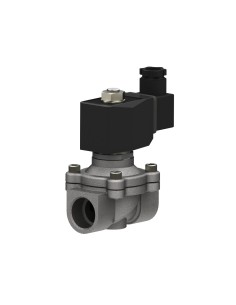

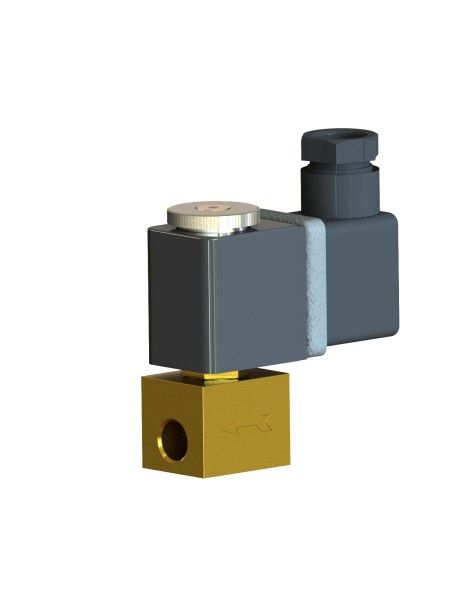
Solenoid Valves
AWS solenoid valves are used for electrically actuated On/Off flow control in liquid and gas lines, mainly in auxiliary automation circuits, water supply, compressed air distribution, filling and draining duties, branch isolation, and PLC-controlled sequences. The range covers 2/2-way direct acting series 210, 214, and 219, 3/2-way direct acting series 310 and 314, and 2/2-way diaphragm-operated series 220, 221, 240/240FL, and 242/242FL.
Valve selection should be based on normal position (NC or NO), coil voltage, nominal diameter (DN), operating pressure range, media temperature, required flow rate, seal compatibility, and available differential pressure. Direct acting seat valves do not require a minimum differential pressure for opening or closing. Servo-controlled diaphragm valves in series 220 and 240 require differential pressure for operation; indicative minimum values are 0.1 bar for type 220 and 0.5 bar for type 240. Series 221 and 242 are servo-controlled with positive lift and do not require differential pressure for switching.
Body materials are available in brass or stainless steel, with NBR, EPDM, or FKM sealing materials selected according to medium, temperature, and chemical compatibility. Electrical connection is via plug connector to DIN EN 175301-803, typically form A for most series and form B for types 210 and 310. Flow direction must follow the arrow marked on the body. These valves are not intended for reverse pressure service.
Installation should include upstream filtration, line flushing before commissioning, protection against water hammer, and avoidance of pipe strain on the valve body. Mounting with the coil preferably in the upward position is recommended. Maintenance assessment should include seat leakage, noise or vibration during switching, coil overheating, moisture ingress at the plug, seal condition, and media cleanliness, since deposits directly affect shut-off tightness and switching time.