
Gate Valve - Parallel Slide - DIN | Valvosider

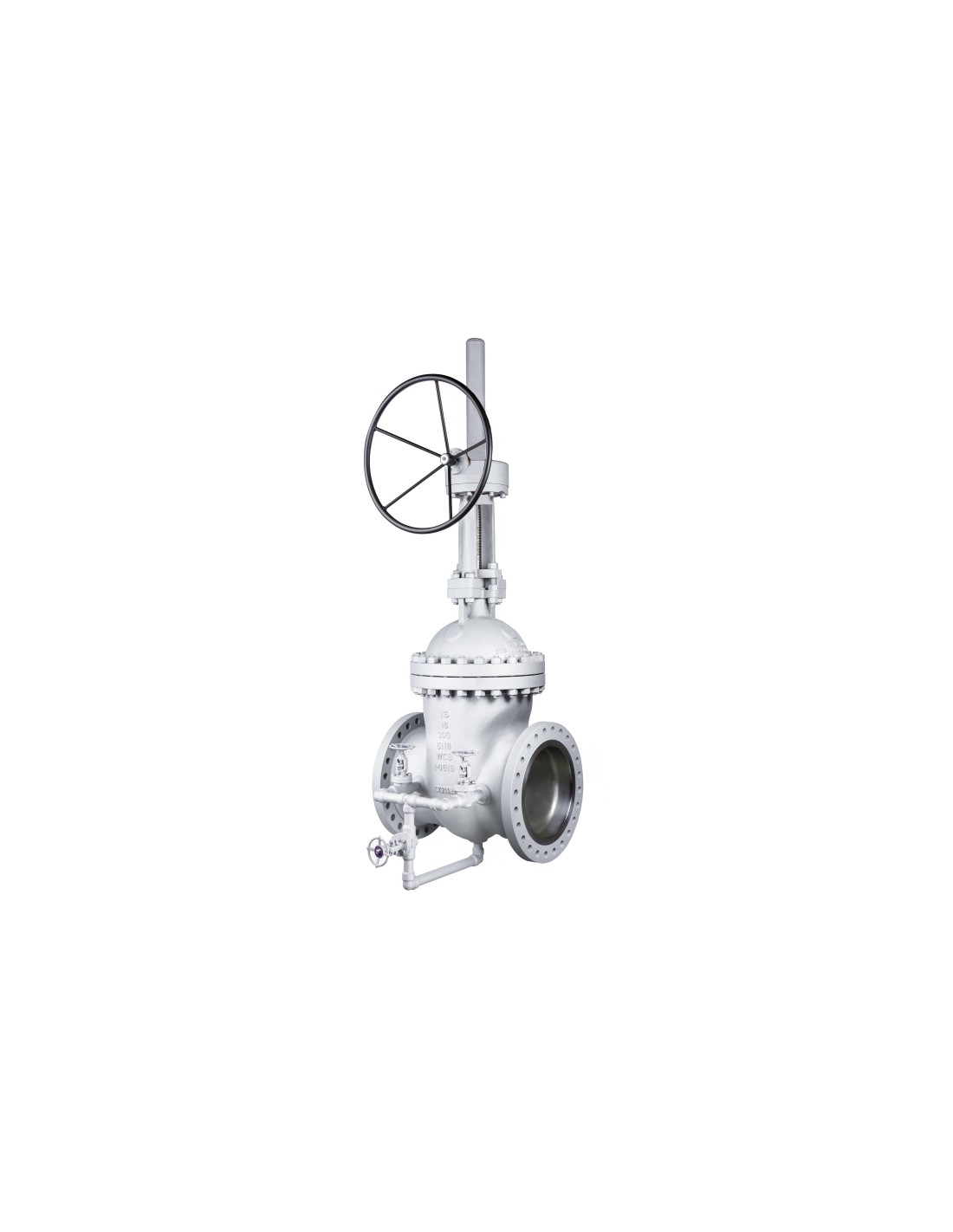
Valvosider Parallel Slide Gate Valve According to DIN
The Valvosider Parallel Slide Gate Valve is designed for flow isolation in high-pressure and high-temperature lines, primarily for steam, superheated steam, boiler feedwater, condensates, and thermal circuits. It is not a throttling valve; it operates fully open or fully closed. Partial open positions increase wear on seats and discs.
Parallel Slide Operation Logic
Unlike the traditional wedge design, the parallel slide configuration uses parallel discs. Sealing is achieved by the medium's pressure and/or a disc spreading mechanism, without significant wedging in the body. This is beneficial in thermal cycles where expansion can cause sticking in conventional wedge gate valves.
DIN Pressure Seal Versions
Valvosider documentation links the DIN version with pressure seal gate valves PN100, PN160, PN250, PN320, and PN420, with standard diameters DN50–DN600 and face-to-face F8. Types are referred to as P24 to P28.
Construction and Standards
- Round body, pressure seal bonnet
- OS&Y, rising stem, non-rising handwheel
- Integral backseat, welded-in seats
- Design: DIN 3352 / DIN 3840
- Face-to-face: DIN 3202
- Flanges: DIN 2501 / DIN 2547 / DIN 2526 Form E
- BW ends: DIN 3239
- Testing: DIN 3352 Part 1 / DIN 3230 Part 3
- Marking: EN 19, CE/PED, certificates EN 10204 3.1B
Materials and Sealing
Body materials available include 1.0619, 1.5419, 1.7357, 1.7379, 1.4581. Seat and disc surfaces can be provided with hard facing, Stellite, Monel, or Hastelloy upon request. Stem sealing is achieved with graphite rings and wiper rings.
Options
Available options include ISO 5210 top flange, gear reducer, chain wheel, electric, pneumatic or hydraulic actuator, position indicator, limit switches, interlock, stem extension, live-loaded packing, drain plug, and by-pass.
FAQ
When is it chosen over a flexible wedge?
In high-pressure steam, frequent thermal cycles, or when there is a risk of wedging.
Is a by-pass needed?
Recommended for large DN or high ΔP to balance pressure before opening.
Is it suitable for water?
Yes, mainly in feedwater or high-pressure circuits, with material and P/T rating checks.
Datasheet and documents

Certifications