
Flash Vessels
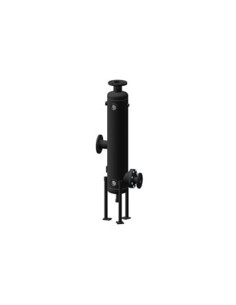
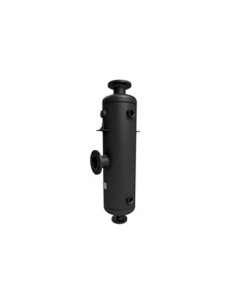
Flash steam recovery vessels are used in steam systems when high-pressure condensate or boiler blowdown water is expanded to a lower pressure. During depressurization, part of the liquid re-evaporates and forms flash steam. The vessel operates as a phase separator, allowing the secondary steam to be routed to low-pressure users, preheating duty, or auxiliary heating equipment, while the remaining condensate is discharged through a suitable drainage arrangement.
This category includes the ADCA RV and RVST series. The RV type is used as a standard flash recovery vessel for high-pressure condensate and for heat recovery arrangements associated with boiler blowdown. The RVST type incorporates a steam trap mechanism, which affects the drain configuration and the selection of ancillary equipment. Available constructions are carbon steel or stainless steel, with EN 1092-1 PN16 flanged connections and vertical installation.
Vessel selection should be based on condensate flowrate, inlet temperature, required flash steam pressure, available differential pressure, and the ability to provide safe condensate discharge. For the RV/RVST series, the stated PMO is 13 bar for saturated steam, with a minimum operating temperature of -10 °C. Pressure/temperature limits depend on body material and flange rating, up to 12 bar at 250 °C for PN16 versions.
System design should include provision for safety valve connection, venting, drainage, inspection access, thermal insulation, and verification of flange load conditions. The vessel should be evaluated not only as a pressure-retaining component, but as part of an integrated condensate recovery and flash steam management system.