

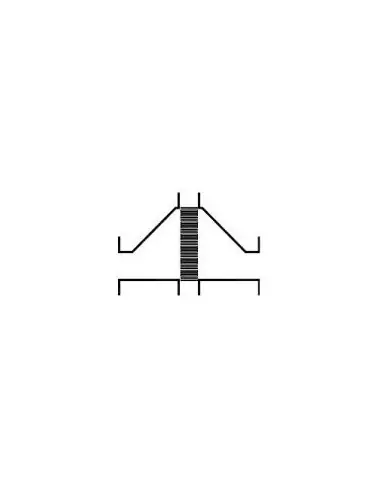
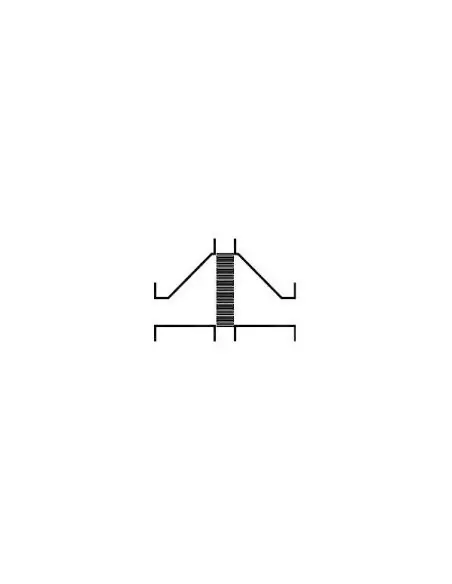


Bi-directional in-line deflagration flame arrester, short-time burning proof - H 39.3 N | KITO Armaturen | Philippopoulos s.a.

Bi-directional in-line deflagration flame arrester, short-time burning proof - H 39.3 N | KITO Armaturen

Bi-directional in-line deflagration flame arrester, short-time burning proof - H 39.3 N | KITO Armaturen: Reliable Protection for Industrial Safety

The Bi-directional in-line deflagration flame arrester, short-time burning proof - H 39.3 N | KITO Armaturen is engineered to provide trustworthy safety and protection in demanding industrial settings. Designed for installations where flammable gases or vapors are present, this flame arrester acts as a robust barrier, minimizing the risk of fire propagation through pipelines.

Features & Benefits of Bi-directional in-line deflagration flame arrester, short-time burning proof - H 39.3 N | KITO Armaturen

  • Dual Direction Protection – Offers reliable flame stoppage in both flow directions, ensuring flexible installation and comprehensive safety.
  • Short-Time Burning Proof – Specially constructed to withstand and resist short-term flames, adding an extra layer of security to your processes.
  • Compact In-Line Design – Easily integrates into existing pipelines without requiring major modifications, saving time and installation costs.
  • Durable Construction – Made with high-quality materials, the arrester delivers long-lasting performance in harsh industrial environments.
  • Low Maintenance – The smart, user-friendly design allows for easy inspection and cleaning, reducing downtime and ensuring continuous protection.
  • Certified Safety – Meets strict industrial safety standards, offering peace of mind for plant managers and operators.

The Bi-directional in-line deflagration flame arrester, short-time burning proof - H 39.3 N | KITO Armaturen helps prevent flames from traveling back through pipes, which could otherwise cause damage or hazardous situations. Its bi-directional function means it works effectively whichever way the gas flows, making it ideal for systems with changing directions. With its proven short-time burning resistance, it acts as a robust safeguard, even during brief fire exposure.

Thanks to its sturdy, compact build, this flame arrester fits neatly into pipeline systems without requiring special fittings. It is suitable for use in chemical plants, refineries, and any industrial facility handling flammable substances. Maintenance is straightforward—the flame arrester can be easily accessed, inspected, and cleaned, ensuring ongoing reliability with minimal effort.

This product represents an essential investment in safety, reducing risks and helping maintain smooth, trouble-free operations. Choose the Bi-directional in-line deflagration flame arrester, short-time burning proof - H 39.3 N | KITO Armaturen for dependable protection you can trust.

Standard (Options)
  • DIN
Connection (Options)
  • Flanged
Material (Options)
  • 1.0619
  • 1.4408
Pressure Rating (Options)
  • PN 10
  • PN 16
  • PN 40

Datasheet and documents

Description

KITO® EFA-Def0-IIC-…/…-1.2

KITO® EFA-Def0-IIC-…/…-1.2-T (-TT)

  • For installation into pipes to the protection of vessels and components against deflagration of flammable liquids and gases.
  • Approved for all substances of explosion groups IIA1 to IIC with a maximum experimental safe gap (MESG) < 0.5 mm.
  • Bi-directionally working in pipes, whereby an operating pressure of 1.2 bar abs. and an operating temperature of 60 °C must not be exceeded.
  • The distance between a potential ignition source and the flame arrester must not exceed 30 times the inner pipe diameter.
  • The installation of the Deflagration flame arrester into horizontal and vertical pipes is permissible.
  • When equipped with one or two temperature sensors, the devices are protected under atmospheric conditions against a short time burning by a burning time tBT = 1.0 min.
  • If only one temperature sensor, then it is to be placed on the device side where a burning could be expected.