


Full Face Rubber Flanged Expansion Joints - MAC-FB Elbow | Macoga | Philippopoulos s.a.

Full Face Rubber Flanged Expansion Joints - MAC-FB Elbow | Macoga

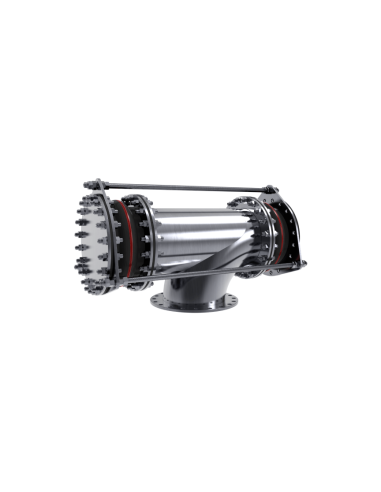
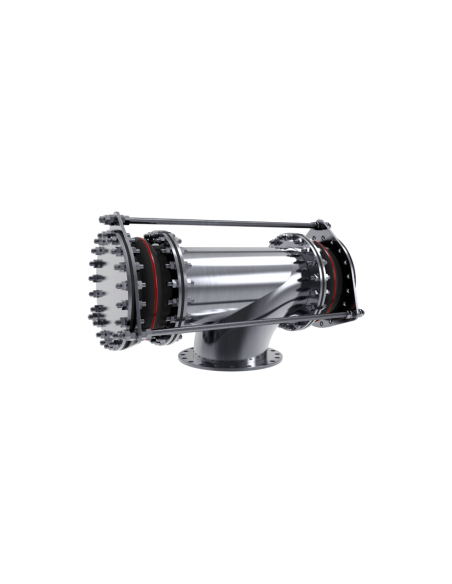
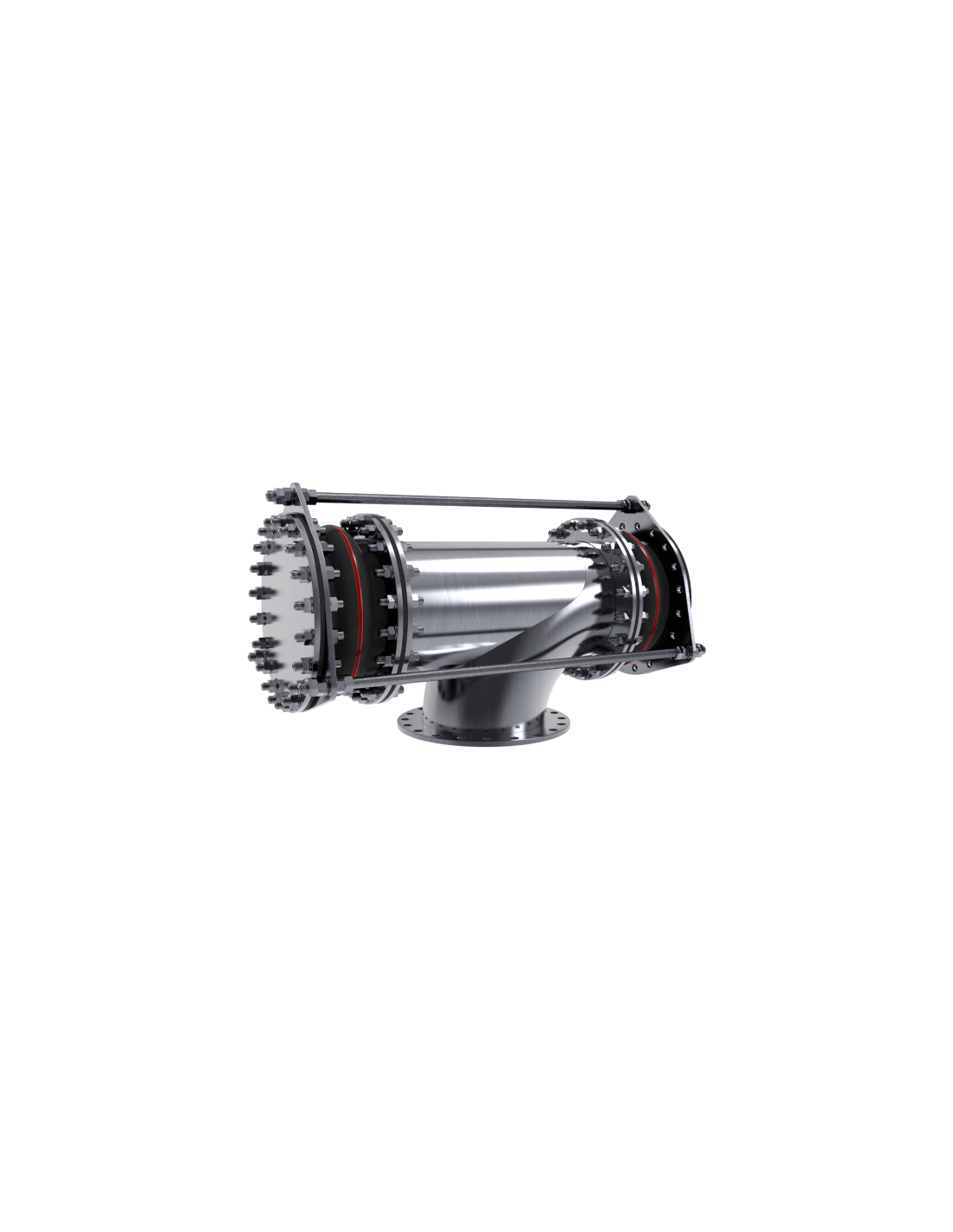
MACOGA MAC-FB Elbow – Pressure Balanced Full-Face Flanged Rubber Expansion Joint

The MAC-FB Elbow is a pressure-balanced elastomeric expansion joint designed for angular installation. It is specified where piping systems or connected equipment must not be subjected to axial loads generated by internal pressure. The assembly incorporates an additional pressure-balancing rubber element exposed to line pressure, generating a counteracting force to offset the main element’s thrust.

Function and Selection

The MAC-FB series absorbs axial and lateral movements while minimizing pressure thrust transfer to pumps, turbines, heat exchangers, or other equipment with limited allowable nozzle loads. Units can be manufactured with single or multiple convolutions, depending on required movement, pressure rating, and available installation length.

Construction

  • Type: Pressure balanced, full-face rubber flanged.
  • Variants: In-line and elbow configurations.
  • Connections: Full-face elastomeric flange with metallic backing flanges.
  • Drilling: EN, ANSI, AWWA, JIS, or project-specific patterns.
  • Flange materials: Painted carbon steel, hot-dip galvanized, or stainless steel as specified.
  • Nominal pressure, DN, and movement capabilities defined per application drawing.

Materials and Media Compatibility

Available in EPDM, EPDM HT, NBR, white NBR, CSM/Hypalon, SBR, Neoprene, Butyl, natural rubber, and FKM/Viton. Typical selection: EPDM for hot/cold water, saline solutions, and oil-free air up to 100 °C; EPDM HT up to 140 °C; NBR for oils and fuels up to 90 °C; FKM for hydrocarbons and chemicals up to 150 °C.

Standards and Installation

Design in accordance with FSA Non-Metallic Expansion Joints Technical Handbook, ASTM F1123-87, and PED 2014/68/EU for declared operating conditions. No actuator required. Additional gaskets are generally unnecessary due to the full-face sealing surface; cross-tightening with controlled torque is recommended.

Typical Applications

Power generation, oil & gas, desalination, cooling water, chemical processing, HVAC, shipbuilding, offshore, water and wastewater treatment—especially where anchoring pressure thrust is impractical or would overload sensitive equipment.

Description

These expansion joints accommodate axial and lateral movements and counteract the bellows pressure thrust. They can be fabricated with single and multiple arches.

An additional bellows is incorporated into the unit and is subject to the line pressure to generate a force equal and opposite to that on the main bellows. Tying these bellows together neutralizes the pressure load on the unit.

The Pressure Balanced Expansion Joints are used in situations similar to those described for the Axial and/or Lateral Expansions, although this particular type of Expansion Joint offers the additional advantage of not transferring the thrust caused by the internal pressure to the pipes or adjacent equipment.

This characteristic is especially important when it comes to joining the pipes to turbines or other delicate equipment which, by their nature, are unable to withstand these extra loads. The only loads on the equipment are the sum of the forces required to move the line bellows and balancing bellows of the expansion joint.

This type of Joint can be fitted between intermediate fixed points so main anchoring of the pipe or adjacent equipment is not required.

CERTIFICATES