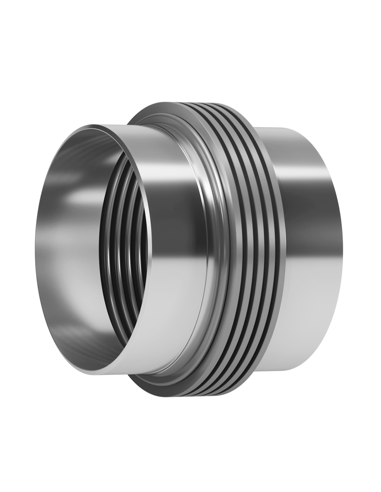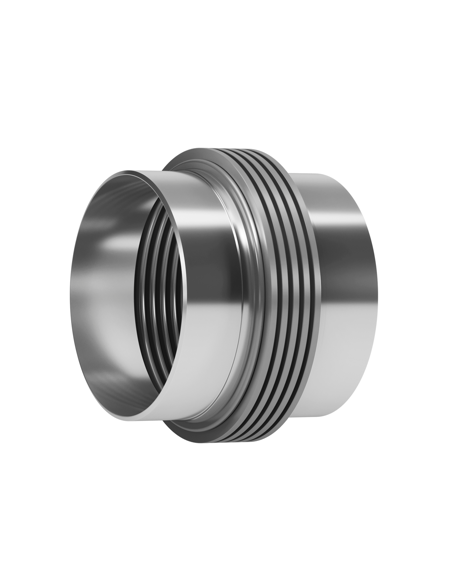

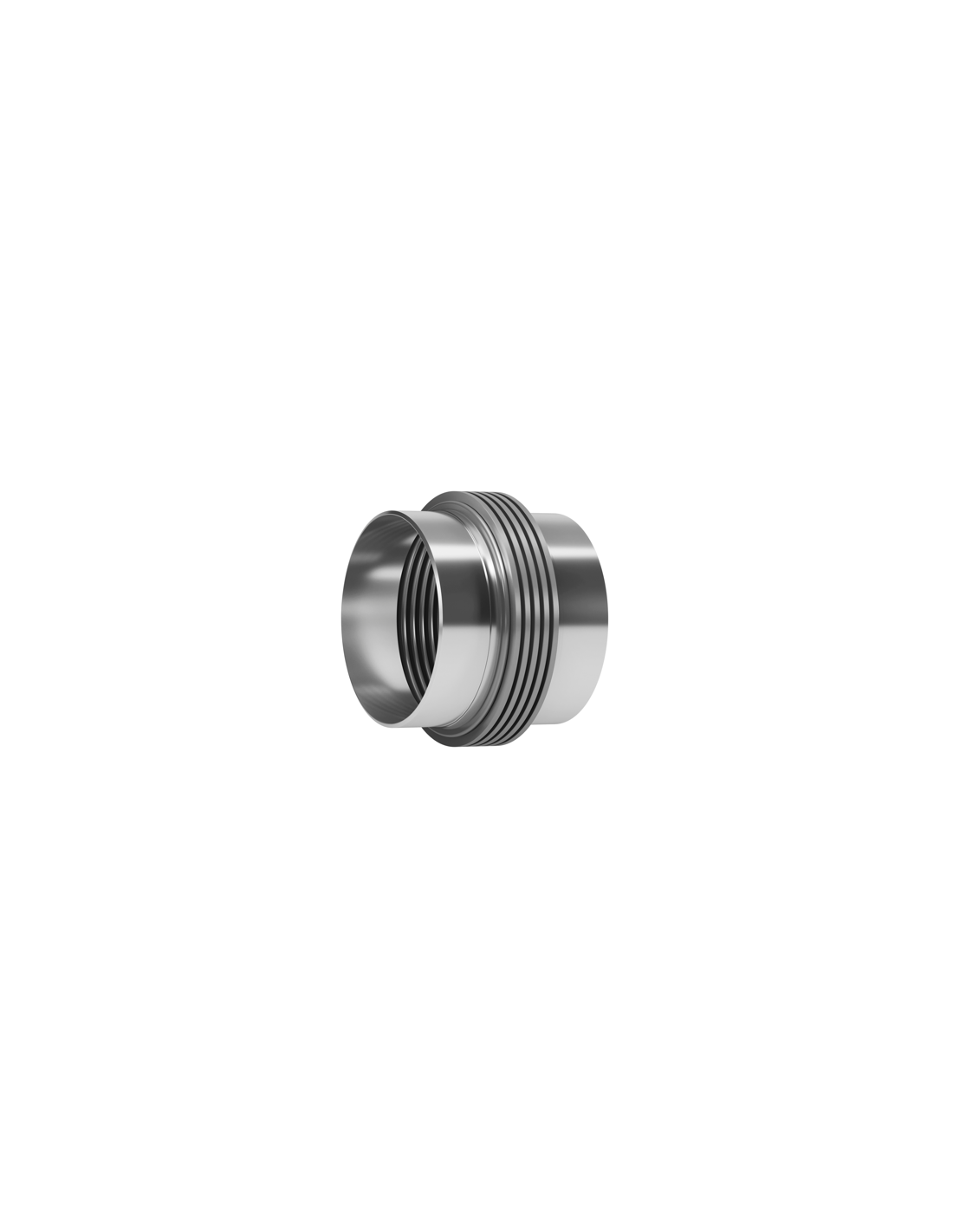
Expansion joint with reinforcement rings.


Expansion Joints - Type MRR | Macoga
Macoga MRR Expansion Joints
Macoga MRR are metallic expansion joints designed for high internal pressure applications. Reinforcement rings are positioned around the bellows convolutions to support the root area and limit deformation under pressure loads.
Construction and Movements
The MRR series can be configured for axial, lateral, or angular movement compensation. These units do not absorb pressure thrust; pipe anchors, guides, and supports must be engineered according to piping stress analysis.
- Available sizes: DN50 to DN10000
- Single or multi-ply bellows construction
- Single or multiple convolutions
- Reinforcement or equalizing rings in carbon steel, stainless steel, or special alloys
Materials
Bellows and metallic components are selected based on pressure, temperature, cycle count, and process media. Documentation includes stainless steels 304, 321, 316, 316L, 310, 309; nickel alloys such as Inconel, Incoloy, Hastelloy; and carbon/alloy steels like P265GH, 16Mo3, 13CrMo44.
Typical Applications
Used in steam lines, hot water, thermal oil, process gases, exhaust gas, and industrial piping where pressure requires reinforced bellows geometry. Final selection should be based on project data sheets, not nominal diameter alone.
Installation and Inspection
During installation, verify nameplate data, flow direction (if internal sleeve is present), gasket positioning, and absence of foreign matter in convolutions. Bellows must not be subjected to impact, scoring, arc strikes, or weld spatter.
Before pressure testing, remove yellow transport bars. For hydrostatic testing, use chloride-free water to prevent stress corrosion cracking.
FAQ
Does it absorb pressure thrust?
No. Independent calculation of anchors and guides is required.
What is checked during maintenance?
Leakage, pressure loss, vibration, external corrosion, loose mechanical parts, and particle accumulation in convolutions.
Datasheet and documents
Description
CERTIFICATES
MACOGA holds numerous industry approvals, including:
Ministry of Defense and NATO Member Countries
Tap to zoom