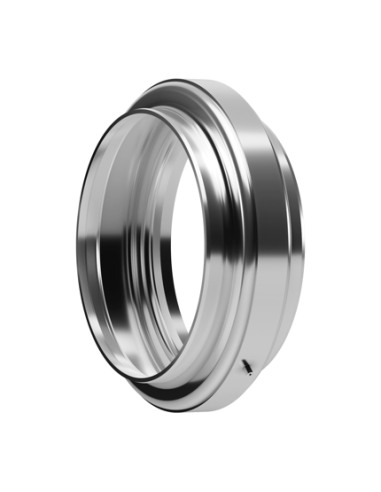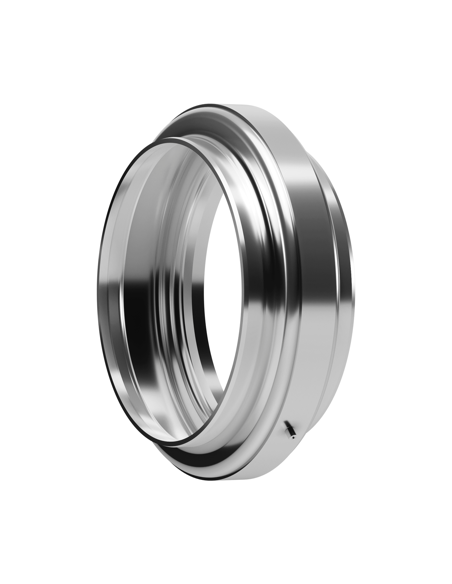

This type of expansion joint is rugged and the most durable from the standpoint of abuse, but it has the disadvantage of limited flexibility.


Expansion Joints - Type MFF | Macoga

Macoga MFF Expansion Joints
Macoga MFF expansion joints are metallic, flanged & flued type, classified as thick wall construction. They consist of two half-segments formed from flat annular plates; the outer edges are flanged, and the inner edges are flued. The halves are welded together and typically integrated into the shell of a heat exchanger.
Function and Operation
The MFF type is specified when the expansion joint must simultaneously absorb thermal expansion and act as a pressure-retaining structural element. The thick wall design provides mechanical strength but offers limited flexibility compared to thin-wall bellows.
Typical Applications
- Heat exchanger shells
- Fixed tube-sheet heat exchangers
- Pressure vessels
- Large diameter piping
- High-temperature lines with differential expansion between shell and tube bundle
In fixed tube-sheet exchangers, MFF joints are considered when the mean metal temperature difference between shell and tubes results in high loads on tube sheets and tube ends.
Materials and Design
Common materials: stainless steels 304, 321, 316, 316L, 310, 309; nickel alloys Inconel, Incoloy, Hastelloy; carbon and alloy steels P265GH, 16Mo3, 13CrMo44. Design is based on ASME VIII-1 Mandatory Appendix 5, ASME Appendix 26, and EJMA for stress, fatigue life, and spring rate calculations.
Selection Criteria
Selection must consider:
- Differential thermal expansion
- Design pressure and temperature
- Allowable shell stresses
- Operating cycles
- Spring rate
- Welding and NDT procedures
- Material compatibility with process media and environment
Installation and Inspection
Not intended for misalignment correction. Remove transport bars before pressure testing. Use chloride-free water for hydrostatic tests. Inspection includes leak checks, pressure loss, bellows stability, supports, anchors, and external corrosion.
Datasheet and documents
Description
CERTIFICATES
MACOGA holds numerous industry approvals, including:
Ministry of Defense and NATO Member Countries
Tap to zoom