


Dog Bone Expansion Joints | Macoga | Philippopoulos s.a.

Dog Bone Expansion Joints | Macoga

Macoga Dog Bone Expansion Joints

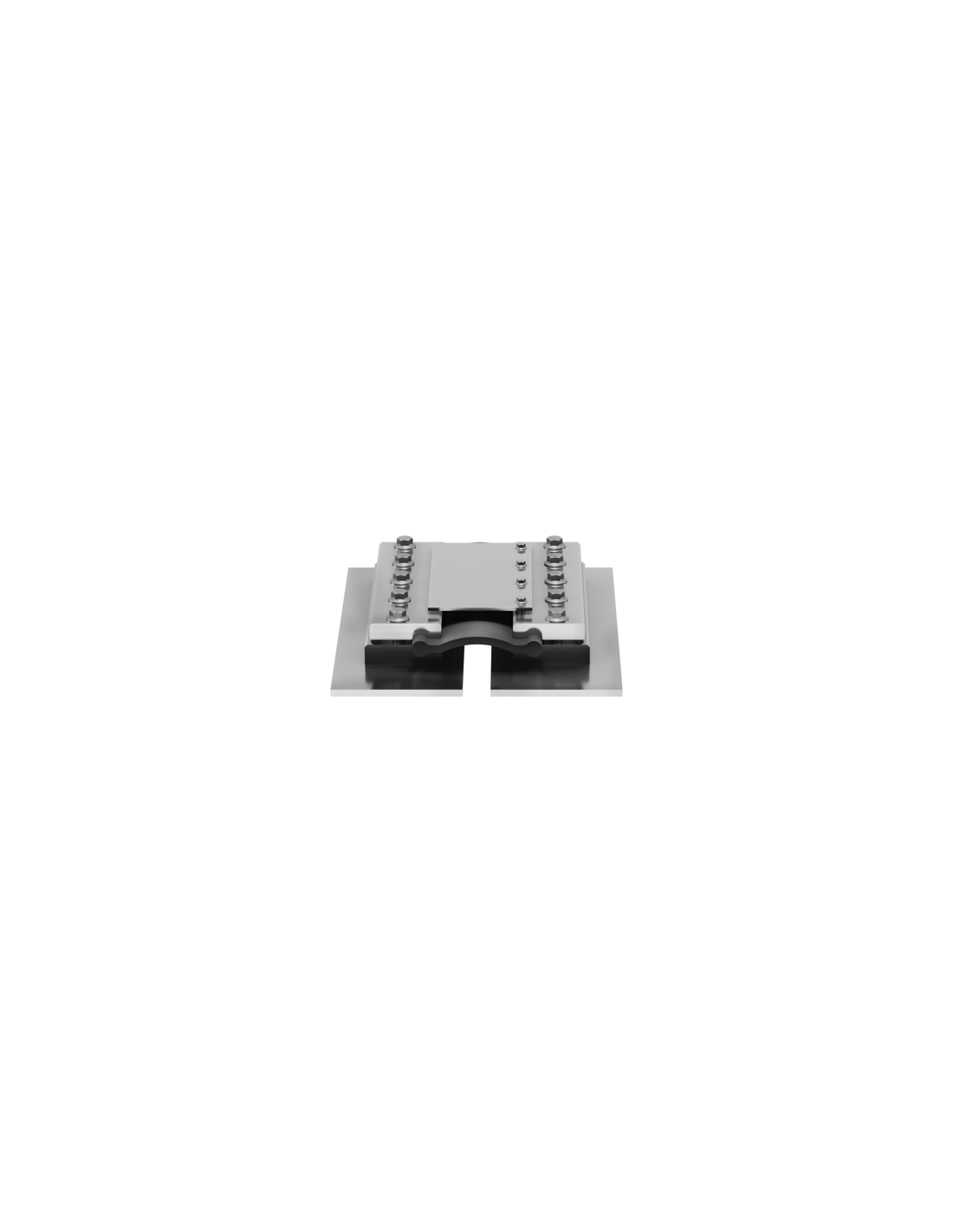
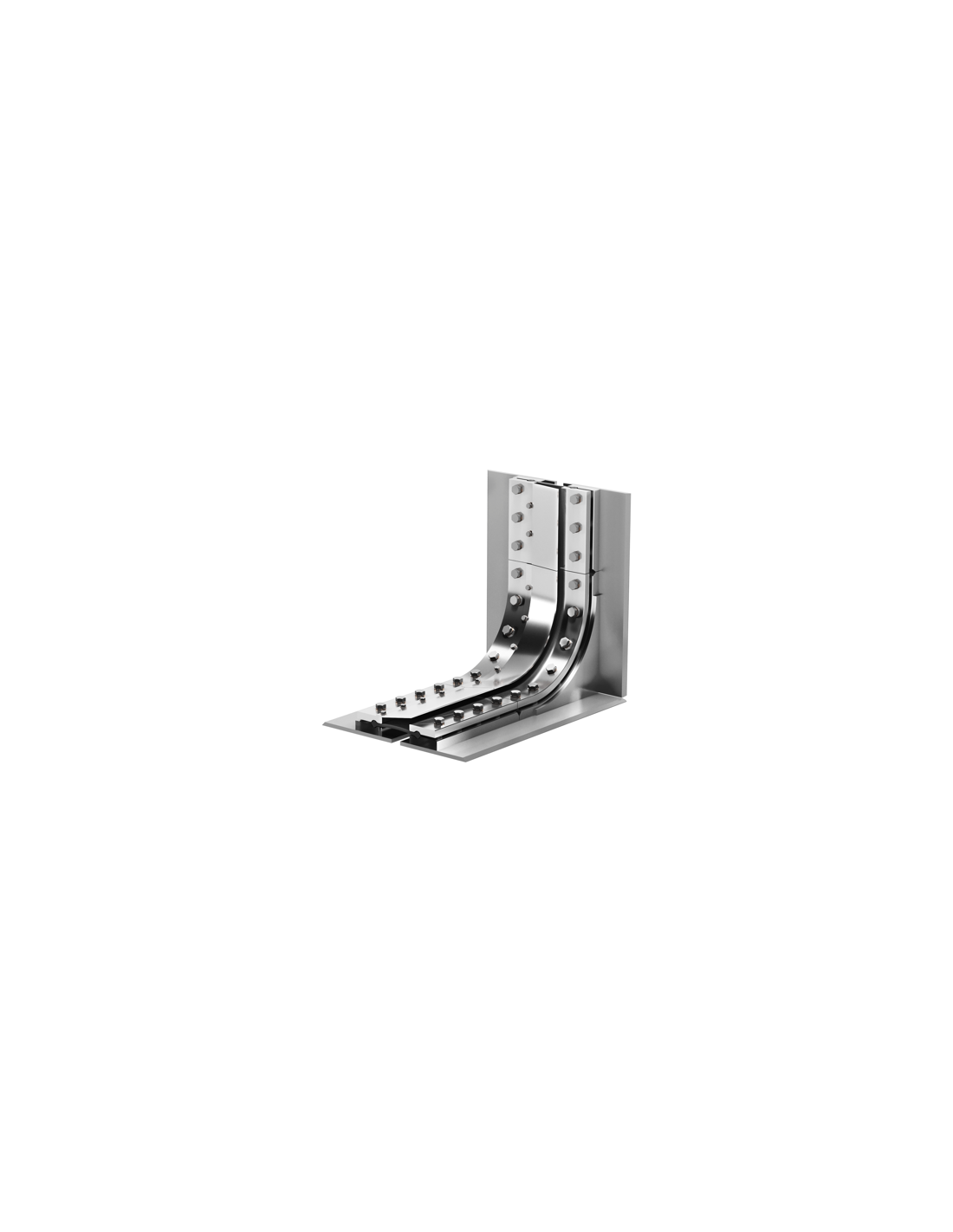
Macoga Dog Bone expansion joints are elastomeric belt-type compensators designed for turbine–condenser connections in power generation facilities. They accommodate differential thermal expansion between turbine exhaust and condenser ducting, minimizing reaction forces and moments on the turbine exhaust flange. Typical configurations include down exhaust, axial exhaust, and top exhaust arrangements.

Construction

The standard design is a multiply moulded rubber belt consisting of elastomer-impregnated fabric plies, rubber-coated and formed into a closed perimeter band. Available elastomers include EPDM and Neoprene. Typical construction: 240 mm width, 6 or 8 ply polyester reinforcement, self-sealing rubber knobs (32 mm), and a 16 mm polypropylene cord core.

Operating Limits

For 240 mm width:

  • Pressure: 1 bar / full vacuum
  • Axial compression: 25 mm
  • Axial extension: 3 mm
  • Lateral movement: 12 mm
  • EPDM: 121°C continuous, 194°C intermittent (up to 36 h total)
  • Neoprene: 107°C continuous, 152°C intermittent (up to 36 h total)

Connection and Sealing

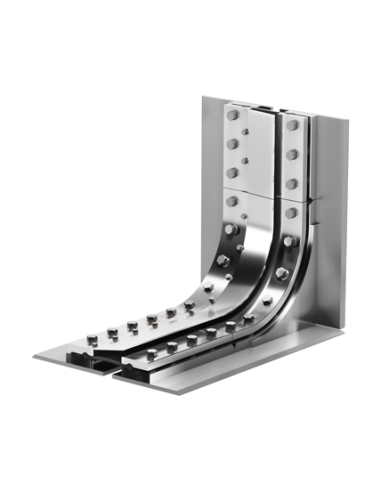
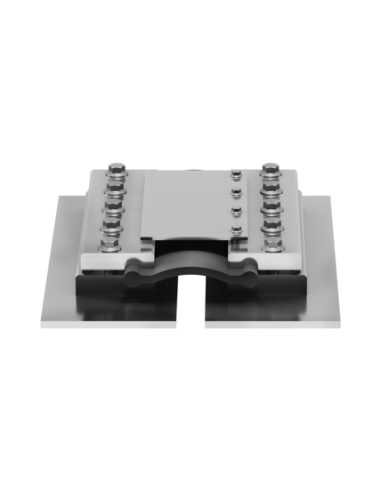
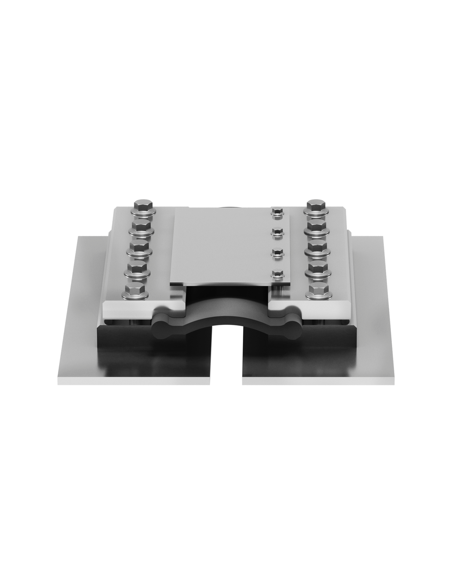
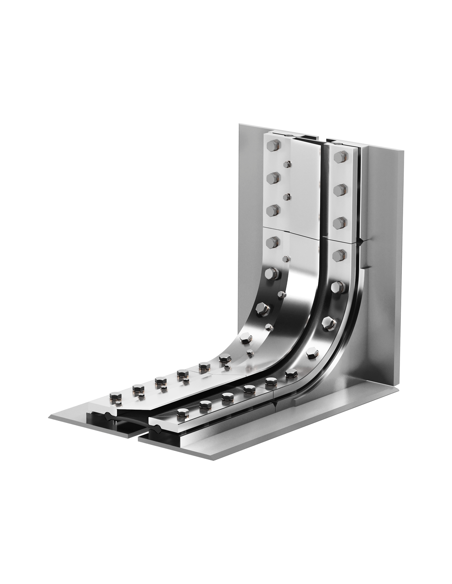
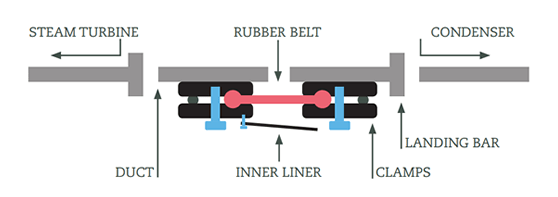
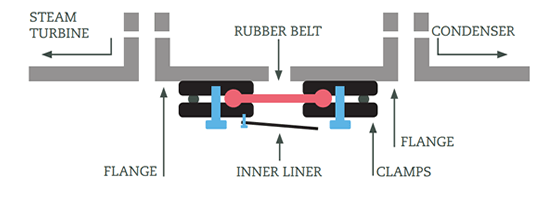
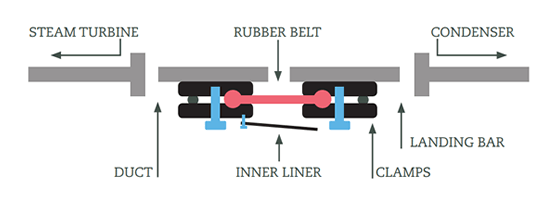
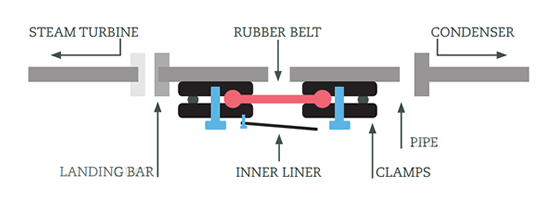
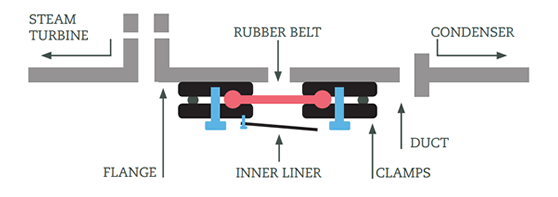
Sealing is achieved via rubber knobs and precision-machined clamps. Clamps are bolted to the metallic connection points and may be welded to flanges or weld ends/landing bars, depending on turbine and condenser ducting. Metallic ends are typically carbon steel and can be supplied with drilled flanges to match project equipment.

Internal Sleeve

An internal sleeve is used to optimize flow, reduce friction, limit flow-induced vibration, and protect the elastomeric belt from erosion or flow-related corrosion.

FAQ

Is this suitable for high-pressure lines?
No. The specified pressure rating is 1 bar and full vacuum only.

When to select EPDM vs. Neoprene?
Selection is based on temperature, operating environment, chemical exposure, and required service life of the turbine–condenser joint.

Datasheet and documents

Description

Multiply moulded belt

A moulded construction of plies of rubber impregnated fabric, rubber covered and spliced endless to a specific peripheral dimension. Dog Bone Expansion Joints can be made of Neoprene (Poly-Chloroprene) or EPDM (Ethylene Propylene Polymer).

Standard overall width240 mm (9-3/8”)
Rubber MaterialEPDM or Neoprene
Reinforcements6 (standard) or 8 ply polyester 500 warp x 500 fill tensile strength.
Knobs32 mm (1-1/4”) diameter
Core16 mm (5/8”) Polypropylene cord

Rate movements (for a standard 240 mm width)

Axial Compression25 mm (1”)
Axial Extension3 mm (1/8”)
Lateral Movement12 mm (1/2”)

Maximum Temperature Rating

EPDM121 °C (250 °F) continuous
194 °C (350 °F) intermittent (max. 36 hours whole life)
Neoprene107 °C (225 °F) continuous
152 °C (275 °F) intermittent (max. 36 hours whole life)

Inner Liner

The internal liner secures a smooth flow, protects bellows from flow induced vibrations, hold friction to a minimum and protect bellows from erosion.

Connecting Ends

In carbon steel material as standard, they can be supplied with landing bars or weld ends for welding to customer’s ducting or with flanges drilled to match customer’s equipment.

Clamps

The rubber belt expansion joint equipped on both sides with self-sealing rubber knobs, affixed to the connecting metal parts using specially designed machined clamps that ensure tightness. The machined clamps and the bolting ensure leak tightness during operation. The clamps on either end are welded to a flange if the expansion joint is to be bolted to the condenser and the turbine. The clamps are welded to filler piece of a weld end if the expansion joint is to be welded to the turbine or the condenser.

Typical Applications

CERTIFICATES