
Expansion Joints - Type Two Ply | Macoga

Macoga Two-Ply Testable Expansion Joints
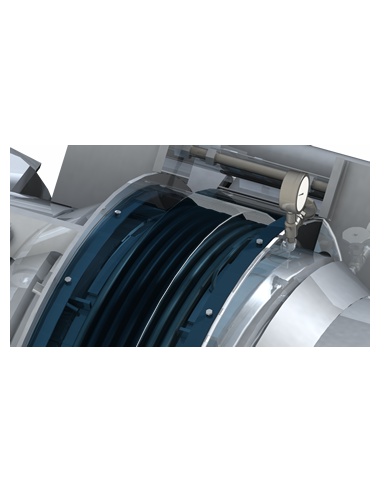
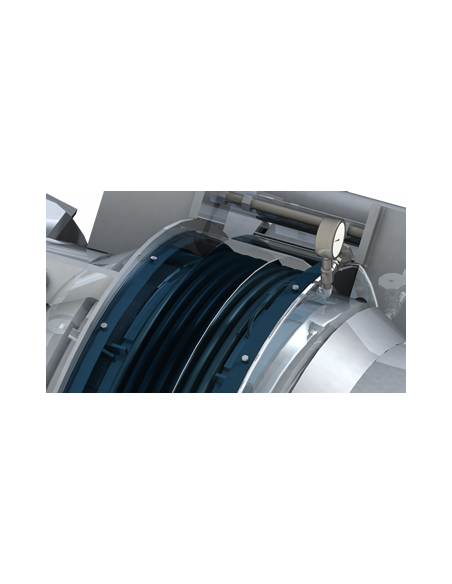
Macoga Two-Ply Testable expansion joints are metallic bellows assemblies constructed with two independent layers. Each ply is engineered to withstand full design conditions, including pressure, temperature, and movement. In the event of a leak or fatigue crack in the inner ply, the outer ply remains as a secondary pressure barrier, allowing for scheduled intervention without immediate shutdown.
Monitoring Logic
The annular space between the two plies can be connected to a monitoring system. Pressure increase or vacuum loss in this space indicates ply failure, providing early warning before process media escapes to the environment or equipment.
Monitoring types:
- Passive monitoring: Activated when the inner ply fails and pressure builds between plies.
- Active monitoring: A vacuum is maintained between plies; loss of vacuum due to inner or outer ply failure triggers an alarm.
Applications
Used in critical locations where bellows failure could result in unplanned shutdown or personnel/equipment exposure to hazardous media:
- FCCU and refinery units,
- petrochemical and chemical networks,
- hot gases, catalyst, flue gases,
- steam, thermal oil, or process fluids,
- lines requiring in-service leak monitoring.
Macoga specifies two-ply testable designs primarily for critical refinery equipment, such as FCC units.
Selection Criteria
Selection is not based solely on DN and PN. The following must be specified:
- design pressure and temperature,
- axial, lateral, or angular movement,
- fatigue cycles,
- bellows material,
- monitoring type,
- requirement for internal sleeve or refractory lining,
- fluid category and inspection requirements.
Maintenance
Monitoring systems do not replace periodic inspection. Instrument readings, bellows condition, welds, supports, guides, mechanical deformation, and any leakage indications must be checked. During shutdown, both inner and outer plies can be pressure tested.
Description
CERTIFICATES
MACOGA holds numerous industry approvals, including:
Ministry of Defense and NATO Member Countries
Tap to zoom