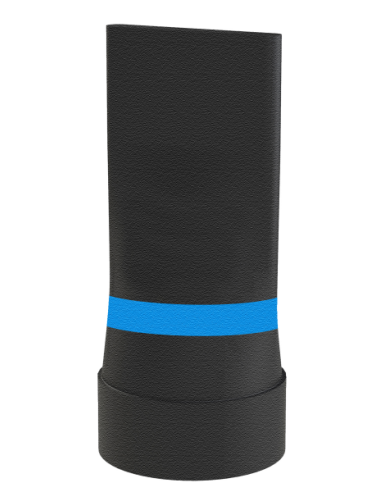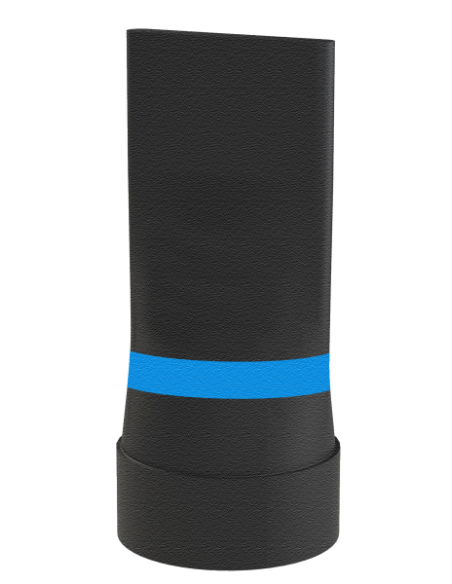

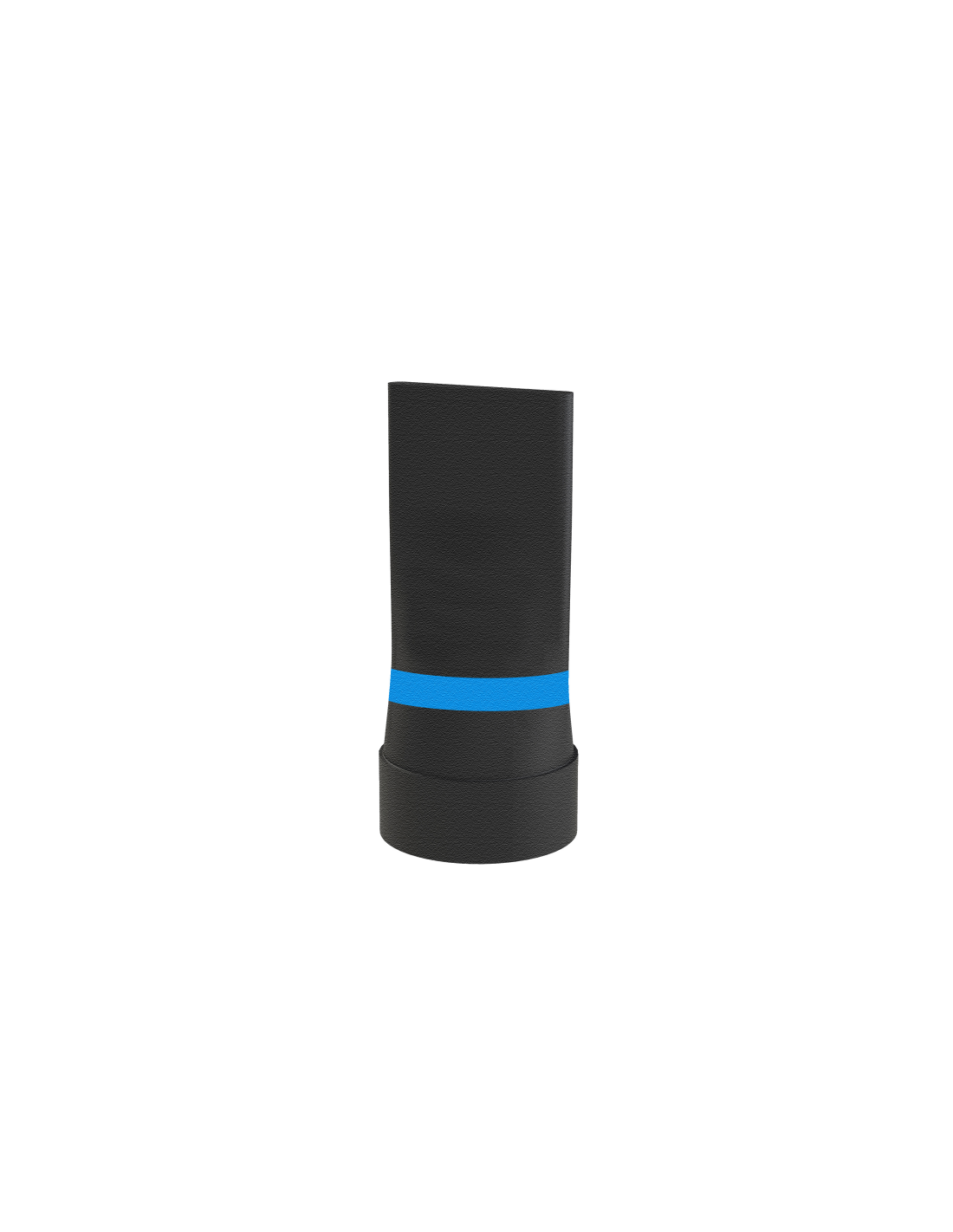
The Cla-Val Series RF-DBI-IN Rubber-Flex™ Duckbill In-Line Style Check Valve is designed to be efficient, quiet and tough. It requires no external power sources, thereby reducing operating costs. The valve’s simple design means there are no moving mechanical parts to break down or jam, reducing maintenance costs. RF-DBI-IN Valves easily handle corrosive or abrasive materials such as raw sewage, sludges or slurries. Their flexible design allows solids to pass through unhindered and can even seal around solids trapped in the valve.


Rubber-Flex Duckbill Check Valves - RF-DBI-IN In-Line | Cla-Val

Cla-Val RF-DBI-IN Slip-In In-Line Duckbill Check Valve
The RF-DBI-IN is an elastomeric slip-in check valve designed for installation inside existing pipelines without a flanged valve body. Retention is achieved via an internal stainless steel expanding ring. Valve selection is based on pipe internal diameter, flow rate, line pressure, and backpressure conditions.
Operation
Normal forward flow opens the duckbill lips. Under backpressure, the elastomer closes passively—no shafts, hinges, seats, or actuators are involved. The geometry allows passage of solids and can seal even with trapped debris at the closure point.
Installation
- Installed inside the pipeline, horizontally or vertically.
- For horizontal lines, the duckbill opening is oriented vertically.
- The internal stainless ring is expanded until compressed against the elastomer cuff.
- If there is a gap between valve OD and pipe ID, a 1/8" filler strip may be used.
- For corrugated pipe, the ring is placed at the lowest groove, at the minimum internal diameter.
Elastomer Materials
EPDM for wastewater and dilute acids; Buna-N for oils, greases, and hydrocarbons; Neoprene for moderate chemicals and marine fouling; Natural Rubber for abrasion and elasticity; Viton, Butyl, or Hypalon for specific chemical or thermal requirements.
Typical Applications
- wastewater, sludge, and slurries
- sewage pump stations
- pipelines with corrosive or abrasive fluids
- retrofit in existing lines where flanged valves cannot be installed
- stormwater and outfall lines requiring passive backflow prevention
RF-DBI-IN vs RF-DBI
RF-DBI is installed between two flanges. RF-DBI-IN is inserted directly into the pipe and retained by an internal expanding ring, suitable where flanged connections are unavailable or retrofit into existing pipelines is required.
FAQ
What data is required for selection?
Model RF-DBI-IN, pipe ID, elastomer type, flow rate, line pressure, and backpressure.
Where is sealing verified?
At the interface between valve OD, pipe ID, and the internal compression ring.
Datasheet and documents
Description
Tap to zoom