
Control
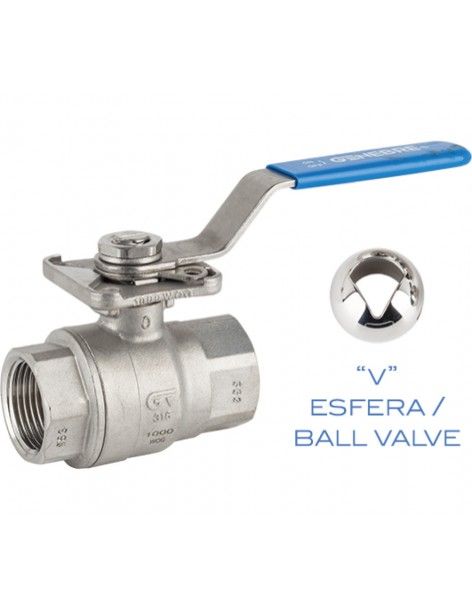
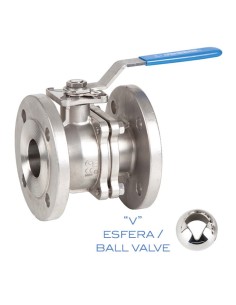
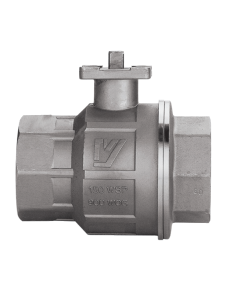
Analog control ball valves are used where the valve must operate as a flow-regulating element rather than simple on/off isolation. The ball is machined with a V-control port so that changes in opening angle produce a controlled change in flow area. They are selected for HVAC systems, hydronic circuits, utility process networks, process water, air, and compatible liquids where flow must be adjusted either manually or through an actuator.
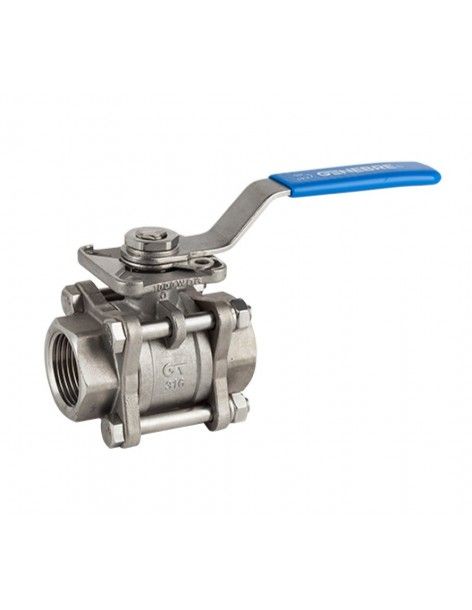
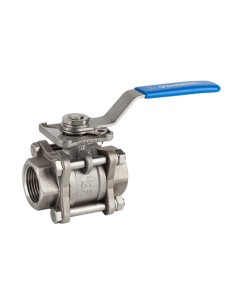
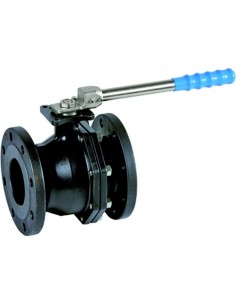
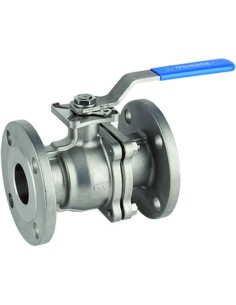
This category includes Genebre and Valpres variants in 2-piece, 3-piece, and dedicated V-control configurations, with DIN and ANSI executions. Available pressure ratings typically cover PN 15 to PN 100 and, depending on series, ANSI Class 150. End connections include BSP, ISO 7 Rp, and flanged ends. Body materials include stainless steel, ASTM A351 CF8M, AISI 316, and cast steel. Seat materials include PTFE reinforced with glass fiber or graphite, selected according to temperature, chemical compatibility, and required operating torque.
Typical stainless steel versions are specified for temperature ranges such as approximately -25°C to +180°C for Genebre 2015V and -20°C to +160°C for Valpres 700355, with PN63 or PN64 depending on size and construction. The V-control angle, for example 30°, 60°, or 90°, should be selected according to the required flow characteristic, available differential pressure, Kv/Cv target, and the controllable range of the loop.
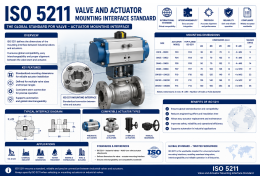
Selection should verify seat and seal compatibility with the medium, actuator torque requirements, ISO 5211 mounting interface, throttling behavior at partial opening, and the risk of cavitation, flashing, or noise at elevated differential pressure. For more accurate process control, the valve should be matched with the actuator and control signal, rather than sized only by line diameter. Maintenance considerations should also include seat wear under throttling duty, stem sealing arrangement, and shut-off leakage performance under expected operating conditions.