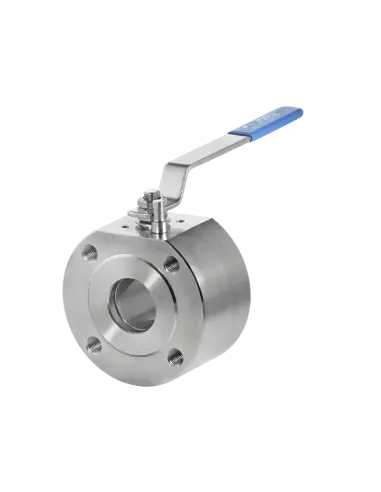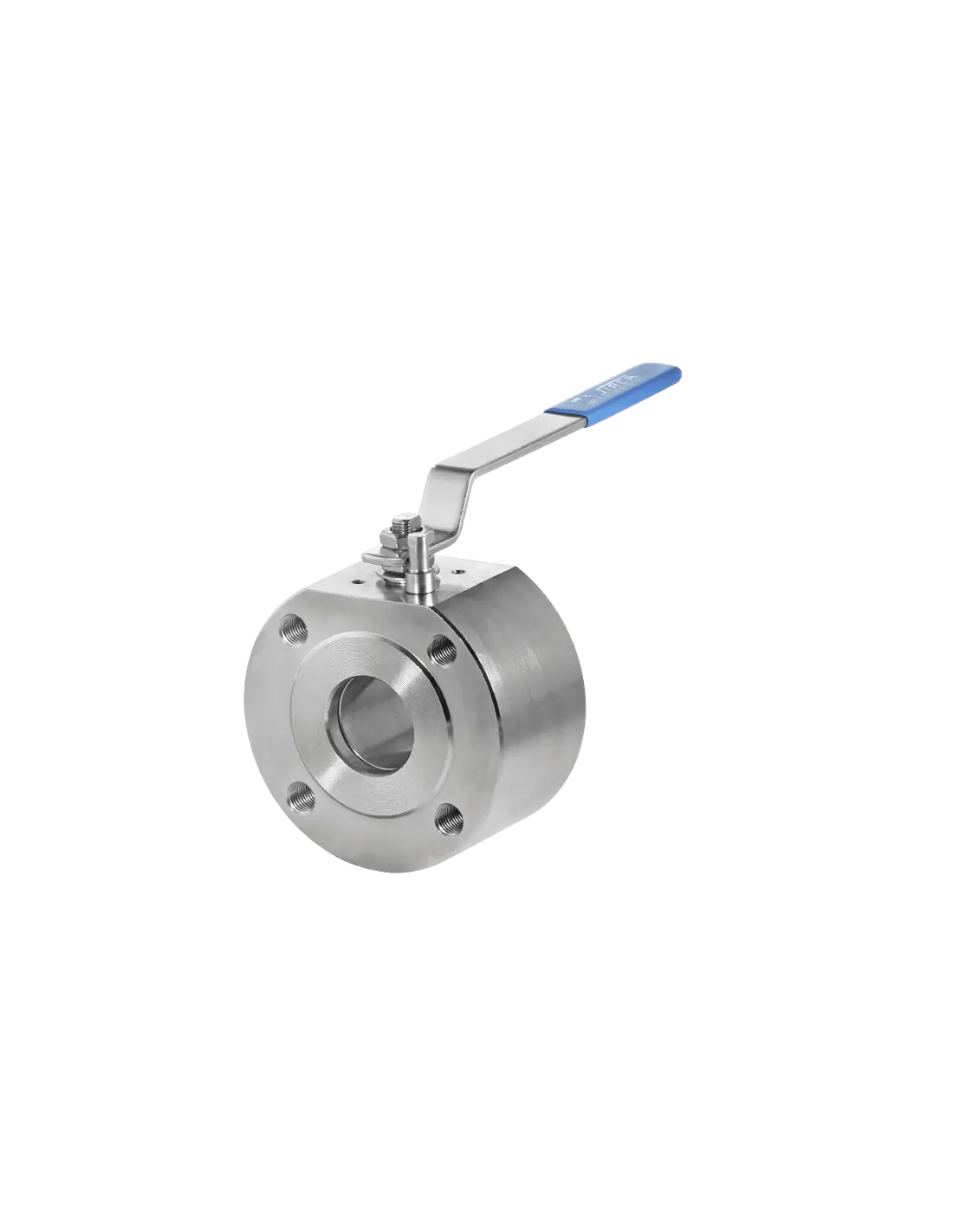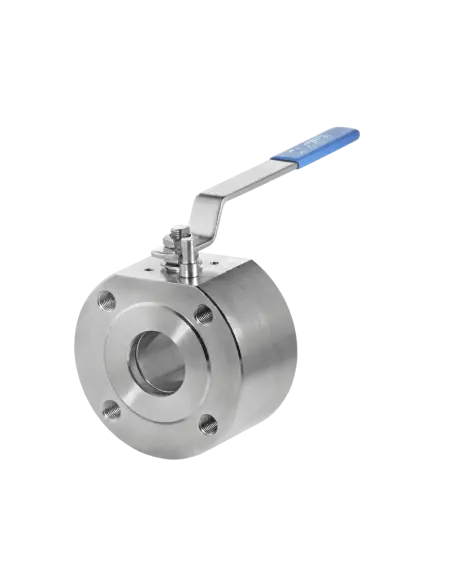

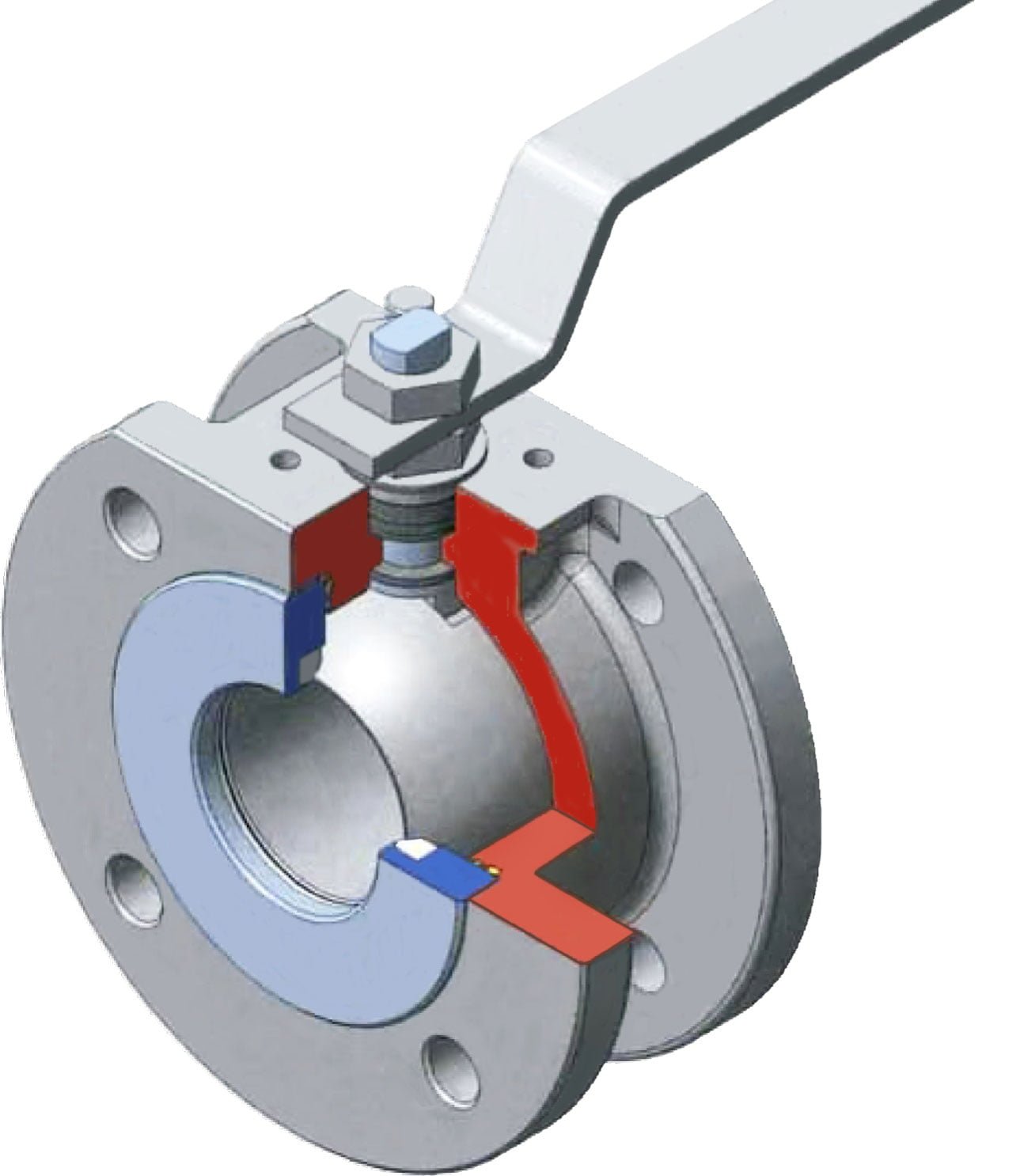
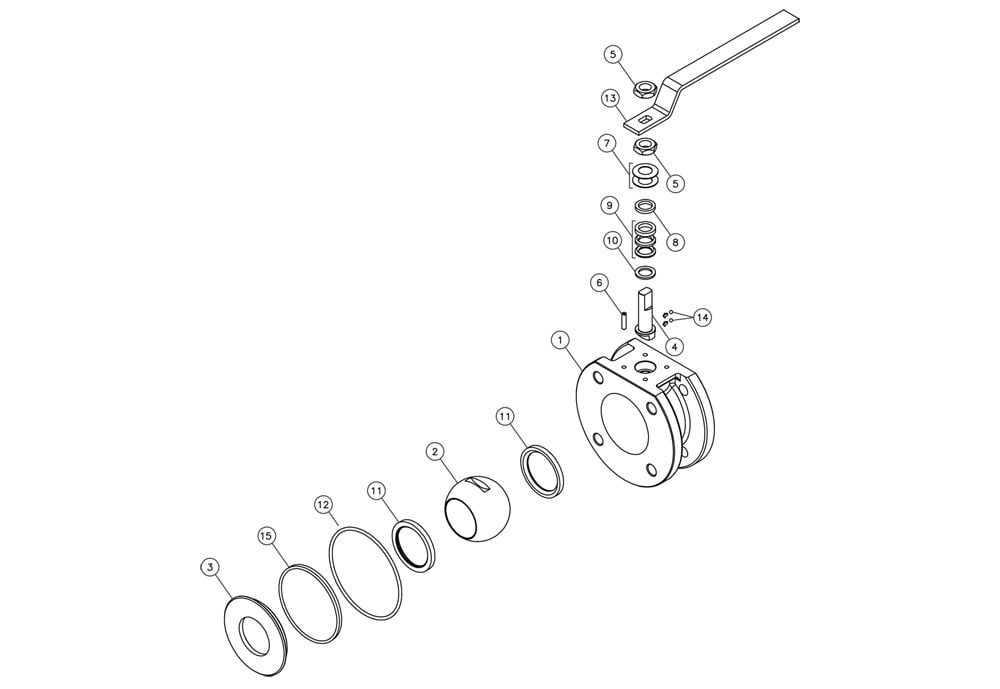



The Sirca S10 is a full-bore, wafer-pattern flanged ball valve for bidirectional isolation of clean liquids and gases in industrial piping systems. Its compact one-piece body reduces installation length, while the enlarged ball passage limits pressure loss through the valve.
Size range: DN15–DN200
Maximum working pressure: 40 bar
Operating temperature: −20 to +200 °C
Flange drilling: PN6, PN10, PN16, PN25, PN40, ASME Class 150 and 300
Face-to-face dimensions: EN 558, Series 100
Design standards: ASME B16.34, EN 12516-2 and ISO 14313
Actuator mounting interface: ISO 5211
Leakage rate: Rate A according to EN 12266-1
Rotation: 90°
Flow direction: bidirectional
Body options include ASTM A105 carbon steel and ASTM A351 CF8M stainless steel. Ball and stem materials are selected from AISI 304, AISI 316 and CF8M according to the valve version.
The seats are manufactured from glass-filled PTFE. The adjustable stem packing uses PTFE with carbographite Chevron rings. An anti-blowout stem and antistatic device provide mechanical stem retention and electrical continuity between the ball, stem and body.
Manual lever
Double-acting pneumatic actuator
Spring-return pneumatic actuator
Electric quarter-turn actuator
Solenoid valve, positioner and limit-switch box
Actuator sizing must consider differential pressure, breakaway torque, operating frequency and the required fail position.
The S10 is used for compressed air, compatible gases, water-treatment systems and clean industrial liquids without suspended solids. Seat and seal compatibility must be checked against fluid composition, temperature and pressure.
Available certifications include PED 2014/68/EU, ATEX 2014/34/EU, Fire Safe testing according to API 607, ISO 10497 and API 6FA, SIL assessment according to IEC 61508/61511, DVGW EN 13774 and fugitive-emissions qualification according to ISO 15848-1. Certification availability must be confirmed for the specified construction.