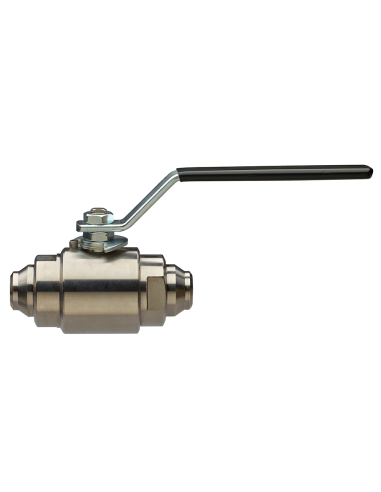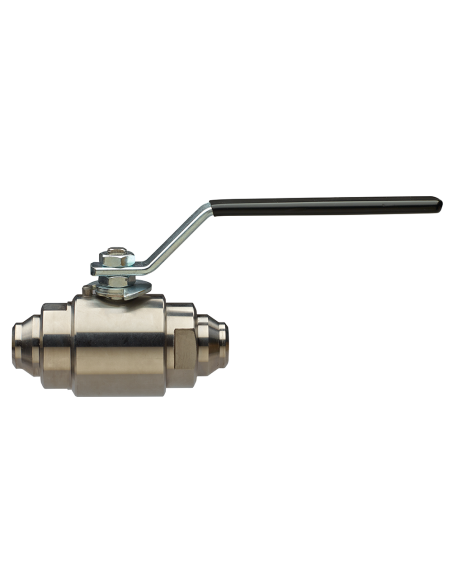

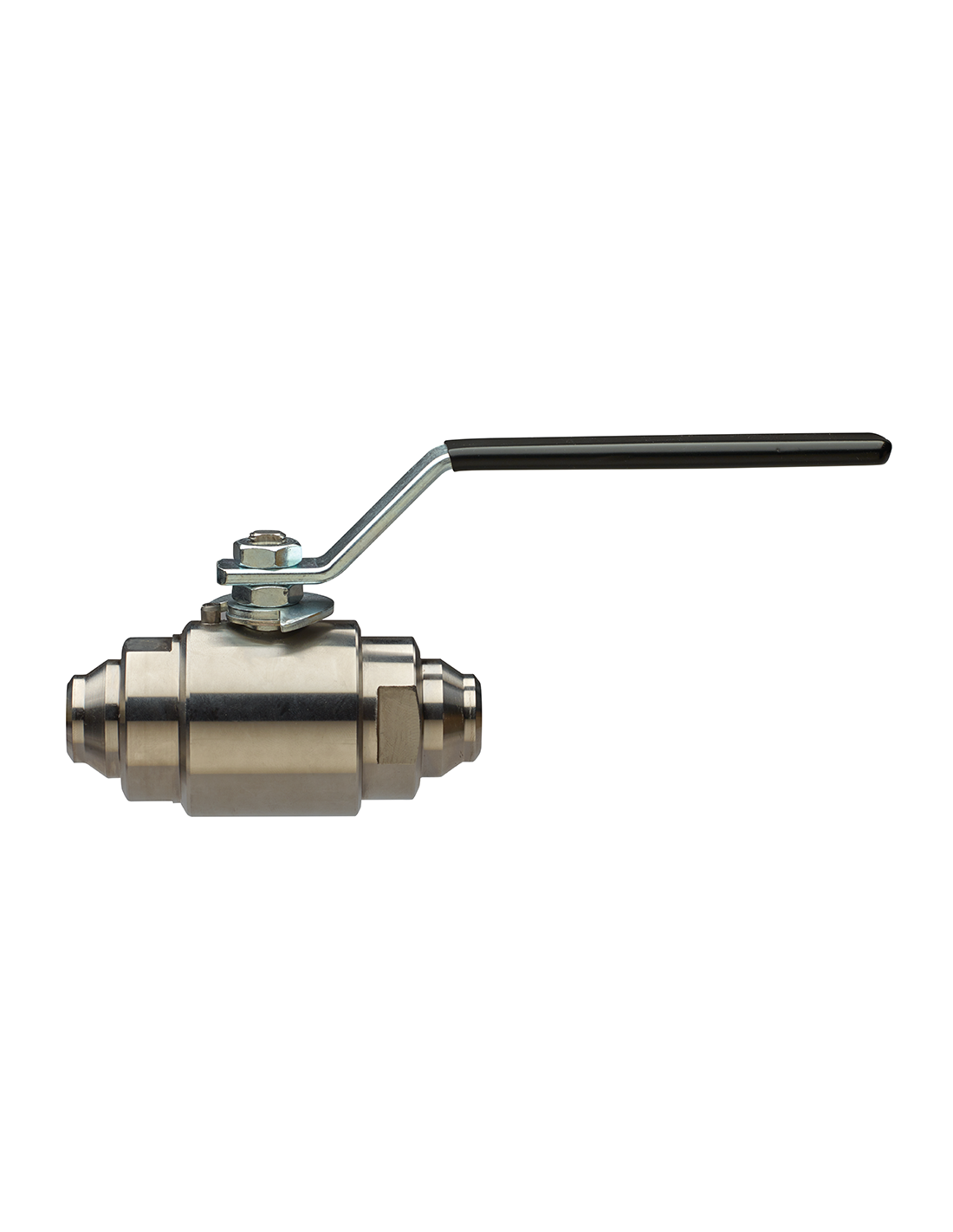
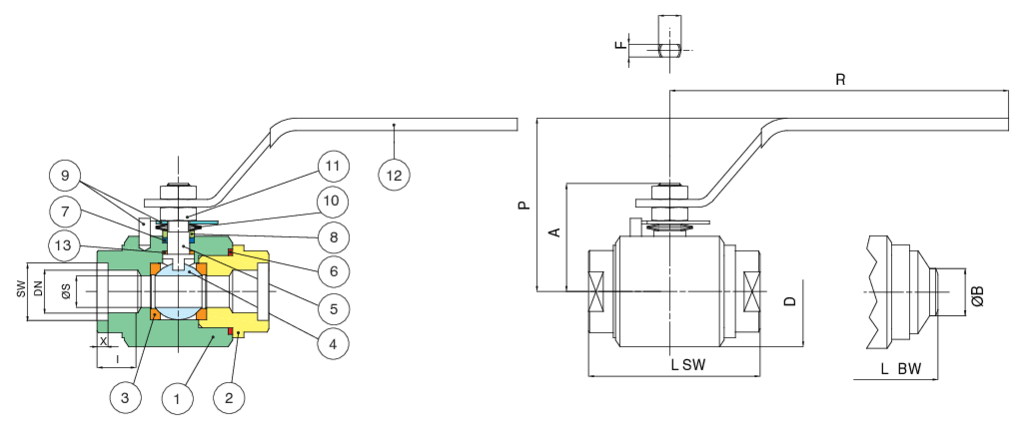


Two-piece ball valve for welded-end installation, available with Socket Weld or Butt Weld connections. The Series 709 is used on small-bore, high-pressure lines where threaded joints are not preferred due to leakage risk, vibration, thermal cycling, or plant specification requirements.
Fire-safe execution is available in accordance with ISO 10497:2010. Material selection should be checked against the line class, corrosion allowance, fluid compatibility, and site certification requirements.
The valve is suitable for fluids compatible with ASTM A105 or 316/316L body materials and PTFE-carbographite sealing components. Final selection should consider pressure, temperature, corrosion, phase changes, solids content, and cleaning procedures.
The valve is typically supplied for manual quarter-turn operation. Pneumatic or electric actuation can be considered where stem torque, mounting arrangement, duty cycle, and fail-position requirements are verified for the specific valve size and service conditions.
Series 709 is selected when a welded connection is required and higher mechanical integrity is needed compared with standard PN64 threaded ball valves. Check SW/BW end type, pressure class, temperature, seat compatibility, fire-safe requirement, and maintenance access before specification.
When should SW or BW ends be selected?
Use SW for compact small-bore welded installation; use BW where piping specifications require butt welds or weld inspection continuity.
Is it suitable for steam?
Yes, within the stated pressure-temperature limits and provided the seat material is acceptable for the operating steam conditions.
Can it replace a threaded ball valve?
Yes, when the line class permits welded valves and reduced threaded-joint leakage risk is required.
 FIRE-SAFE 10497-2010