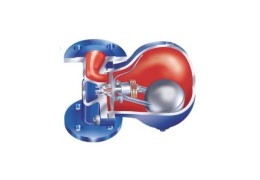
Ball float steam traps are mechanical steam traps used where continuous condensate removal is required under variable...
How to Select the Right Steam Trap for Industrial Applications
A steam trap is a self-acting valve used to discharge condensate, air, and non-condensable gases from a steam system while limiting live steam loss. Correct selection depends on the duty, not only the pipe size. A trap that works on a steam main drip leg may be unsuitable for a heat exchanger, tracing circuit, sterilizer, or pressure-reducing station.
ISO classifies automatic steam traps into three main operating groups: mechanical, thermostatic, and thermodynamic. ISO/DIS 6704 is currently under development to replace ISO 6704:1982, while retaining this actuation-based classification.
1. Define the Steam Trap Duty
Before selecting the trap type, establish the actual process duty.
Key operating data
Collect the following:
- Steam pressure at the trap inlet, not only boiler pressure
- Back pressure in the condensate return line
- Differential pressure across the trap
- Condensate load during start-up and normal operation
- Saturated or superheated steam condition
- Required air venting rate
- Risk of water hammer
- Vertical or horizontal installation position
- Condensate recovery or discharge to atmosphere
- Clean steam, plant steam, culinary steam, or contaminated condensate service
The trap must be sized for condensate load at the available differential pressure. Oversizing can increase cycling, seat wear, and steam leakage. Undersizing causes condensate backing, poor heat transfer, water hammer, and process temperature instability.
2. Understand the Main Steam Trap Types
Mechanical steam traps
Mechanical traps operate according to condensate level. Common variants include:
- Float and thermostatic traps
- Inverted bucket traps
Mechanical traps are typically selected where continuous condensate discharge is required, especially on heat exchangers, air heating coils, process vessels, and modulating steam control applications.
Suitable applications:
- Heat exchangers
- Calorifiers
- HVAC heating coils
- Process jackets
- Dryers
- Steam-to-water packages
- Low-pressure process heating
Engineering notes:
- Float traps discharge continuously and handle variable loads well.
- They require good air venting, usually by an integral thermostatic air vent.
- They are sensitive to freezing if installed outdoors without protection.
- Inverted bucket traps tolerate some water hammer but generally vent air more slowly unless fitted with auxiliary venting.
Thermostatic steam traps
Thermostatic traps operate according to condensate temperature. They remain open to cooler condensate and air, then close as condensate approaches steam temperature.
Common variants:
- Balanced pressure capsule traps
- Bimetallic traps
- Liquid expansion traps
Suitable applications:
- Steam tracing
- Small tank coils
- Instrument enclosures
- Sterilizers, where air removal is critical
- Low-load branch lines
- Applications where subcooled condensate discharge is acceptable
Engineering notes:
- Balanced pressure traps provide good air venting during start-up.
- Bimetallic traps tolerate high pressure and superheat better than many capsule designs.
- Thermostatic traps intentionally allow condensate cooling before discharge; this is useful in some tracing duties but unsuitable where immediate condensate removal is required for heat transfer.
Thermodynamic steam traps
Thermodynamic traps use fluid velocity and pressure effects across a disc or impulse mechanism. They are compact and commonly used on steam mains and outdoor distribution systems.
Suitable applications:
- Steam main drip legs
- Header drainage
- Outdoor steam lines
- High-pressure distribution
- Superheated steam lines, depending on design limits
Engineering notes:
- Disc traps are robust and compact.
- They can cycle rapidly at low load or high back pressure.
- Performance can be affected by dirt, poor insulation, and excessive back pressure.
- They are not usually the first choice for modulating heat exchangers with variable condensate load.
3. Match Trap Type to Application
| Application | Common trap choice | Selection logic |
|---|---|---|
| Steam main drip leg | Thermodynamic or inverted bucket | Handles high-temperature condensate and intermittent drainage |
| Heat exchanger with control valve | Float and thermostatic | Continuous discharge under variable load |
| HVAC air coil | Float and thermostatic | Reduces coil flooding and supports stable heat transfer |
| Steam tracing | Thermostatic or thermodynamic | Depends on required tracing temperature and condensate subcooling |
| Jacketed vessel | Float and thermostatic or inverted bucket | Selection depends on load variation and water hammer risk |
| Sterilizer/autoclave | Thermostatic or sanitary-type trap | Air removal and cleanability are critical |
| Superheated steam drip | Thermodynamic or bimetallic | Trap must tolerate superheat and high temperature |
| Condensate lift after trap | Avoid where possible; use pump trap if required | Back pressure can reduce or stop discharge |
4. Calculate Condensate Load Correctly
Steam trap sizing should be based on the maximum expected condensate flow, including start-up load.
Typical load conditions
- Start-up load: High condensate rate due to cold pipework or cold equipment.
- Running load: Lower, steady condensate rate during normal operation.
- Stall condition: Occurs when a modulating control valve reduces steam pressure below condensate return pressure.
For process equipment with a control valve, check whether the trap will still have enough differential pressure at low load. A heat exchanger operating under vacuum or low-pressure steam may require a pump trap, mechanical condensate pump, or gravity drainage to a vented receiver.
5. Check Pressure, Temperature, and Body Rating
Steam traps are pressure-containing components. Their body material, end connection, and pressure-temperature rating must match the piping specification.
Common industrial ratings
Typical trap body ratings include:
- PN16, PN25, PN40
- ASME Class 150, Class 300, Class 600
- Threaded, socket weld, butt weld, flanged, or sanitary clamp connections
Common body materials
- Cast iron: low-pressure HVAC and general plant steam
- Ductile iron: higher mechanical strength than cast iron
- Carbon steel: industrial steam distribution and process service
- Stainless steel: clean steam, corrosive condensate, food, pharmaceutical, and washdown areas
For European pressure equipment, the Pressure Equipment Directive 2014/68/EU is relevant where pressure equipment is placed on the EU market. PED classification depends on pressure, size, fluid group, and stored energy.
6. Consider Media Compatibility
Steam traps usually handle more than pure condensate. The actual fluid may include:
- Treated boiler water carryover
- Oxygen and carbon dioxide
- Flash steam
- Air and non-condensable gases
- Cleaning chemicals in clean steam systems
- Contaminated condensate from process coils
- Corrosion products and pipe scale
Material selection should consider condensate chemistry. Carbonic acid corrosion can occur where carbon dioxide dissolves in condensate. Oxygen pitting may occur in poorly deaerated systems. Stainless steel internals and hardened valve seats are often specified where seat erosion or corrosion is expected.
7. Evaluate Air Venting Requirements
Air is a major cause of poor steam heat transfer. It reduces effective steam temperature, forms insulating films, and delays warm-up.
Applications with high air removal requirements include:
- Sterilizers
- Autoclaves
- Large heat exchangers
- Steam coils
- Long distribution headers after shutdown
- Batch processes with frequent start-stop operation
Float and thermostatic traps and balanced pressure thermostatic traps generally provide better air venting than basic thermodynamic disc traps. For large steam mains, separate air vents may be required at high points and remote ends.
8. Account for Back Pressure
Back pressure reduces trap capacity and can prevent condensate discharge. It may be caused by:
- Elevated condensate return lines
- Flash steam in the return header
- Undersized condensate piping
- Multiple traps discharging into a common return
- Failed-open traps upstream
- Pressurized condensate recovery systems
As a rule, the trap must be selected using differential pressure, not inlet pressure alone:
Differential pressure = trap inlet pressure − trap outlet pressure
Thermodynamic disc traps are particularly sensitive to excessive back pressure. Float traps can also fail to drain if the return pressure exceeds the available motive pressure.
9. Select Sealing and Internal Construction
Steam leakage is strongly influenced by seat condition, dirt, cycling rate, and closure design.
Common sealing arrangements
- Metal-to-metal valve and seat
- Hardened stainless steel seat
- Replaceable seat assembly
- Integral seat
- Thermostatic capsule or bellows element
- Disc and seat arrangement in thermodynamic traps
Soft seats are uncommon in conventional industrial steam traps because of temperature, erosion, and condensate flashing. For clean steam or sanitary service, sealing design must also consider cleanability, surface finish, dead legs, and material certification.
Maintenance considerations
Specify traps with serviceable internals where plant maintenance strategy supports repair. In small tracing systems, replacement may be more economical than rebuilding. For critical process heat exchangers, maintainable traps with strainers, test valves, and isolation valves are preferred.
10. Installation Details Affect Trap Performance
A correctly selected trap can still fail if installed poorly.
Good installation practice
- Install the trap below the drain point where possible.
- Provide a dirt pocket or drip leg before the trap.
- Fit a strainer upstream where dirt is expected.
- Include isolation valves for maintenance.
- Provide a test valve or sight glass where safe and permitted.
- Avoid lifting condensate after the trap unless back pressure has been calculated.
- Avoid grouping multiple drain points into one trap.
- Protect outdoor traps from freezing.
- Install check valves where reverse flow can occur.
For steam main drainage, the drip leg must be correctly sized. A small branch connection from the bottom of a large steam main may not collect condensate effectively, especially during start-up.
11. Standards and Test References
Relevant standards and test documents include:
- ISO 6704 / ISO/DIS 6704 — classification of automatic steam traps by actuation principle.
- EN ISO 5117:2023 — production and performance characteristic tests for automatic steam traps.
- ASME PTC 39 — performance test code covering steam traps used to remove condensate and non-condensables from steam systems.
- ASTM F1139 — specification covering design, fabrication, pressure rating, marking, and testing of steam traps and drains.
- PED 2014/68/EU — pressure equipment conformity framework for applicable equipment placed on the EU market.
Procurement specifications should reference the applicable edition, pressure class, material standard, end connection, test requirement, and documentation package.
12. Practical Selection Guide
Use a float and thermostatic trap when:
- Load is variable.
- Continuous condensate removal is required.
- Heat transfer stability is important.
- Air venting is required during start-up.
- The equipment is controlled by a modulating steam valve.
Use a thermodynamic trap when:
- The duty is steam main drainage.
- The installation is outdoors.
- The condensate load is relatively small and intermittent.
- The system pressure is medium to high.
- Compact construction is required.
Use a thermostatic trap when:
- Air venting is important.
- Condensate subcooling is acceptable.
- The application is tracing, small coils, or batch warm-up.
- The trap must remain open during cold start.
- Superheat tolerance is required, in the case of suitable bimetallic designs.
Use an inverted bucket trap when:
- Rugged mechanical operation is preferred.
- Some resistance to water hammer is required.
- The application has relatively steady load.
- Air venting limitations are acceptable or separately addressed.
FAQ
What is the most common mistake in steam trap selection?
The most common error is selecting by pipe size instead of condensate load and differential pressure. A trap with the same nominal connection size can have very different discharge capacity depending on orifice size, pressure rating, and operating principle.
Can one steam trap drain several pieces of equipment?
It is generally poor practice. Each heat exchanger, coil, or process unit should have its own trap. Group trapping can cause short-circuiting, waterlogging, uneven heating, and difficult fault diagnosis.
Why do steam traps fail open?
Common causes include dirt on the seat, wire drawing, erosion from flashing condensate, worn internals, water hammer damage, and incorrect trap selection. A failed-open trap wastes live steam and increases condensate return pressure.
Why do steam traps fail closed?
Closed failure may result from blocked strainers, seized mechanisms, collapsed thermostatic elements, incorrect installation, freezing, or excessive back pressure. Closed failure can cause condensate accumulation, poor heat transfer, and water hammer.
Is a thermodynamic trap suitable for a heat exchanger?
Usually not the first choice for a modulating heat exchanger. A float and thermostatic trap is generally more suitable because it discharges condensate continuously over a variable load range.
When is a pump trap required?
A pump trap is required when condensate must be lifted or discharged into a return line with pressure higher than the available steam-side pressure. This condition is common on heat exchangers with modulating control valves.
Conclusion
Steam trap selection is an application engineering task. The correct trap is determined by condensate load, differential pressure, air venting requirement, back pressure, steam condition, material compatibility, pressure class, and maintenance strategy. For industrial plants, the objective is not simply to remove condensate, but to maintain heat transfer, avoid water hammer, reduce live steam loss, and keep the condensate return system hydraulically stable.