Ball float steam traps are mechanical steam traps used where continuous condensate removal is required under variable...
Ball Float Steam Traps: Selection, Operation, and Industrial Applications
Ball float steam traps are mechanical steam traps used where continuous condensate removal is required under variable load conditions. They are commonly specified for steam-heated heat exchangers, process coils, calorifiers, air heaters, and other equipment where condensate must be discharged as it forms without causing temperature instability or waterlogging.
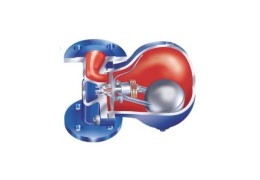
A typical ball float steam trap uses a buoyant spherical float connected to a valve mechanism. As condensate enters the trap body, the float rises and opens the discharge valve. When the condensate level drops, the float falls and reduces or closes the outlet. Most industrial designs also include a thermostatic air vent to remove air and non-condensable gases during start-up and operation.
Operating Principle of a Ball Float Steam Trap
Mechanical condensate discharge
The trap body contains:
- A hollow stainless steel ball float
- Lever mechanism or linkage
- Valve seat and discharge orifice
- Thermostatic air vent
- Body and cover assembly
- Optional strainer or check valve depending on design
When condensate enters the trap, the float rises with the condensate level. This movement opens the valve seat and allows condensate to discharge. Because the float responds directly to liquid level, the discharge is modulating rather than cyclic.
This makes ball float traps suitable for equipment with varying steam loads, especially where a temperature control valve is installed upstream.
Air venting function
Most ball float steam traps include an internal thermostatic air vent. During start-up, the trap body contains air and cold condensate. The air vent remains open at low temperature, allowing air to leave the system quickly. As steam reaches the trap and temperature rises toward saturation temperature, the thermostatic element closes.
Air removal is important because air in steam spaces reduces heat transfer efficiency and can cause temperature control problems in heat exchangers and coils.
Typical Applications
Ball float steam traps are commonly used on process equipment where condensate forms continuously and must be removed immediately.
Common industrial applications
- Shell-and-tube heat exchangers
- Plate heat exchangers using steam as the heating medium
- Steam heating coils
- Air handling unit steam coils
- Calorifiers and storage water heaters
- Jacketed vessels
- Process tanks with steam jackets
- Laundry equipment
- Dryers and presses
- Steam-heated reboilers with stable condensate drainage requirements
HVAC and building services applications
In HVAC systems, ball float traps are often installed on:
- Steam coils in air handling units
- Domestic hot water calorifiers
- Steam-to-water heat exchangers
- Unit heaters
- Humidifier steam supply drainage points, where applicable
They are particularly useful where the steam pressure is controlled by a modulating valve. Under partial load, the pressure in the heat exchanger may fall significantly, so the steam trap must discharge condensate at low differential pressure.
Suitable Media
Ball float steam traps are intended primarily for:
- Steam condensate
- Air and non-condensable gases during venting
- Clean pressurized condensate systems
They are not intended for:
- Dirty fluids with heavy suspended solids
- Slurries
- Corrosive condensate outside the body material compatibility range
- Two-phase flow containing severe water hammer
- Superheated steam lines without condensate formation at the trap location
Condensate chemistry should be reviewed where oxygen, carbon dioxide, amines, or acidic condensate may affect body, seat, or internal component materials.
Operating Conditions and Selection Parameters
Differential pressure
Ball float traps must be selected based on differential pressure, not only upstream steam pressure.
The relevant differential pressure is:
Inlet pressure at the trap − outlet/back pressure
Back pressure may come from:
- Elevated condensate return lines
- Pressurized condensate headers
- Flash steam recovery vessels
- Long discharge pipe runs
- Lift after the trap
- Check valves and fittings
If the differential pressure is too low, the trap may not discharge the required condensate load. If the differential pressure exceeds the trap’s maximum operating differential pressure, the float mechanism may be unable to open the valve.
Condensate load
Sizing should consider:
- Full-load condensate rate
- Start-up load
- Warm-up time
- Equipment heat duty
- Steam pressure
- Latent heat of steam
- Safety factor
- Control valve turndown
- Minimum operating differential pressure
For heat exchangers and coils, the trap should be checked at both maximum load and low-load conditions. Low-load operation can be more critical if the control valve throttles heavily and the heat exchanger shell pressure drops close to the condensate return pressure.
Pressure and temperature ratings
Typical body pressure classes depend on manufacturer and construction, but common industrial ratings include:
- PN16
- PN25
- PN40
- ASME Class 150
- ASME Class 300
Common body materials include:
- Cast iron for low to moderate pressure building services
- Ductile iron for higher mechanical strength
- Carbon steel for industrial steam systems
- Stainless steel for corrosive environments or clean utility systems
Temperature capability depends on body material, gasket material, seat design, and pressure rating. Steam trap selection should always confirm the pressure-temperature rating of the complete assembly, not only the nominal pressure class.
Ball Float Trap Variants
Standard ball float trap
A standard ball float trap provides continuous condensate discharge with an integral thermostatic air vent. This is the most common configuration for heat exchangers and process coils.
Ball float trap with steam lock release
A steam lock release is used where steam can enter the trap ahead of condensate and prevent condensate from reaching the float chamber. This can occur on rotating cylinders, syphon drainage systems, and certain process equipment arrangements.
The steam lock release allows controlled venting of locked steam so condensate can enter the trap body.
Ball float trap with integral strainer
Some designs include an upstream strainer screen inside the trap body. This protects the valve seat and orifice from pipe scale and debris.
For dirty systems, an external Y-strainer upstream of the trap is often preferred because it provides easier blowdown and maintenance access.
Ball float trap with check valve
A check valve may be required where reverse flow is possible from a condensate return header. This is common where multiple traps discharge into a common pressurized return line.
Sealing and Internal Component Options
Ball float trap sealing is typically metal-to-metal at the discharge valve seat. The seat and valve components are usually stainless steel or hardened stainless steel, depending on duty.
Important internal features include:
- Stainless steel float
- Stainless steel valve seat
- Replaceable seat and valve assembly
- Thermostatic capsule, bellows, or bimetallic air vent
- Graphite, spiral wound, or compressed fiber gaskets depending on temperature and pressure
- Bolted cover for maintenance access
Soft sealing is less common in steam trap discharge seats because steam and high-temperature condensate can damage elastomers. Where elastomers are used in auxiliary components, compatibility with temperature, condensate chemistry, and pressure cycling must be verified.
Comparison with Other Steam Trap Types
Ball float vs thermodynamic steam trap
Ball float traps discharge continuously and are better suited to process equipment with varying condensate loads. Thermodynamic traps discharge intermittently and are commonly used on steam mains, tracing lines, and outdoor drainage points.
Ball float traps are more sensitive to freezing and water hammer. Thermodynamic traps are compact and robust but may not vent air as effectively during start-up unless additional air venting is provided.
Ball float vs thermostatic steam trap
Thermostatic traps discharge condensate below steam saturation temperature. They are useful where subcooling is acceptable, such as steam tracing or some heating applications.
Ball float traps discharge condensate close to saturation temperature, which is preferred where immediate condensate removal is required to maintain heat transfer.
Ball float vs inverted bucket steam trap
Inverted bucket traps are mechanically robust and tolerate some water hammer, but they usually discharge intermittently and require a water seal to operate correctly.
Ball float traps are generally preferred for modulating process loads because they respond directly to condensate level and can discharge continuously over a wide load range.
Installation Considerations
Correct installation is important because the float mechanism depends on gravity and liquid level.
Recommended installation practices
- Install the trap in the correct orientation shown by the manufacturer.
- Provide a dirt pocket or drip leg upstream where appropriate.
- Install isolation valves upstream and downstream for maintenance.
- Use a strainer where pipe scale or welding debris may be present.
- Avoid lifting condensate after the trap unless available differential pressure is confirmed.
- Provide a check valve if discharging into a common return header.
- Keep discharge piping adequately sized to limit back pressure.
- Provide freeze protection for outdoor installations.
- Avoid installing the trap where it will be exposed to severe water hammer.
Location relative to equipment
The trap should normally be installed below the condensate outlet of the heat exchanger or coil. A vertical drop into the trap helps maintain positive condensate flow and reduces the risk of waterlogging.
For modulating steam control systems, the condensate line between the equipment and trap should be short and free-draining. Vacuum breakers may be required where the steam space can fall below atmospheric pressure during low-load operation or shutdown.
Maintenance and Failure Modes
Ball float steam traps have moving internal components and should be included in the plant’s steam trap inspection program.
Common failure modes
- Valve seat wear causing live steam leakage
- Float damage due to water hammer
- Air vent failure in the open or closed position
- Blocked strainer or seat orifice
- Mechanism fouling due to pipe scale
- Gasket leakage at the cover joint
- Incorrect operation caused by excessive back pressure
Leakage considerations
A failed-open trap can pass live steam into the condensate return system. This increases energy loss, raises return line pressure, and may affect other traps discharging into the same header.
A failed-closed or blocked trap can cause condensate backing up into the heat exchanger or coil. This can lead to poor temperature control, corrosion, water hammer, tube damage, or freezing in air coils.
Testing methods include:
- Ultrasonic testing
- Temperature measurement upstream and downstream
- Visual discharge observation where test valves are installed
- Thermal imaging as a screening method
- Permanent trap monitoring in critical systems
Standards and Certification Considerations
Applicable standards depend on region, pressure rating, and end connection. Common references include:
- ASME B16.34 for pressure-temperature ratings of valves, where applicable
- ASME B16.5 for flanged connections
- ASME B16.11 for forged socket weld and threaded fittings
- ASME B1.20.1 for NPT threads
- EN 1092-1 for European flanges
- EN 10204 Type 3.1 material certification where required
- ISO 6552 for marking of automatic steam traps
- ISO 7841 and ISO 7842 for steam trap test methods
- PED 2014/68/EU for pressure equipment supplied into the European market
For procurement, the datasheet should specify:
- Design pressure and temperature
- Maximum operating differential pressure
- Condensate capacity at stated differential pressure
- Body material
- End connection and rating
- Orientation
- Air vent type
- Strainer requirement
- Certification and inspection documents
- Spare parts availability
Valve Selection Logic for Ball Float Steam Traps
A practical selection sequence is:
- Define the equipment duty and condensate load.
- Determine normal and maximum steam pressure.
- Calculate available differential pressure at the trap.
- Check condensate return back pressure.
- Confirm start-up load and warm-up requirements.
- Select trap capacity at the lowest expected differential pressure.
- Verify maximum operating differential pressure.
- Select body material and pressure class.
- Confirm end connections and installation orientation.
- Specify air vent, strainer, check valve, or steam lock release if required.
For heat exchangers with modulating control valves, the low-load case should not be ignored. At low steam flow, shell pressure can fall, differential pressure across the trap can become small, and condensate drainage can become unstable.
FAQ
What is the main advantage of a ball float steam trap?
The main advantage is continuous condensate discharge over a wide range of loads. This makes it suitable for process equipment where condensate must be removed as soon as it forms.
Can a ball float trap be used on steam mains?
It can be used in some steam main drainage applications, but thermodynamic or inverted bucket traps are often selected because they are more compact and more tolerant of outdoor exposure and water hammer. For steam mains, the trap type should be selected based on pressure, condensate load, start-up conditions, and installation environment.
Does a ball float steam trap vent air?
Most ball float traps include a thermostatic air vent. This helps remove air during start-up and improves heat transfer in heat exchangers and coils.
What causes a ball float trap to fail open?
Common causes include seat wear, debris lodged in the valve, damaged linkage, or a failed internal mechanism. A failed-open trap may discharge live steam into the condensate return system.
What causes a ball float trap to fail closed?
A blocked strainer, plugged orifice, damaged float, failed air vent, or excessive back pressure can prevent condensate from discharging properly.
Are ball float traps suitable for outdoor installations?
They can be used outdoors, but freeze protection is important. The trap body retains condensate, so freezing can crack the body or damage internal components.
Why is back pressure important?
Back pressure reduces the differential pressure across the trap. Reduced differential pressure lowers condensate discharge capacity and may cause condensate to back up into the equipment.
When is a steam lock release required?
A steam lock release is used where steam can prevent condensate from entering the trap body, such as rotating cylinders, syphon drainage, or equipment with long horizontal condensate connections.
Engineering Summary
Ball float steam traps are selected where continuous condensate removal, rapid air venting, and stable heat transfer are required. They are most commonly applied to steam-heated process equipment and HVAC heat exchangers operating under variable load.
The critical selection parameters are condensate load, available differential pressure, back pressure, pressure class, body material, orientation, and air venting requirements. In systems with modulating steam control valves, sizing must be checked at low differential pressure, not only at nominal steam pressure.