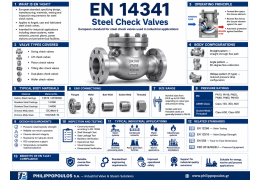

EN 14341 is the European standard specifying the design, manufacturing, material, testing and inspection requirements...
Valves and flow equipment for the wood, pulp and paper industry
Wood product, pulp and paper plants operate with steam, condensate, process water, hot water, compressed air, chemical solution and auxiliary fluid networks. Valves in these circuits are selected according to pressure, temperature, fluid chemistry, operating frequency and the maintenance requirements of the plant.
Pulp and paper production requires stable flow control in pulping, washing, bleaching, heating, drying, heat recovery and water treatment processes. Correct valve sizing helps limit pressure losses, temperature fluctuations and unstable operation in heat exchangers, drying cylinders, tanks, pumps and pipework.
Typical applications
- Steam networks on drying cylinders, heat exchangers, tanks and thermal processes.
- Condensate and drainage lines from headers, heat exchangers and steam pipework.
- Process water, washing, cooling and recirculation circuits.
- Chemical solution lines for bleaching, cleaning and pulp treatment.
- Compressed air networks for pneumatic actuators, instruments and auxiliary equipment.
- Wastewater treatment and water recovery systems.
- Auxiliary circuits on dryers, presses, tanks, pumping stations and cutting units.
Equipment selection criteria
- Operating pressure, temperature and load variations.
- Material compatibility with steam, condensate, water, pulp or chemical solutions.
- Resistance to corrosion, deposits, fibres, suspended solids and external humidity.
- Required flow rate and allowable pressure drop.
- Isolation, control, non-return or overpressure protection function.
- Operating frequency and need for connection to an automation system.
- Access for inspection, cleaning, maintenance and replacement of internal parts.
Indicative equipment
- Isolation valves for steam, water, air, chemical solutions and auxiliary fluids.
- Control valves for flow, pressure and temperature regulation.
- Pressure reducing valves and pressure regulators for steam, water and compressed air networks.
- Safety valves for boilers, vessels, headers and pipework.
- Check valves for pump protection and backflow prevention.
- Steam traps and condensate management equipment.
- Line strainers for protection of valves, instruments, nozzles and heat exchangers.
- Pneumatic and electric actuators for remote or automatic operation.
For each application, the line operating data, fluid type, presence of fibres or solids, start-up and shutdown conditions and automation requirements should be reviewed. These parameters define the valve type, nominal size, pressure class, construction materials, sealing requirements and suitable actuation method.