
Vaccum Breakers

Vacuum relief valves are used to protect tanks, vessels, and piping systems from excessive negative pressure during emptying, cooling, pump trip, or rapid flow change. Their function is to admit atmospheric air in a controlled manner when internal pressure falls below the set vacuum level, limiting the risk of wall deformation, piping collapse, or other mechanically induced failure. This category includes Mankenberg VV 34/36 vacuum relief valves and Tassalini vacuum/pressure valves.

Selection should be based on vacuum set pressure, required air inbreathing capacity, tank volume, withdrawal rate, operating temperature, process medium, likelihood of condensation, ambient corrosivity, and required shut-off tightness. For storage tanks, the valve must be checked against the maximum vacuum relief load resulting from pump-out, thermal contraction, or atmospheric condensation. In steam and hot liquid systems, allowance should be made for condensate formation, installation at the high point, drainage provision, and prevention of dirt ingress.

Mankenberg VV 34/36 are spring-loaded vacuum control valves for vessels and pipelines. Type VV 34 is supplied with spring cap and adjustment scale, while VV 36 has an exposed spring design. Published data include stainless steel construction in 1.4404 / 316L, pressure classes from PN 6 to PN 40, nominal sizes DN 20 to DN 250, adjustable vacuum setting p₂ from 0.05 to 0.95 bar, Kvs values from 1.2 to 388 m³/h, and operating temperature up to 250 °C. Available options include soft seat versions, special alloys such as Duplex, Super Duplex, Hastelloy, or titanium, NPT threads, DIN/ANSI/JIS flanges, clamp and aseptic connections, and ATEX or NACE execution where required by service conditions.

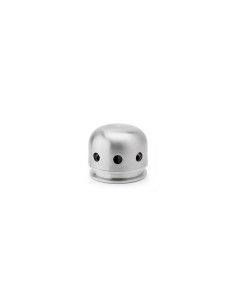
Vacuum / Pressure valves | Tassalini

Vacuum / Pressure valves | Tassalini
Vacuum Relief Valves Tassalini Tassalini vacuum relief valves are installed on tanks, stainless steel vessels, and process lines where vacuum conditions may develop during emptying, product cooling, steam condensation, or pump operation. Their function is to admit atmospheric air in a controlled manner when the vessel pressure drops below the vacuum...