
Steam Generators | Gestra

GESTRA Steam Generator / Regenerator – Pure Steam Generator
The GESTRA pure steam generator produces saturated steam in a secondary circuit, utilizing an existing steam, hot water, or thermal oil network as an energy source. It is applied when process steam must not contain substances from the main boiler house, such as hydrazine or ammonia.
Operating Principle
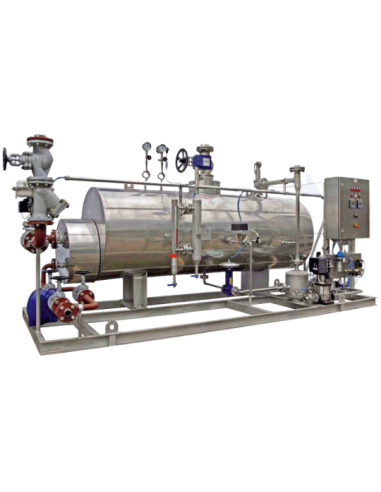
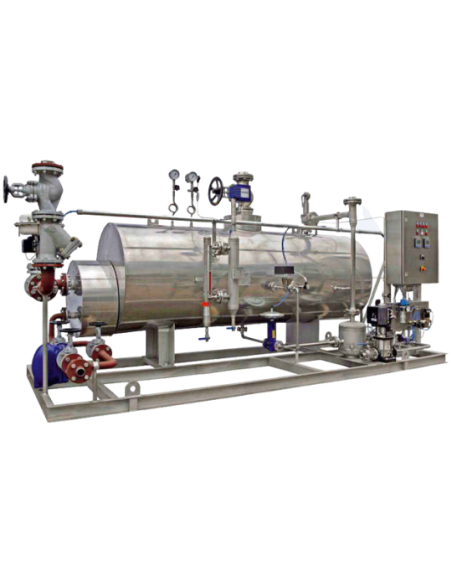
In the horizontal GDE/GRDE version, the unit consists of a cylindrical vessel with a bundle of heating tubes at the bottom. The feed water is maintained approximately 5–15 cm above the bundle. The primary medium passes through a control valve, transfers heat to the water, and the generated steam exits through a droplet separator.
Technical Specifications
- Primary pressure: up to 28 bar
- Primary temperature: up to 250 °C
- Secondary pressure: up to 12 bar
- Secondary temperature: up to 200 °C
- Thermal power: up to 5000 kW
- Connection flanges: PN16 or PN40 according to EN 1092-1
- Materials: steel or stainless steel construction, depending on steam quality requirements
- Design: PED 97/23/EC and AD 2000.
Skid Equipment
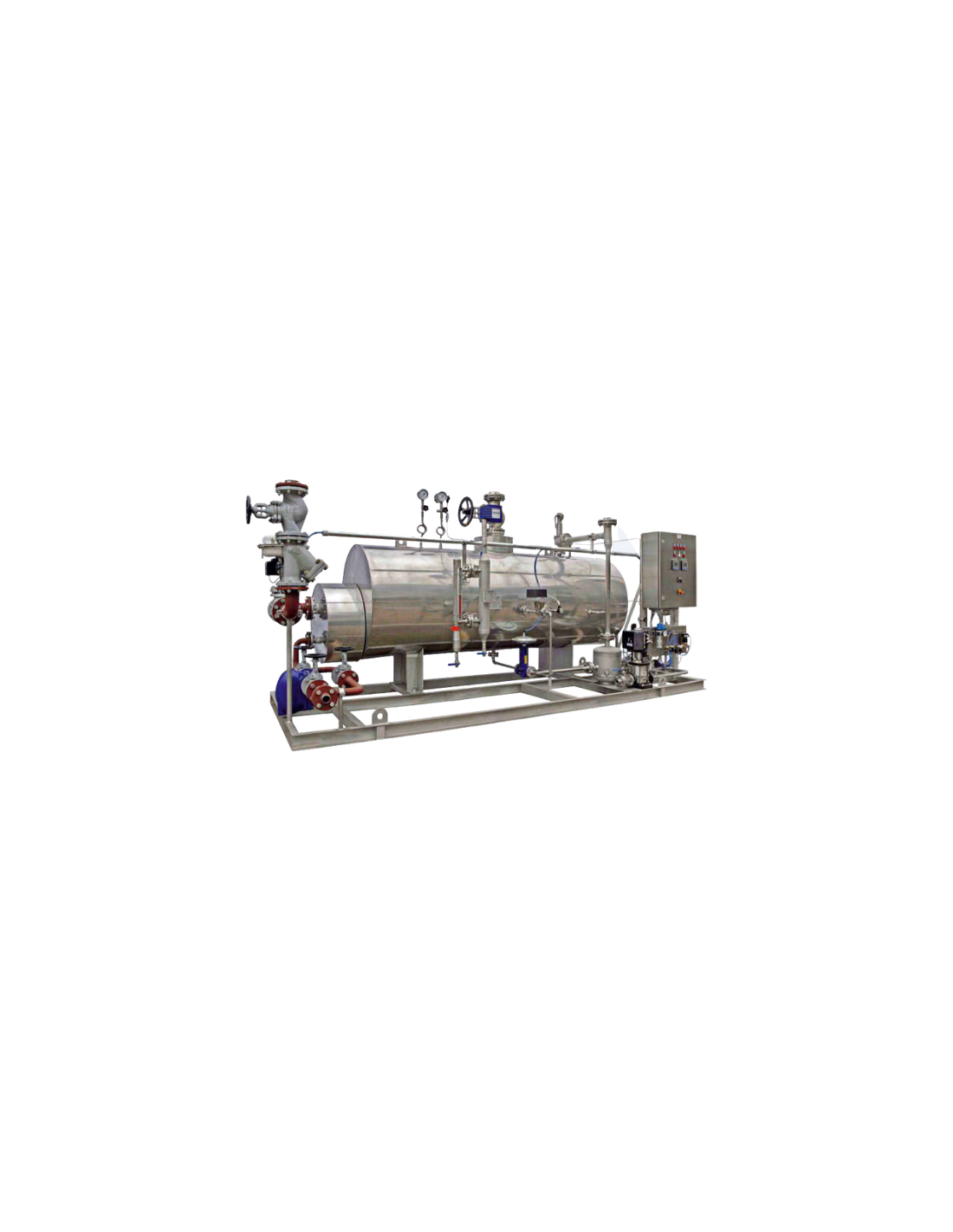
The unit can be delivered without accessories, with unassembled accessories, or fully assembled on a base. Typical equipment includes: pressure reducer, filter, isolation valves, float steam trap, sight glass, check valves, pressure gauges, level indicator, level electrode, feed pump, safety valve, continuous and intermittent blowdown.
Selection and Applications
Used in sterilization, HVAC humidification, food drying/evaporation chambers, and distillate production. Sizing requires steam supply, secondary pressure, available primary medium pressure/temperature, feed water quality, conductivity, and pressure control requirements. For pure steam, water quality is referenced in EN 285, while for secondary steam generation in TRD.
FAQ
When is electrical or pneumatic control required?
When the outlet steam pressure must be maintained with minimal deviation under varying load.
Why is blowdown necessary?
Continuous evaporation increases salts and impurities in the vessel; without blowdown, the risk of foaming, carry-over, and deposits increases.
Description
Tap to zoom