
Desuperheater Systems | Gestra

GESTRA Desuperheater Systems – Steam Desuperheating Systems
GESTRA desuperheating systems are utilized when available steam is superheated, but the end-user requires saturated or controlled cooler steam. GESTRA offers two primary principles: injection cooler EK with water spray and water-bath desuperheater KDS/KDL 13 with water bath cooling.
Injection Cooler EK
The EK is a spray desuperheater for horizontal steam lines. Cooling water, typically condensate or fully deionized water, is sprayed through a ring or nozzle body into a turbulent steam flow. The evaporation of water absorbs thermal energy, reducing the steam temperature.
Typical EK Specifications:
- Operating pressure/temperature: 25 bar / 400 °C or 21 bar / 470 °C,
- Steam flow rate: 0.5 to 100 t/h,
- Turndown ratio: 1:5, special up to 1:10,
- Final temperature: up to approximately 5 K above saturation temperature,
- Materials: P235GH, P265GH, or 16Mo3.
KDS/KDL 13 – Water-bath Desuperheater
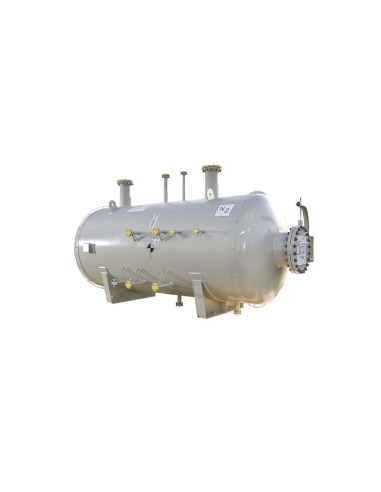
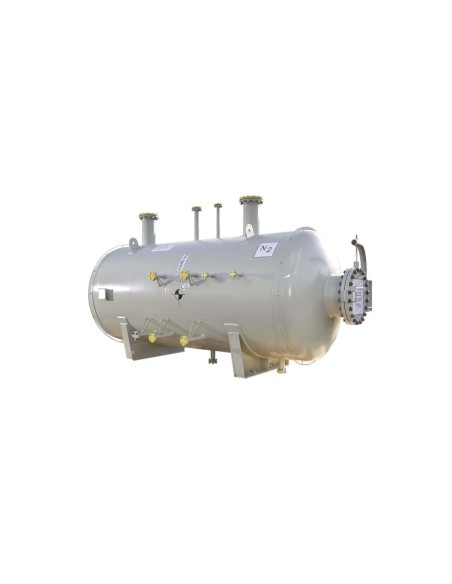
The KDS/KDL 13 series is used when conversion of superheated steam to saturated steam is required. Superheated steam enters a vessel with a water bath, transfers the superheat to the water, and exits as saturated steam. The setup is available in vertical KDS 13 and horizontal KDL 13 versions.
Typical KDS/KDL 13 Specifications:
- Superheated steam inlet temperature: up to 400 °C,
- Operating pressure: up to 32 bar(g),
- Flow rate: 0.06 to 40 t/h,
- Steam content after cooling: approximately 98%,
- Level control with NRG or NRGT electrode,
- Water replenishment via solenoid valve or control valve.
Selection Criteria
The EK is selected when desuperheating is required without full saturation approach. The KDS/KDL 13 is chosen when the process needs saturated steam over a wide load range, even 0–100%. Both cases require input pressure and temperature, desired output pressure/temperature, steam flow rate, and cooling water pressure and quality.
Standards and Water Quality
Systems comply with PED 97/23/EC, AD 2000, and are suitable for group 1 and 2 fluids. Cooling water must be at least condensate quality; for stainless steel construction, chlorides should not exceed 50 mg/L.
FAQ
Does it replace a pressure reducer?
Not always. Many setups require separate pressure control before or after desuperheating.
When is drainage needed?
In EK, removal of non-evaporated water is required via separator and steam trap.
Description
Tap to zoom