
Pressure Regulating Valves
Marine back pressure regulating valves are used in shipboard piping systems where a minimum or constant upstream pressure must be maintained regardless of downstream demand variation. Their function differs from a pressure reducing valve: they do not control outlet pressure, but modulate flow by throttling or opening to hold the pressure ahead of the valve at the specified setpoint.
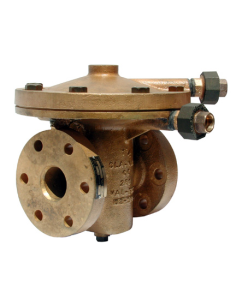
One valve in this category is the Cla-Val 22M Back Pressure Regulating Valve, described by the manufacturer as an upstream pressure control valve for regulated fluid service. It is applied in marine circuits where pressure loss across distribution lines, pumps, or manifolds can affect the operation of equipment located upstream of the valve.
Within the Cla-Val marine range, the 22M is listed as a back pressure regulating valve for sea water control and other shipboard piping services. Published configurations include 1 1/4”, 1 1/2”, and 2” sizes with union end connections to MIL-F1183, as well as flanged versions to MIL-F-20042 Class 250.
Valve selection should verify the required upstream pressure setpoint, available differential pressure, minimum and maximum flowrate, pressure loss, material compatibility with seawater or other media, and valve stability at partial load. In pump systems, incorrect adjustment can cause hunting, excessive recirculation, noise, or unstable upstream pressure control.
Maintenance should include inspection of pilot lines, diaphragm, seat, elastomers, strainers, and the actual control pressure under operating load. Scale, suspended solids, or deposits from seawater service can affect response time, shutoff tightness, and control stability.