
Pressure Reducing Valves
Marine pressure reducing valves are used in shipboard piping where downstream pressure must remain stable despite changes in flow demand or upstream pressure. Selection should be based on the required set pressure, available differential pressure, service medium, line size, flange class, and the dynamic behavior of the system during pump start-up or shutdown.
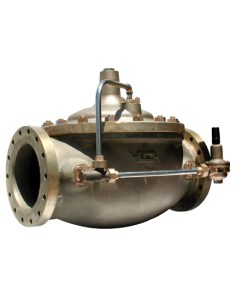
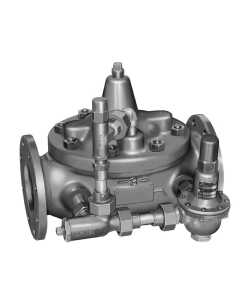
This category includes Cla-Val 90FM-2 and 90M automatic pressure reducing valves for shipboard piping systems, with applications such as sanitary flushing and evaporator cooling systems. The 90FM-2 is specified for general pressure reducing duty, while the 90M is referenced for sizes 4” to 8”. Flanged versions are associated with MIL-F20042 Class 150 and Class 250, while the union-type 90FM-2 configuration is referenced to MIL-F1183.
Pilot-operated pressure reducing valves should be evaluated as pressure control devices rather than as manually throttled valves. Control stability depends on flow rate, line pressure loss, sensing line location, fluid cleanliness, and maintenance condition of the pilot circuit. In systems with low demand or rapid load changes, the risk of hunting, noise, vibration, and incomplete shutoff should be checked during sizing and commissioning.
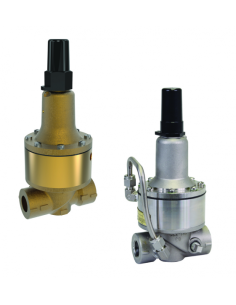
Associated accessories include Cla-Val CRL and 55L devices for pressure control or pressure relief service. The 55L is described as a direct-acting, spring-loaded, diaphragm-type pressure relief valve suitable for fire protection systems or other closed circuits where line pressure must be relieved once it exceeds the spring setting.
Maintenance should include inspection of strainers, restriction orifices, pilot lines, diaphragm, seat, elastomers, and the actual regulated pressure under load. Scale, seawater deposits, suspended solids, or fouling can change response time and affect shutoff tightness. Media compatibility, leakage condition, and pressure setting verification should be confirmed during service intervals.