


| DGRL 2014/68/EU (PED Pressure Equipment Directive) | |
| GOST-R (Russia) | |
| CRN (Canada) | |
| TA - Luft TÜV-Test-No. 922-9204866 |

Piston Check Valve - CHECKO V | ARI

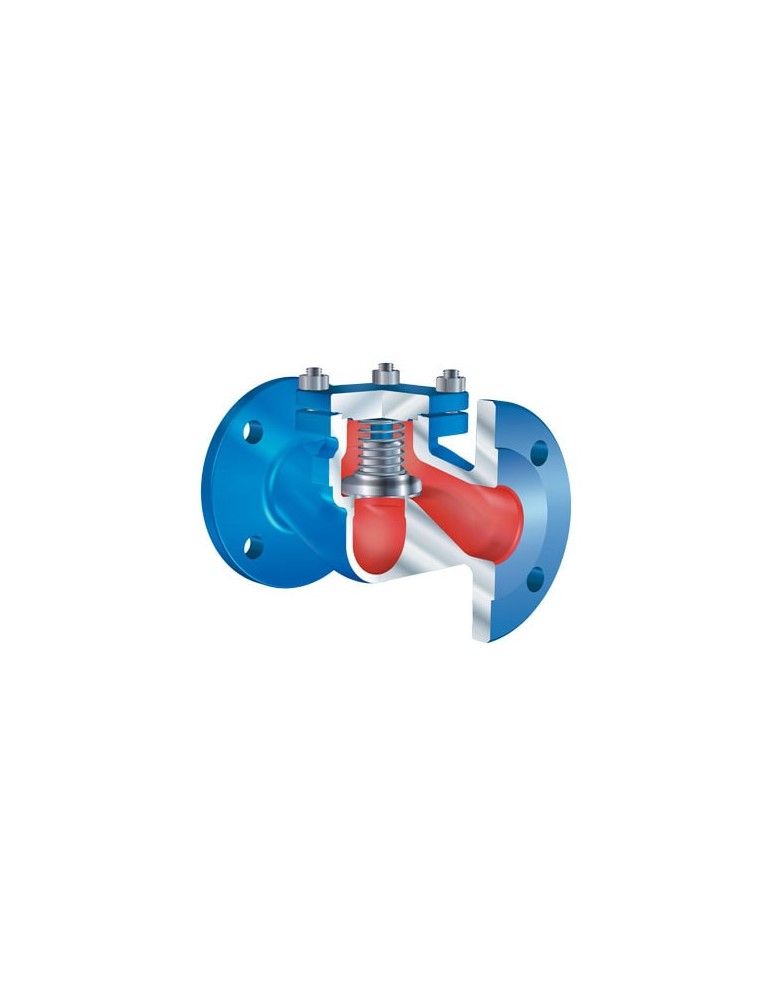
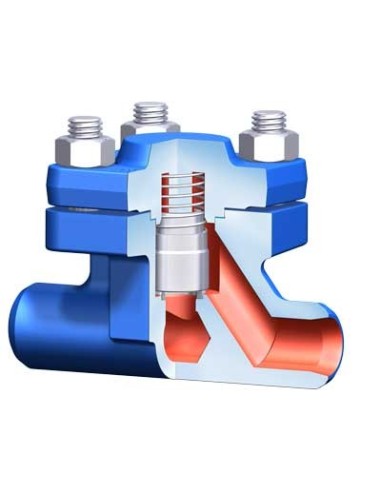
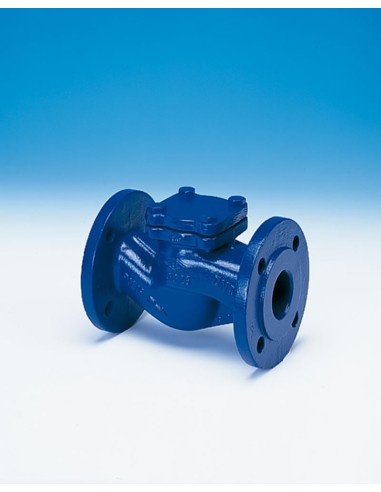
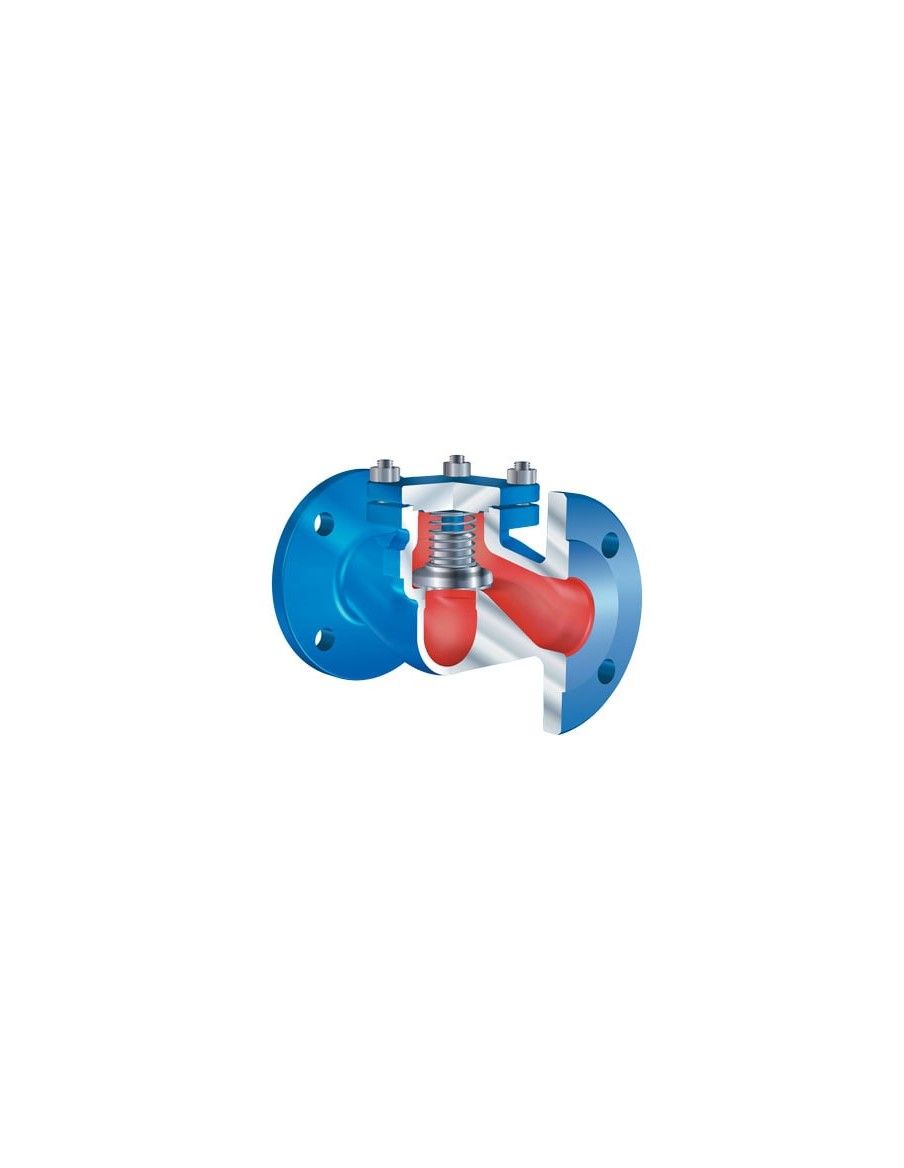
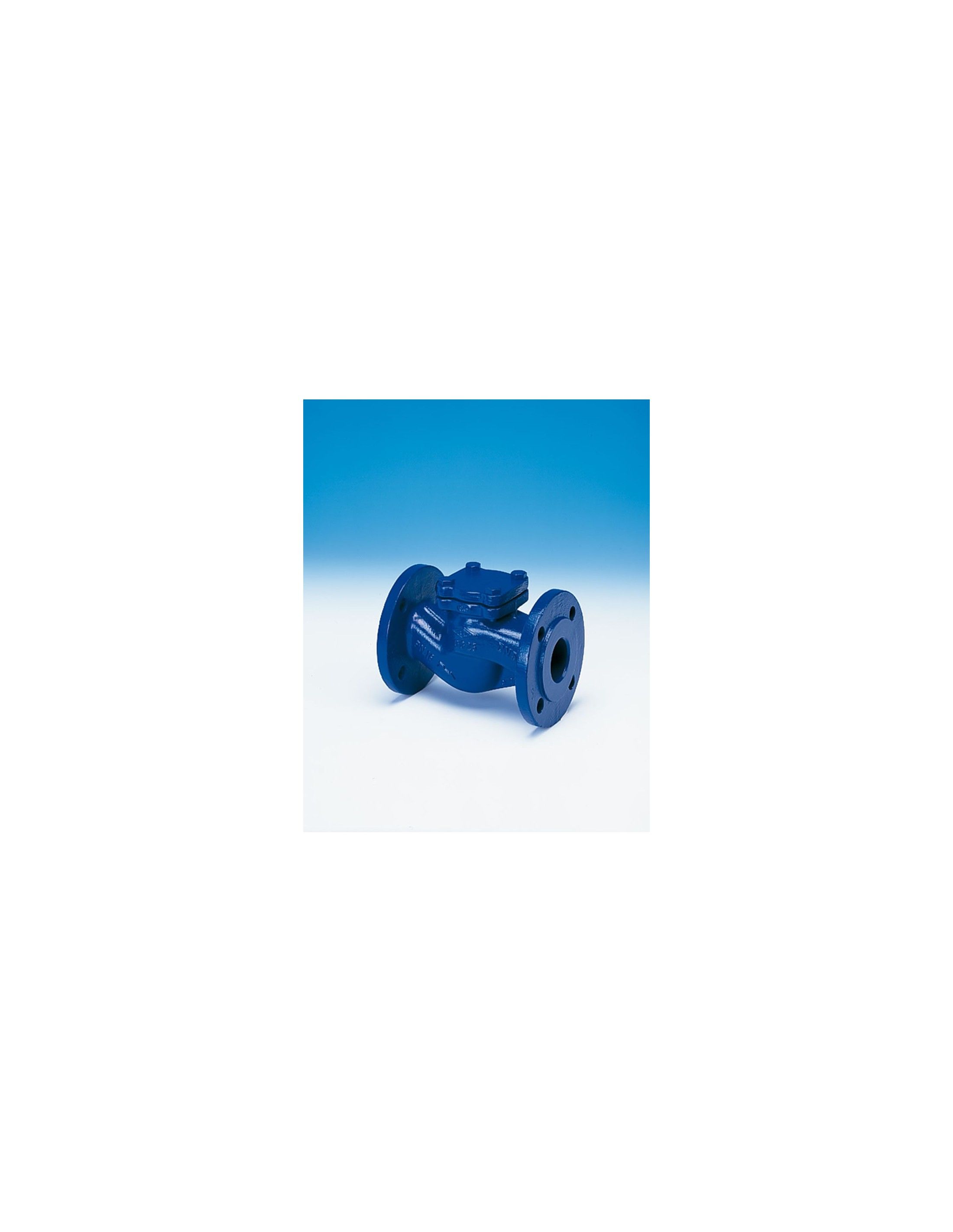
ARI-CHECKO®-V Piston Check Valve
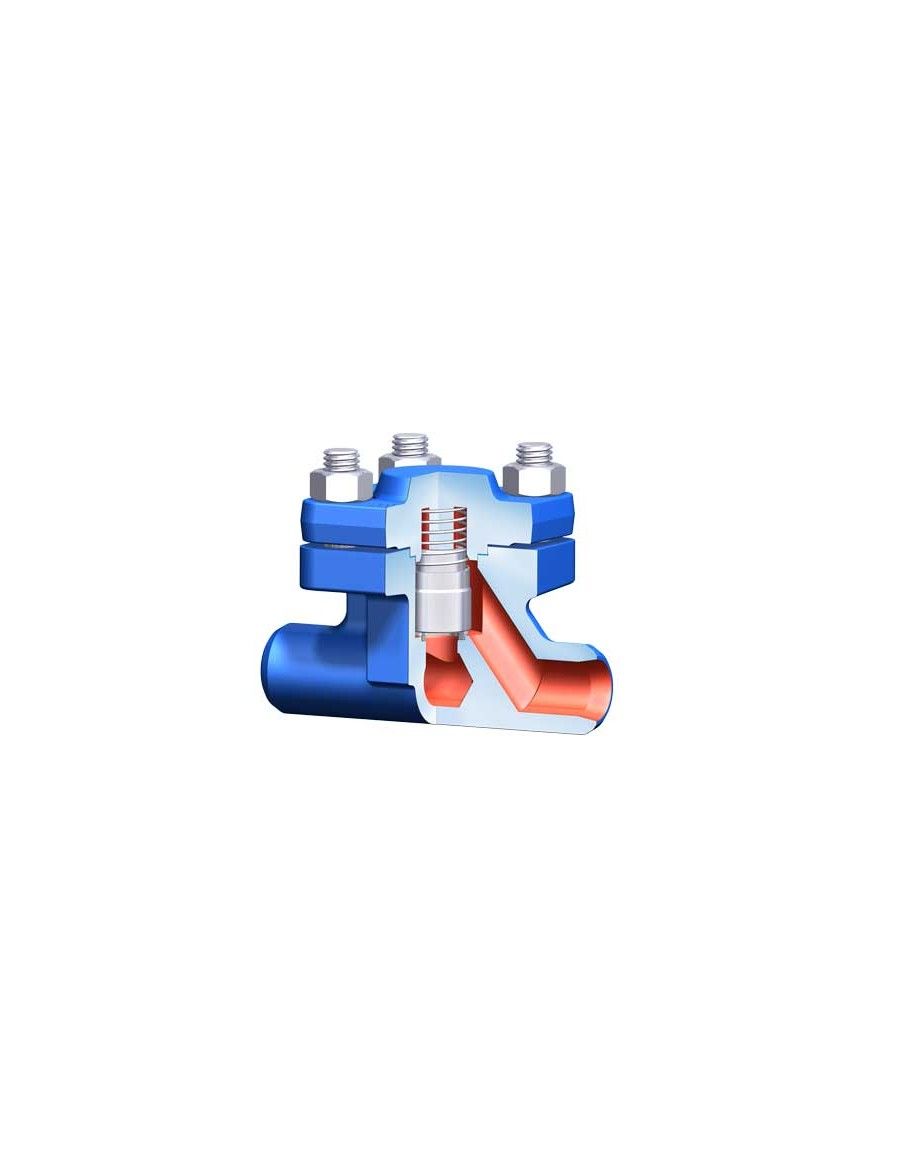
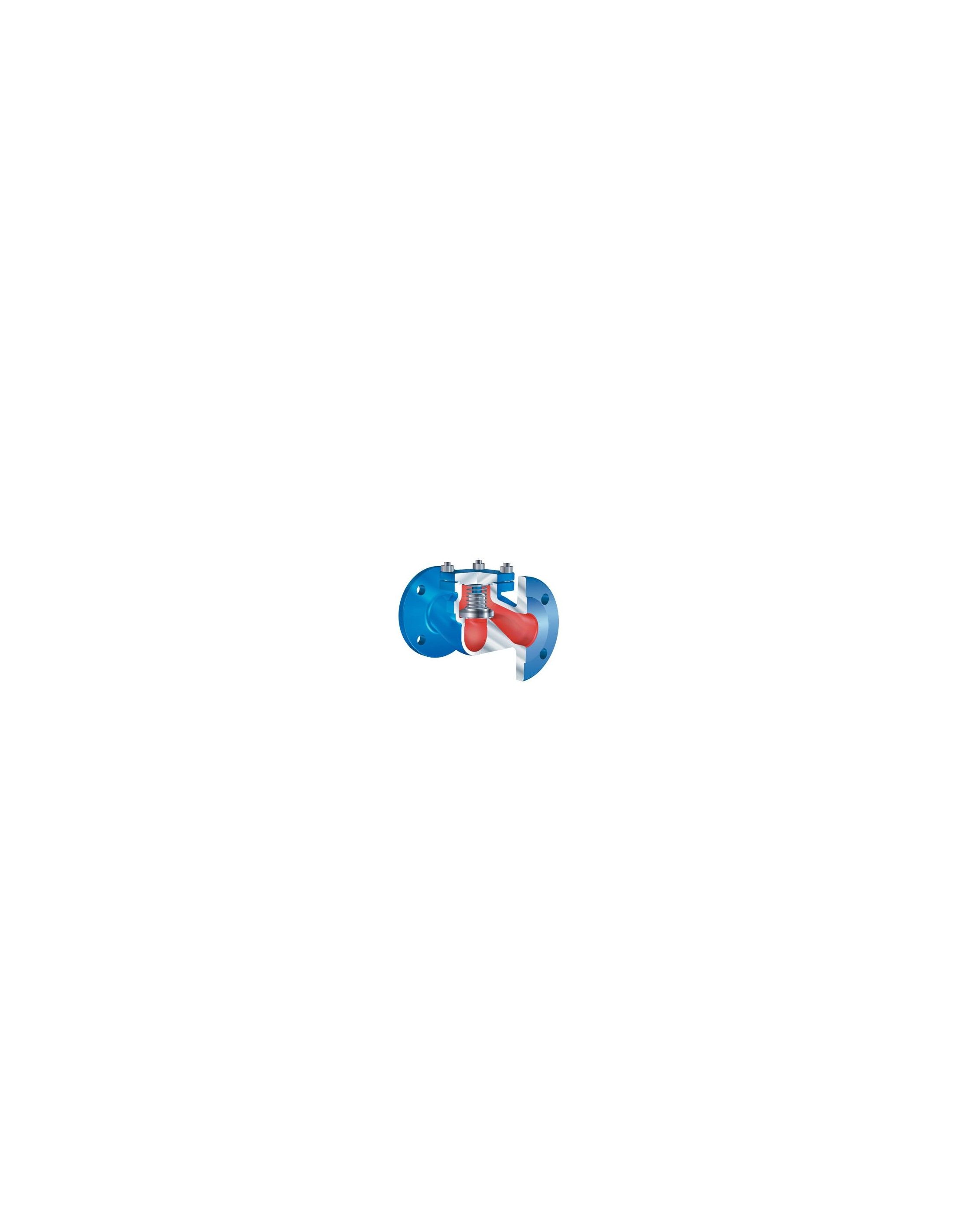
The ARI-CHECKO®-V is a piston-guided, spring-loaded check valve designed to prevent reverse flow in industrial piping systems. The process medium lifts the piston from below; when upstream pressure drops below the opening pressure, the valve closes mechanically. No actuator is required; operation is based on differential pressure and spring force.
Technical Specifications
- Available as straight-through, angle, and Y-pattern types.
- Connections: flanged or butt weld ends.
- Body materials: EN-JL1040, EN-JS1049, 1.0619+N, 1.0460, 1.4408.
- Pressure classes: PN6, PN16, PN25, PN40 depending on material and size.
- Sizes up to DN500 in selected variants.
- Opening pressure CHECKO®-V PN6–40: 0.1 bar.
Sealing and Leakage
Standard version uses metal-to-metal seat with leakage class C per DIN EN 12266-1. Optional PTFE soft seat available for applications requiring lower seat leakage (class A).
Applications
Suitable for steam, condensate, heating water, chilled water, thermal oils, and compatible industrial fluids, subject to material compatibility verification. Commonly installed downstream of pumps, in steam networks, pressure reducing stations, closed HVAC circuits, and compact industrial systems. For pulsating flows or severe turbulence, sizing review and piston damper option are recommended.
Selection and Installation
Valve sizing should be based on flow rate, not just pipe diameter, to avoid oversizing, which can cause chattering and wear. Minimum straight pipe: 2×DN upstream, 6×DN downstream. No actuator is fitted; operation is automatic via process conditions.
Standards / Certifications
Design in accordance with PED 2014/68/EU, EN 16767, EN ISO 15848-1 / TA-Luft. Face-to-face dimensions per DIN EN 558. Leakage testing per DIN EN 12266-1.
FAQ
When is a PTFE seat selected? For applications requiring lower seat leakage than metal-to-metal sealing.
What causes piston noise? Typically low flow, oversizing, or high turbulence near pumps, bends, or pressure reducers.
Datasheet and documents
Tests and Certification
Tap to zoom