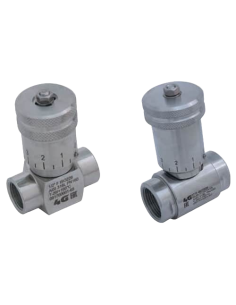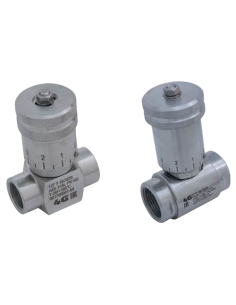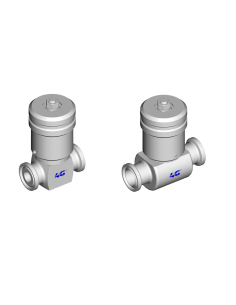

Pinch Valves
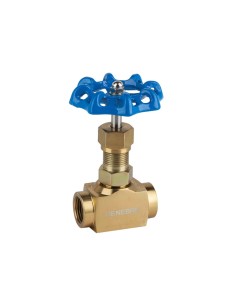
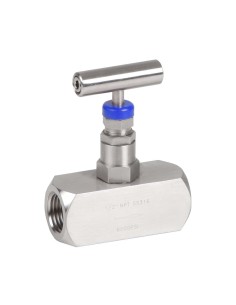
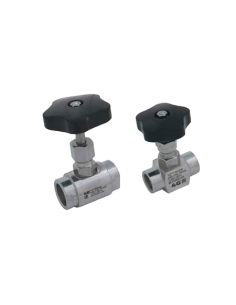
Needle valves are used for fine adjustment of low flow rates in liquid and gas lines, mainly in instrument circuits, sampling lines, bypasses, dosing systems, laboratory installations, and auxiliary process services. The tapered needle progressively changes the flow area, allowing more controlled throttling at low Kv values than a standard on/off valve. They are not intended for high-flow duty or isolation of main lines with large DN, since their internal geometry produces a relatively high pressure drop.
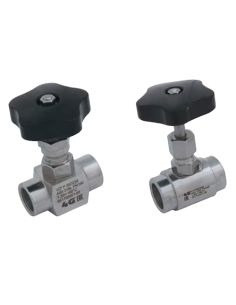
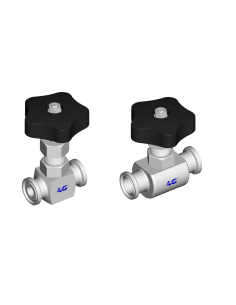
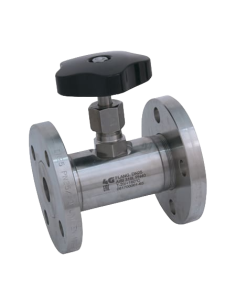
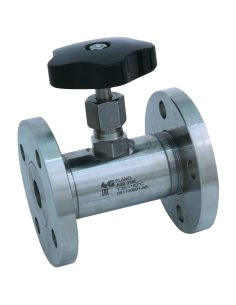
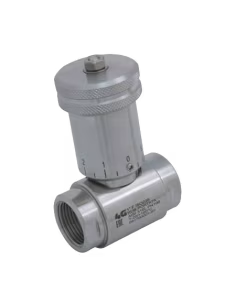
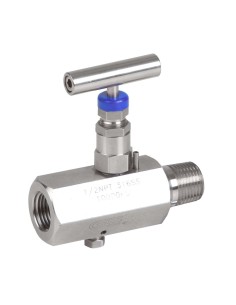
This category includes 4G Ghidini and Genebre needle valves manufactured to DIN-based dimensional practice, with ISO 228-1, BSP, NPT, clamp, flanged, and union-end connections. Available pressure ratings include PN 40, PN 100, PN 160, PN 206, and PN 413, depending on series, size, and body material. Construction materials include stainless steel 1.4404 / AISI 316L, ASTM A105, ASTM A182 F316, and ASTM A479 Type 316.
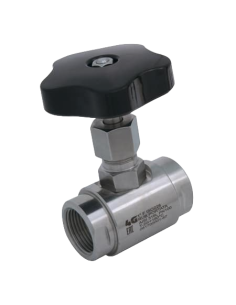
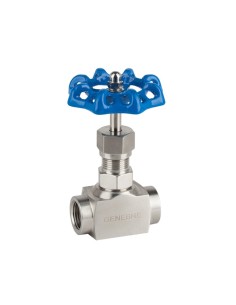
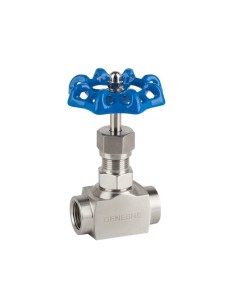
For the stainless steel 4G Ghidini versions, the stated configuration includes female ISO 228 threads, handwheel operation, sizes from 1/4” to 1 1/2”, and a temperature range from -20°C to +160°C. Antistatic execution for ATEX service or compliance with M.O.C.A. CE 1935/2004 may be available on request. For higher-pressure service, the Genebre 3000 lbs design uses an ASTM A105 body, ASTM A182 F316 heat-treated needle, PTFE packing, maximum working pressure up to 210 bar, and a temperature range from -20°C to +250°C.
Valve selection should verify operating pressure, temperature, process medium, allowable stem-packing leakage, and compatibility of PTFE or metallic wetted surfaces with the fluid. Required throttling precision should also be considered, particularly in low-flow regulation. In gas, chemical, or hot-fluid service, additional attention is required for stem sealing integrity, seat wear under throttling duty, and the mechanical strength of the end connection. Needle valves should also be assessed for maintainability, packing adjustment requirements, and acceptable leakage class for the intended service.