


SELF-REGULATING PARALLEL CABLE | AKO - AKO

SELF-REGULATING PARALLEL CABLE | AKO

Self-Regulating Heating Cables AKO for Pipelines and Tanks

AKO self-regulating heating cables are specified for frost protection and temperature maintenance up to 65 °C on pipelines, tanks, and refrigeration systems. Output power is locally modulated according to cable temperature via a carbon-loaded polymer heating matrix. As temperature decreases, electrical resistance drops and power output increases; conversely, higher temperatures reduce output. This enables energy-efficient operation and mitigates overheating risks.

Construction and Operating Limits

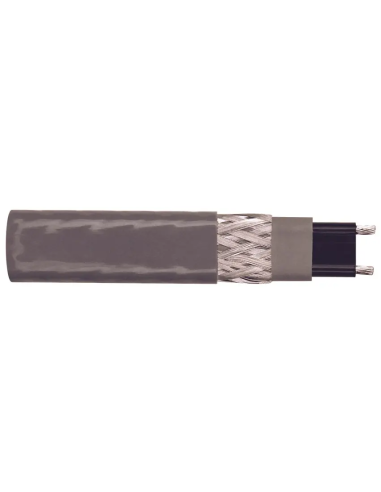
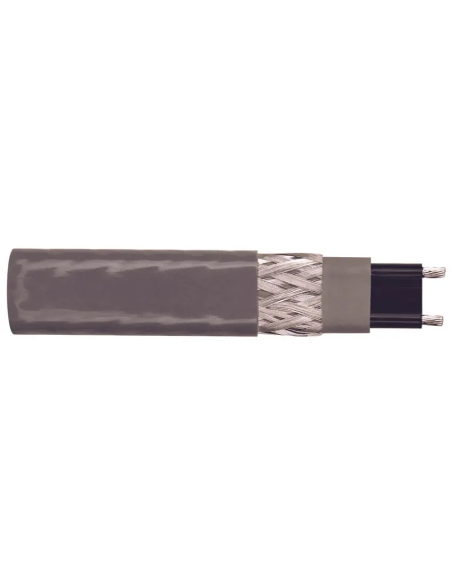
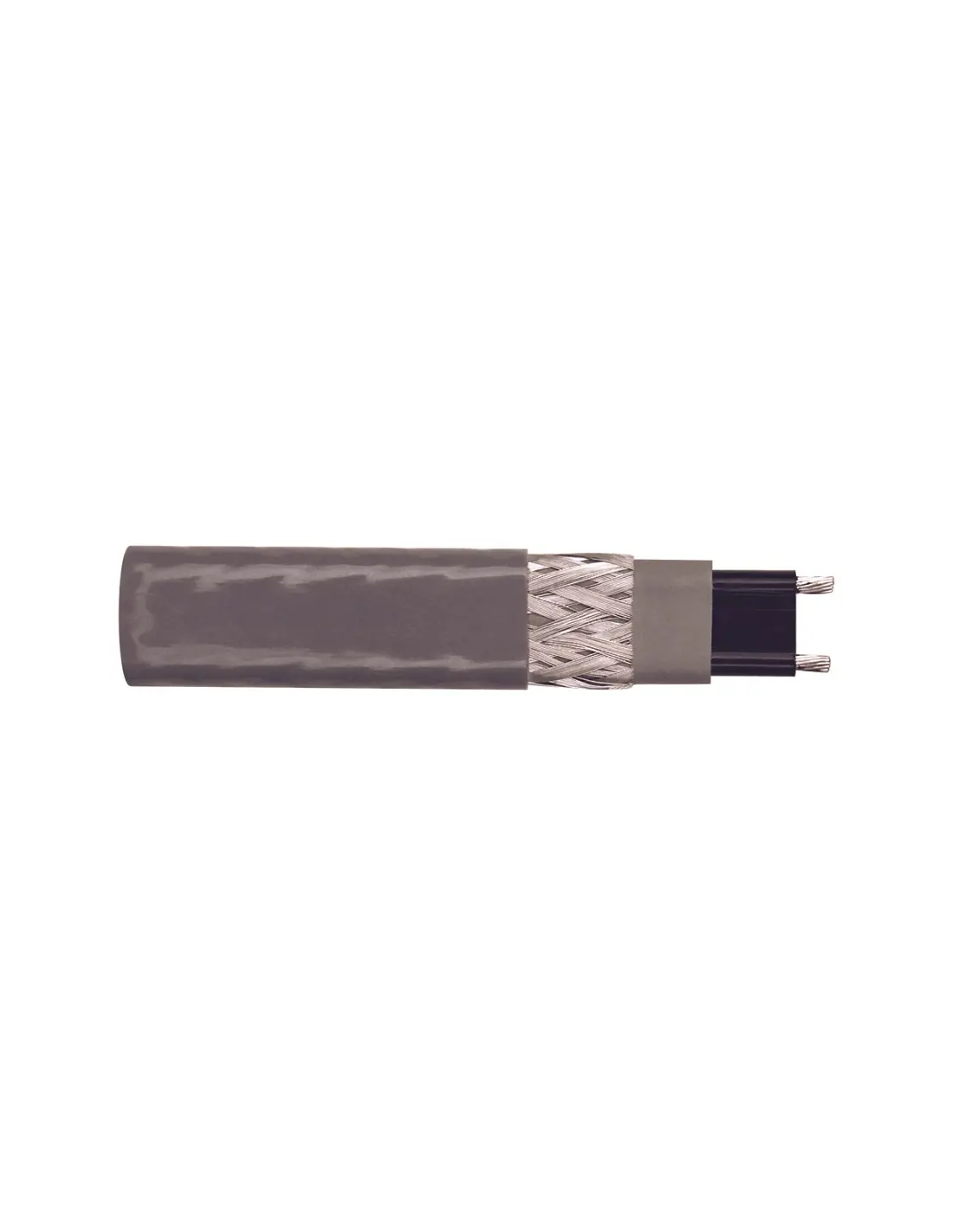
  • Outer jacket: Polyolefin
  • Protective braid: Tinned copper wire mesh
  • Power conductors: Tinned copper, 1 mm²
  • Rated voltage: 230 V (acceptable range 208–254 V AC)
  • Max operating temperature (energized): 65 °C
  • Max exposure temperature (de-energized): 85 °C for up to 1,000 h
  • Min installation temperature: –55 °C
  • Min start-up temperature: –30 °C
  • Min bending radius: 25 mm

Available Variants

Standard outputs: 15, 25, and 30 W/m at 10 °C and 230 V. At 40 °C pipe temperature, output decreases to approximately 9, 14, and 17 W/m, respectively. This is critical for heat loss calculations on insulated metallic piping.

Applications and Limitations

Compatible with carbon steel, stainless steel, plastic pipes, and painted metal surfaces. Classified for ordinary locations in dry or damp, non-corrosive environments. Not rated for ATEX/IECEx hazardous zones. Media compatibility is determined by polyolefin jacket resistance.

Connection and Sealing

Cables are cut to length on site; all terminations and splices must use AKO-12292 or AKO-5239 kits. Maximum circuit length depends on cable type, start-up temperature, and C-curve circuit breaker rating.

FAQ

Is an actuator required?
No. These are not flow control elements; electrical switching is managed via panel or thermostat circuit.

Can these be used for process temperature maintenance?
Yes, within the specified temperature and chemical compatibility limits of the polyolefin jacket.

What is checked during maintenance?
Jacket integrity, end sealing, braid continuity, circuit insulation, and correct electrical protection.

Datasheet and documents

Description

Exposure temperature up to 65 ºC with polyolefin insulation. Heating cables that are commonly used in construction to prevent frost in pipes or in refrigeration to avoid ice. They can be cut to length.

TECHNICAL SPECIFICATIONS

  • Minimum radius of curvature of 25 mm at -30 ºC.
  • Maximum working temperature (connected) 65 ºC.
  • Maximum exposure temperature (disconnected) 65 ºC.
  • Maximum exposure temperature (intermittent, max 1,000 h) 85 ºC.
  • Applications: Industry and refrigeration

REFERENCES

Description Model
Heating cable 15 W/m at 10 °C, 230 V (9 W/m at 40 °C) AKO-71214T
Heating cable 25 W/m at 10 °C, 230 V (14 W/m at 40 °C) AKO-1221
Heating cable 30 W/m at 10 °C, 230 V (17 W/m at 40 °C) AKO-71218T