
Heating Cables
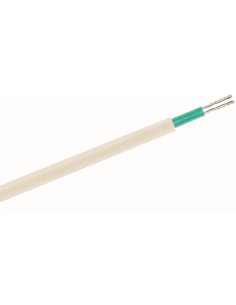
Heating cables are used for freeze protection, temperature maintenance, and controlled heating of piping, condensate drains, refrigeration systems, cold-room door frames, surfaces exposed to condensation, and industrial networks where a temperature drop affects system operation. The category includes AKO series-resistance heating cables, self-regulating parallel cables, and constant-wattage parallel cables.
Selection is based on required heat output in W/m, supply voltage, heated circuit length, pipe or surface heat loss, insulation thickness, minimum ambient temperature, maximum exposure temperature, minimum bending radius, required mechanical protection, and whether field cutting is permitted. Self-regulating cables adjust local power output as installation temperature changes and can be cut to length within manufacturer limits. Constant-wattage cables provide fixed linear output and require correct length calculation, thermostat control, and overtemperature protection.
Available versions include 230 V cables with nominal outputs of 10, 20, 30, 40, 50, or 65 W/m depending on construction, as well as series cables rated at 50 W/m with predefined heated lengths. Insulation systems include PVC, polyolefin, or silicone, with maximum exposure temperatures of 65 °C, 70 °C, or 180 °C depending on cable design. Selected versions incorporate metallic braid for grounding continuity and additional mechanical protection.
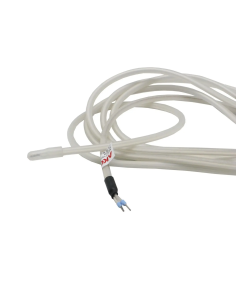
During installation, the circuit should be checked for electrical protection, earth leakage protection, thermostat or sensor control, conductor continuity, thermal contact with the pipe wall, avoidance of cable overlap in non-self-regulating types, and compatibility with insulation materials and the operating environment.