



Globe Valves - Globe Bolted Bonnet | Fluitek | Philippopoulos s.a.

Globe Valves - Globe Bolted Bonnet | Fluitek

Globe Valve with Bolted Bonnet Fluitek

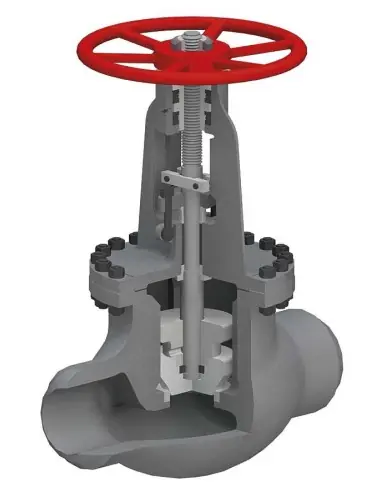
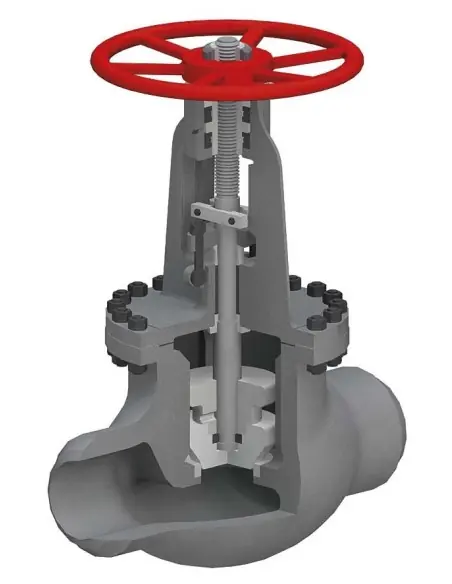
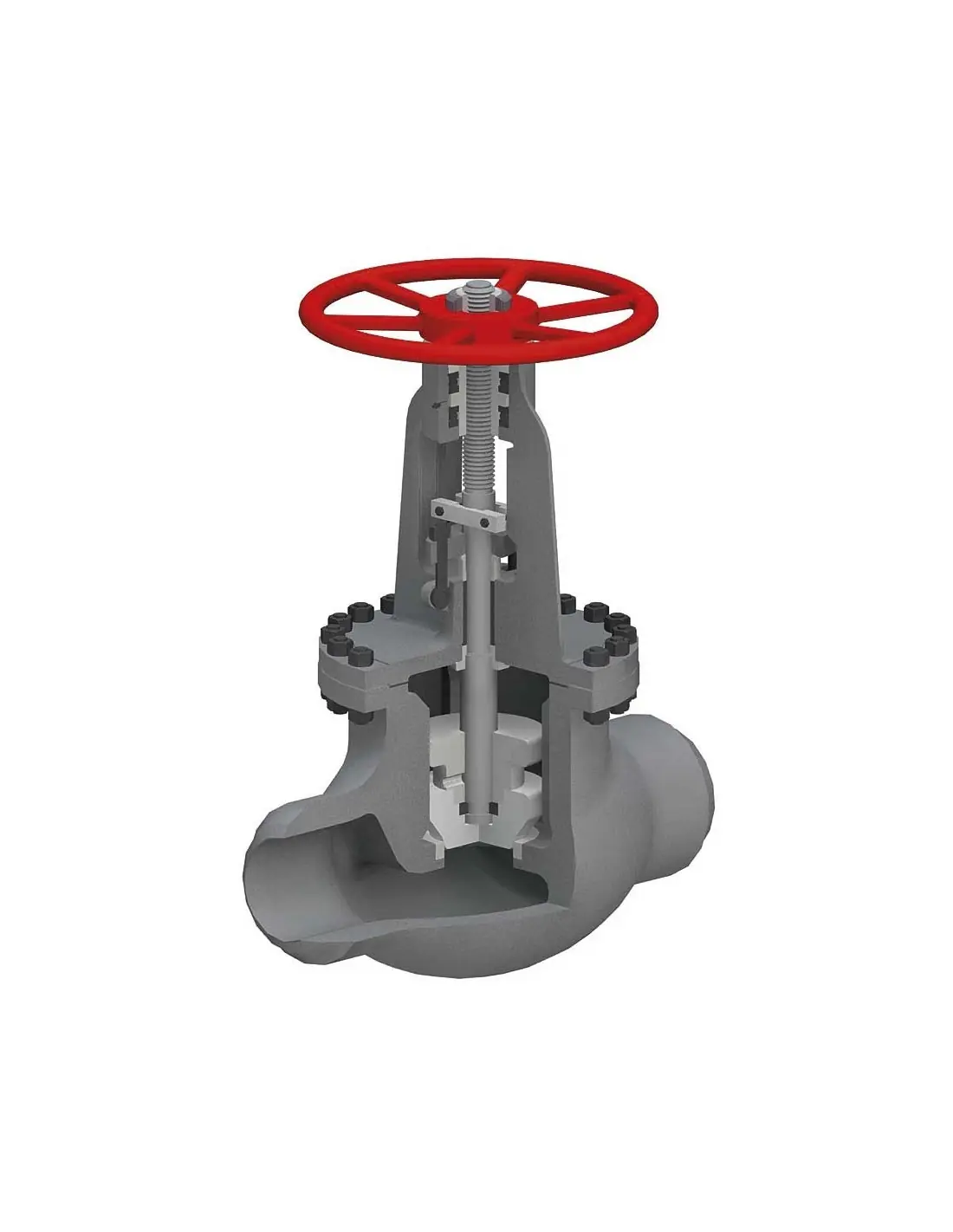
Globe valve with bolted bonnet, designed for isolation or controlled throttling in industrial steam, water, condensate, thermal circuits, and process fluids. The disc moves vertically to the seat, ensuring direct closing force application on the seat-disc sealing line.

Technical Specifications

  • Construction: cast body, bolted bonnet
  • Connections: flanged or butt weld
  • Pressure Classes ANSI: 150#, 300#, 600#
  • Materials: carbon steel, low alloy steel, austenitic stainless steel, nickel alloys
  • Material Standards: ASTM/ASME or EN
  • Disc Configuration: plug, needle, or parabolic

Operational Use

Primarily used for on/off isolation. For throttling applications, a parabolic disc is preferred for predictable shaft travel to flow relationship. The disc features a swivel capability for improved seat contact and reduced seat leakage.

Indicative Sizes Class 600#

Technical documentation provides ANSI 600# examples from 2" to 14", with face-to-face dimensions of 292–889 mm and weights of 34–1402 kg. Sizes above 14" are application-specific.

Valve Selection

Selection is based on:

  • Nominal pressure and design temperature
  • Body material compatibility with the medium
  • Isolation or throttling requirement
  • End type: flanged or BW
  • Available space for handwheel and packing maintenance
  • Permissible seat leakage and cycle frequency

Certifications

Available certifications/compliances include ISO 9001:2015, PED 2014/68/EU, ATEX 2014/34/EU, IEC 61508 SIL, API 6A / ISO 10423, API 6D, and API 6DSS.

FAQ

Is it suitable for flow regulation?

Yes, under conditions. Throttling requires appropriate disc selection, typically parabolic, and control of Δp, velocity, and potential seat erosion.

When is butt weld connection preferred?

In higher pressure or temperature lines where permanent connection and reduced potential flange leakage are desired.

Standard (Options)
  • ANSI
Connection (Options)
  • Flanged
  • Butt Weld
Material (Options)
  • Austenitic Stainless Steel
  • Low Alloy Steel
  • Nickel Alloys
Pressure Rating (Options)
  • 150 lbs
  • 300 lbs
  • 600 lbs

Datasheet and documents

Description

FLUITEK ORSENIGO VALVES has a very extended experience in globe valves manufacturing. In this kind of valve, the disc is moving in a perpendicular direction away from the seats. This implies the disc-to-seat ring contact to be at right angle, which permits the force of closing to tightly seat the disc, reducing the seat leakages. Normally, the globe valves are arranged so that the disc closes against the direction of fluid flow.

The stem and the disc are not strictly fixed together, but the disc can swivel in order to guarantee the complete contact between the disc and seats surfaces. The disc can be plug type, needle type or parabolic type. FLUITEK ORSENIGO VALVES globe valves are on/off valves, but sometimes they are utilized in throttling service. In this case the parabolic disc shape is preferable, since the ratio between the stem position and the fluid flow is constant.

Cast body construction is normally used. Ends configuration is either with flanged ends or with butt weld ends. Materials range from carbon steel to low alloy steel, to austenitic stainless steel, to nickel alloys. Materials are either to ASTM/ASME standards or to EN standards, either harmonized or calculated to design conditions. Pressure classes (per ANSI standard) are normally ranging from 150# to 300# to 600#. Size range depends on pressure class requirements, FLUITEK ORSENIGO VALVES having no limits in relation to market requirements.

Certifications