
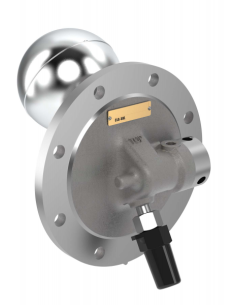
Float Control
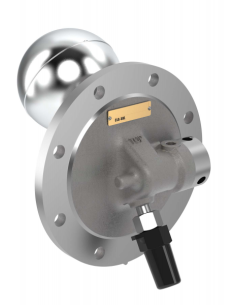
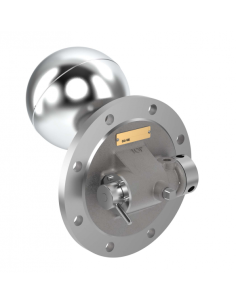
Marine float switches are used for mechanical level supervision and for initiating drain or flow shutoff functions in fuel-water filter separators. The application concerns AV-Gas, JP-5, diesel fuel, and aircraft fueling systems, where the level of the separated phase inside the vessel must be controlled without continuous electronic measurement at the wetted point.
This category includes Cla-Val CFF18M-H2, CFF18MT-H2, and CFF21M-H2. The CFF series is designated as a flanged float control for filter separators, with tester-equipped versions such as CFF18MT-H2. It is applied in fuel-water filter/separator service for AV-Gas, JP-5, and diesel fuel. Available technical references associate this series with MIL-F-15618 for aviation and diesel fuel filter separators, with flanged or union-end configurations depending on model designation and installation requirement.
Functional assessment should consider the specific gravity of each phase, the fuel-to-water density differential, separator nozzle location, float response delay, sediment accumulation, and material compatibility with fuel media and marine atmospheric exposure. For the CFF18M-H2, construction is reported with sil-brazed nickel-copper piping, which is relevant where corrosion resistance and internal cleanliness affect level control operation. Selection should also consider vessel pressure rating, operating temperature range, allowable differential pressure, and switch actuation point relative to the separator internals and shutdown logic.
During maintenance, inspection should confirm free float movement, linkage condition, test ports where fitted, flange gasket integrity, seal condition, and chamber cleanliness. Water carryover, particulates, microbial contamination in fuel, or corrosion products can shift the actuation point and result in false draining or delayed flow shutoff. Leakage at flanged joints, tester connections, or cover seals should be checked after service intervention and after return to operating pressure.