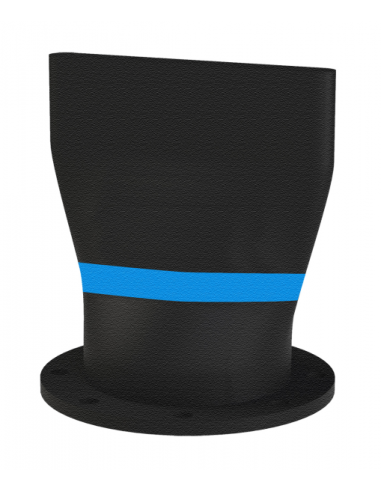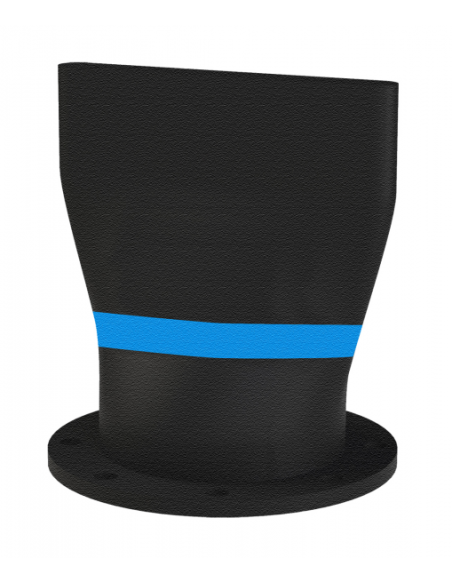

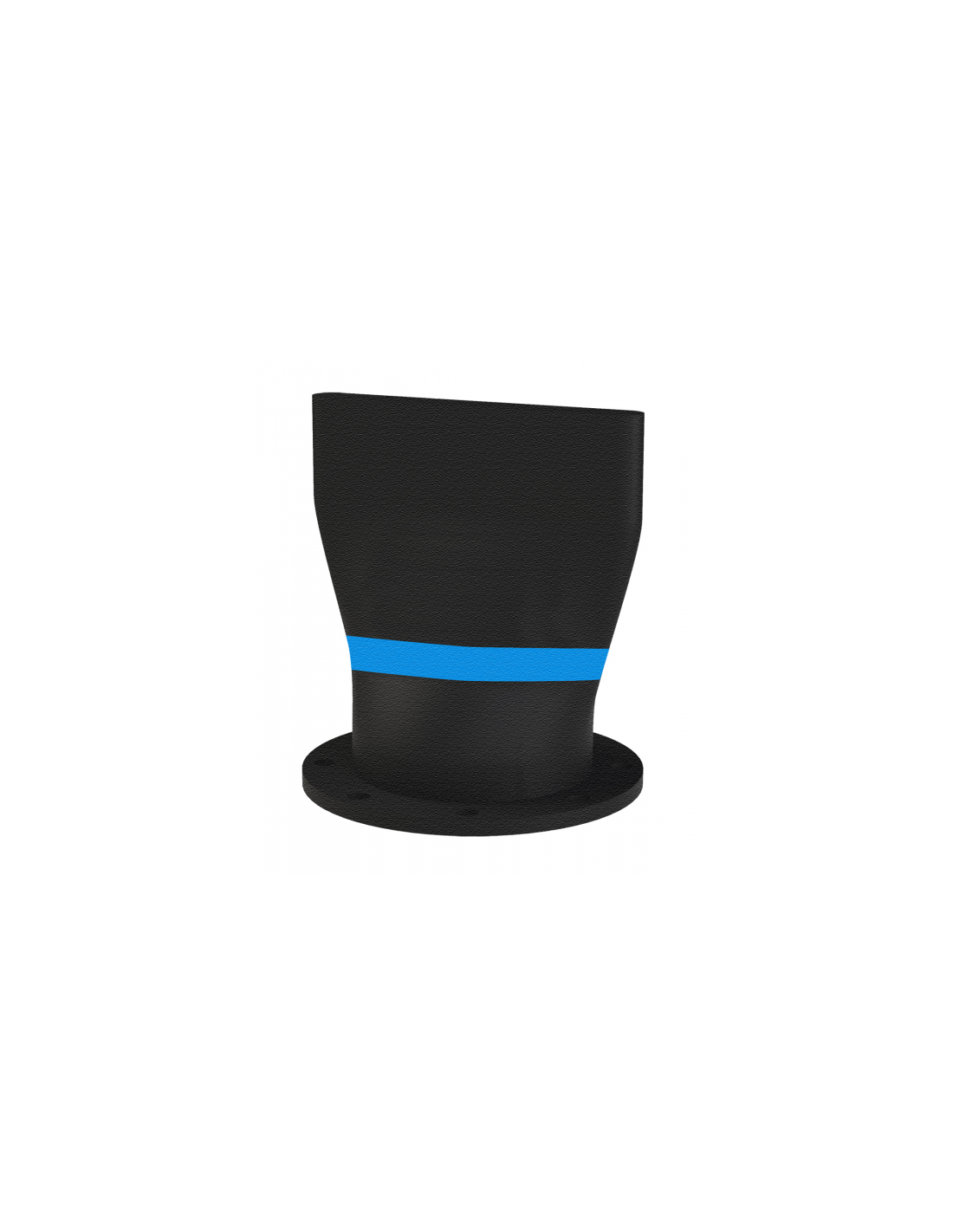
Cla-Val Series RF-DBF Rubber-Flex™ Duckbill Flanged Style Check Valves feature an integral, metal-backed, rubber flange for attaching directly to flanged-end connections from tank or head wall. A variety of elastomers allow RF-DBF valves to be used with many different fluids.


Rubber-Flex Duckbill Check Valves - RF-DBF Flanged | Cla-Val
Rubber-Flex Duckbill Check Valve Cla-Val RF-DBF
The RF-DBF is an elastomeric duckbill-type check valve with flanged connection, designed for backflow prevention in applications where metallic moving parts, shafts, or seats are undesirable. The flange is integrated into the valve body and reinforced with a metal backing ring for direct installation onto pipe flanges, tanks, or outfall walls.
Typical Applications
- stormwater outfalls, sewage and pump stations
- wastewater treatment plants and sludge lines
- protection against tidal or river backflow
- tanks, headwalls, and marine discharges
- systems with solids, sludge, or suspended matter
Operation is based on differential pressure. Forward pressure opens the valve lips, while backpressure compresses them to restrict reverse flow. No electrical, pneumatic, or hydraulic actuator is required.
Connection, Dimensions, Standards
RF-DBF is available in sizes 1"–72". Standard flange drilling is ANSI 125/150#, with options for ANSI 250/300, DIN, JIS, BS, or AS patterns. 316SS retaining rings are standard for the flanged version.
Elastomer Selection
Material selection is based on media, temperature, and chemical compatibility:
- EPDM: sewage, dilute acids
- Buna-N / Nitrile: oils, greases, hydrocarbons
- Neoprene: general use, ozone, greases, moderate chemicals
- Natural Rubber: abrasion, elasticity, organic acids
- Viton / CSM / Butyl: special chemical or thermal requirements
Elastomer combinations cover temperatures up to 82–121 °C, depending on material. NSF/ANSI 61 certification is available on request for suitable configurations.
Installation and Maintenance
For horizontal installations, the duckbill should be oriented vertically unless space constraints apply. Flange bolts must be tightened in a cross pattern with torque appropriate to size, typically 20–800 ft·lbs. Periodic inspection should focus on cuts, wear, and debris trapped at the lips.
FAQ
When is RF-DBF selected over a flap check valve?
Used where passive backflow prevention is required in contaminated water or sludge, without hinges, seats, or mechanical parts prone to blockage.
Is there a low headloss version?
Yes, the RF-DBI-LH series is available for in-line applications with reduced headloss.
Datasheet and documents
Description
Tap to zoom