
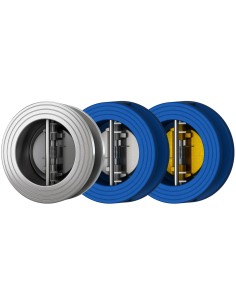
Dual Plate
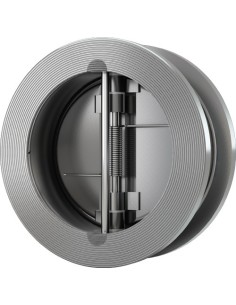
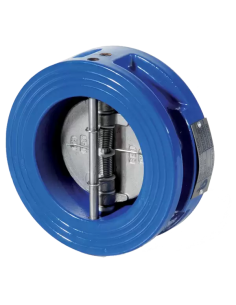
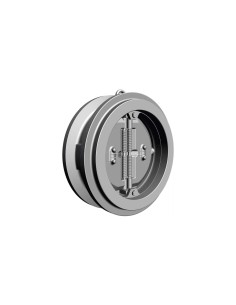
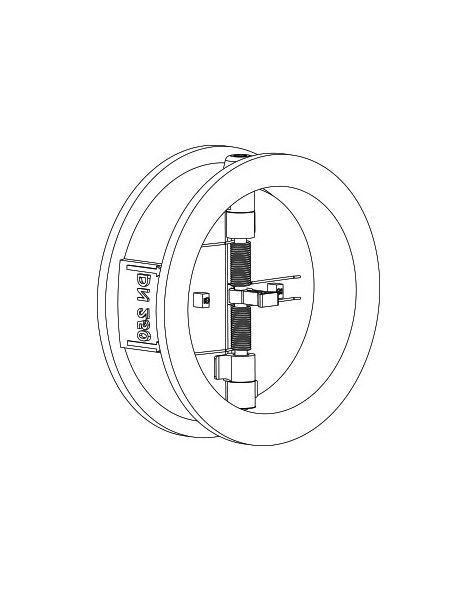
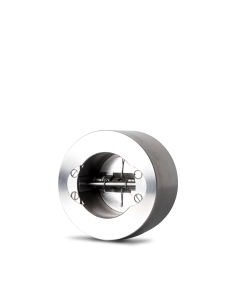
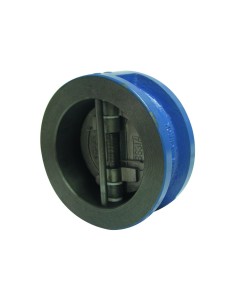
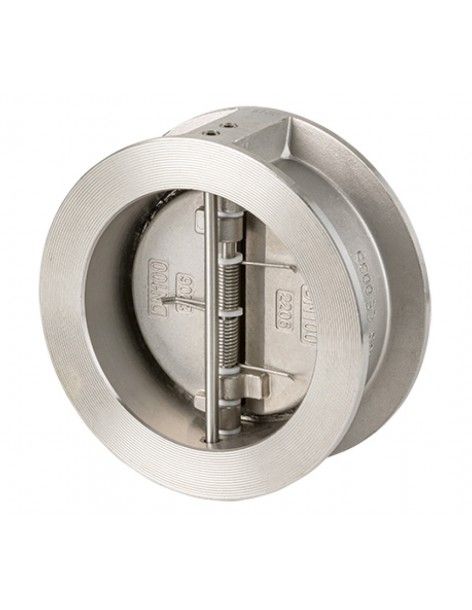
Dual-plate check valves are used to prevent reverse flow in water, steam, condensate, gas, compressed air, fire protection, pump station, HVAC, industrial piping, and water treatment or distribution systems. Operation is based on two spring-loaded half-discs that open under forward differential pressure and close when flow decreases or reverses. The spring-assisted design provides a shorter closing time than conventional swing check valves and helps limit water hammer.
Valve selection should be based on service media, flow rate, fluid velocity, cracking pressure, allowable pressure drop, backpressure, operating temperature, installation orientation, leakage requirement, and seat material. Wafer and lug configurations are used where short face-to-face dimensions and reduced line weight are required, while double-flanged designs are typically selected for larger sizes or where an independent flanged connection is needed. In steam and condensate service, the installation point should be checked for drainage, thermal expansion effects, and elastomer seat compatibility with condensate temperature and chemistry.
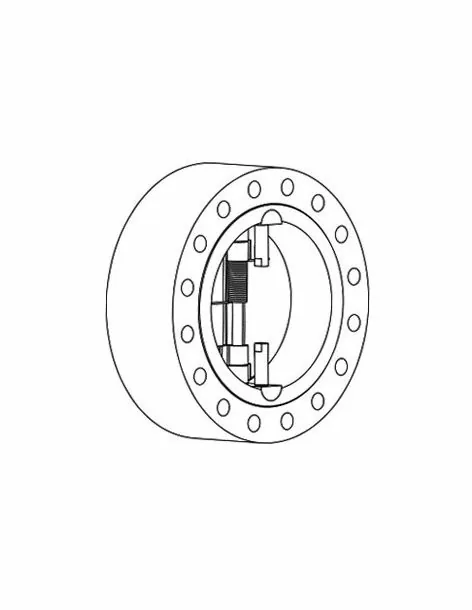
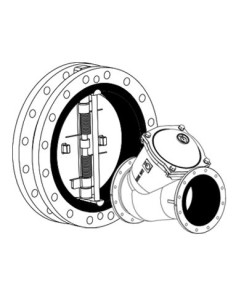
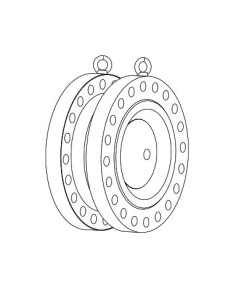
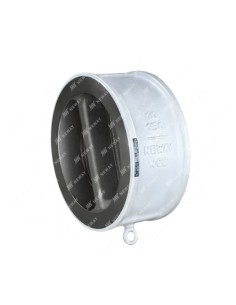
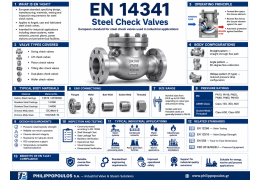
Available versions include DIN and ANSI designs, with pressure ratings PN10, PN16, PN25, PN40, PN100, and ANSI Class 150 to 600. End connections include flanged, wafer, lug, and double-flanged types. Body materials include EN-GJL-250, EN-GJS-400-15, 1.0619, 1.4408, 1.4469 super duplex, ASTM A216 WCB, ASTM A351 CF8M, cast steel, stainless steel, duplex/super duplex, and C954 aluminium bronze. Seat materials include EPDM, NBR, and FKM/Viton, selected according to temperature range, shut-off requirement, and chemical compatibility.
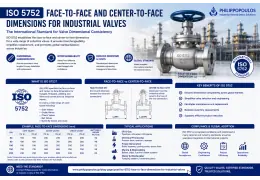
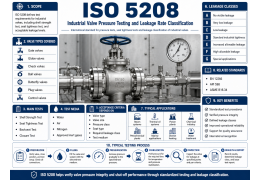
For Cast Flow series, stated sizes are DN40 to DN1400, with design references EN 16767 / EN 12516-1 and API 594 / ASME B16.34. Testing is specified to EN 12266 / ISO 5208 or API 598. Typical service temperature range is -20 to +120 °C, with minimum backpressure for tight shut-off in the range of 0.3 to 0.5 bar.