
Size:2"~24"(DN50~DN600)
Pressure Rating: ASME CLASS 150~2500(PN16~PN420)
Body material:Carbon steel, Stainless steel, Alloy steel, Duplex stainless steel,ect.
End connection: FLAN(RF,RTJ) ect.
Operation:Manual, Pneumatic, Electric, Hydraulic,ect.



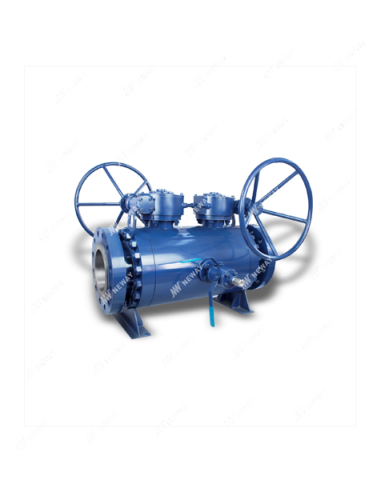
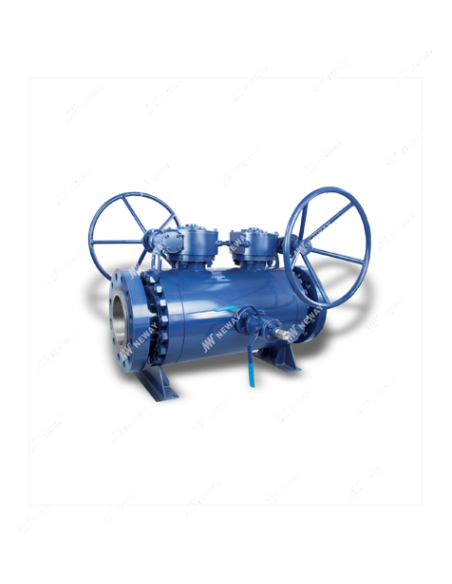
The Neway Double Ball Trunnion Mounted DBB is a compact manifold ball valve arrangement for double block and bleed isolation on high-pressure or large-bore lines. The range covers DN50–DN600 / 2"–24" and ASME Class 150–2500 / PN16–PN420.
The trunnion-mounted design mechanically supports both balls and reduces operating torque under high differential pressure. Body materials include carbon steel, stainless steel, alloy steel and duplex stainless steel. End connections are flanged RF or RTJ.
The compact DBB body replaces two separate isolation valves and an intermediate spool, reducing face-to-face length, flange joints and potential external leak paths.
Two independent ball closures isolate upstream and downstream pressure. The cavity between the two balls is fitted with a bleed connection for pressure verification, venting, draining or safe depressurisation before maintenance work.
Available with manual gear operator, pneumatic actuator, electric actuator or hydraulic actuator. Actuator sizing should consider line pressure, maximum differential pressure, seat material, operating frequency and required fail position.
Why use a double ball DBB valve?
It provides two independent isolation barriers with an intermediate bleed point in one compact assembly.
Can the bleed port confirm isolation?
Yes. With both balls closed, the cavity can be vented and monitored to confirm pressure decay before maintenance.
What should be checked before selection?
Line size, pressure class, medium, temperature, corrosion allowance, seat leakage requirement, actuation method and applicable plant standards.
Size:2"~24"(DN50~DN600)
Pressure Rating: ASME CLASS 150~2500(PN16~PN420)
Body material:Carbon steel, Stainless steel, Alloy steel, Duplex stainless steel,ect.
End connection: FLAN(RF,RTJ) ect.
Operation:Manual, Pneumatic, Electric, Hydraulic,ect.