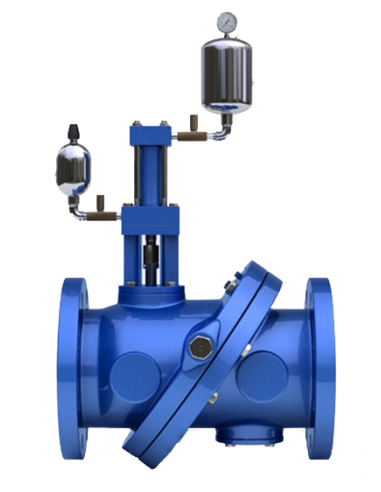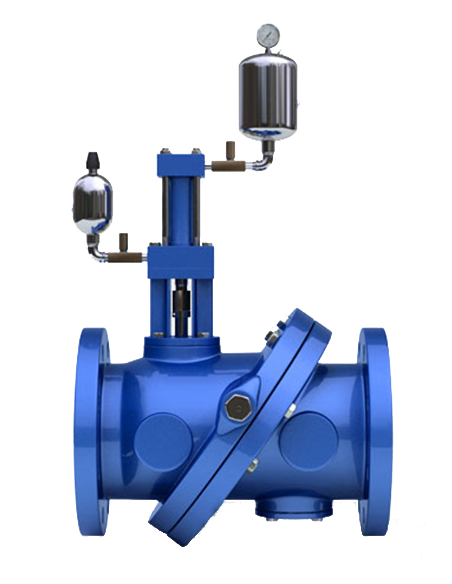

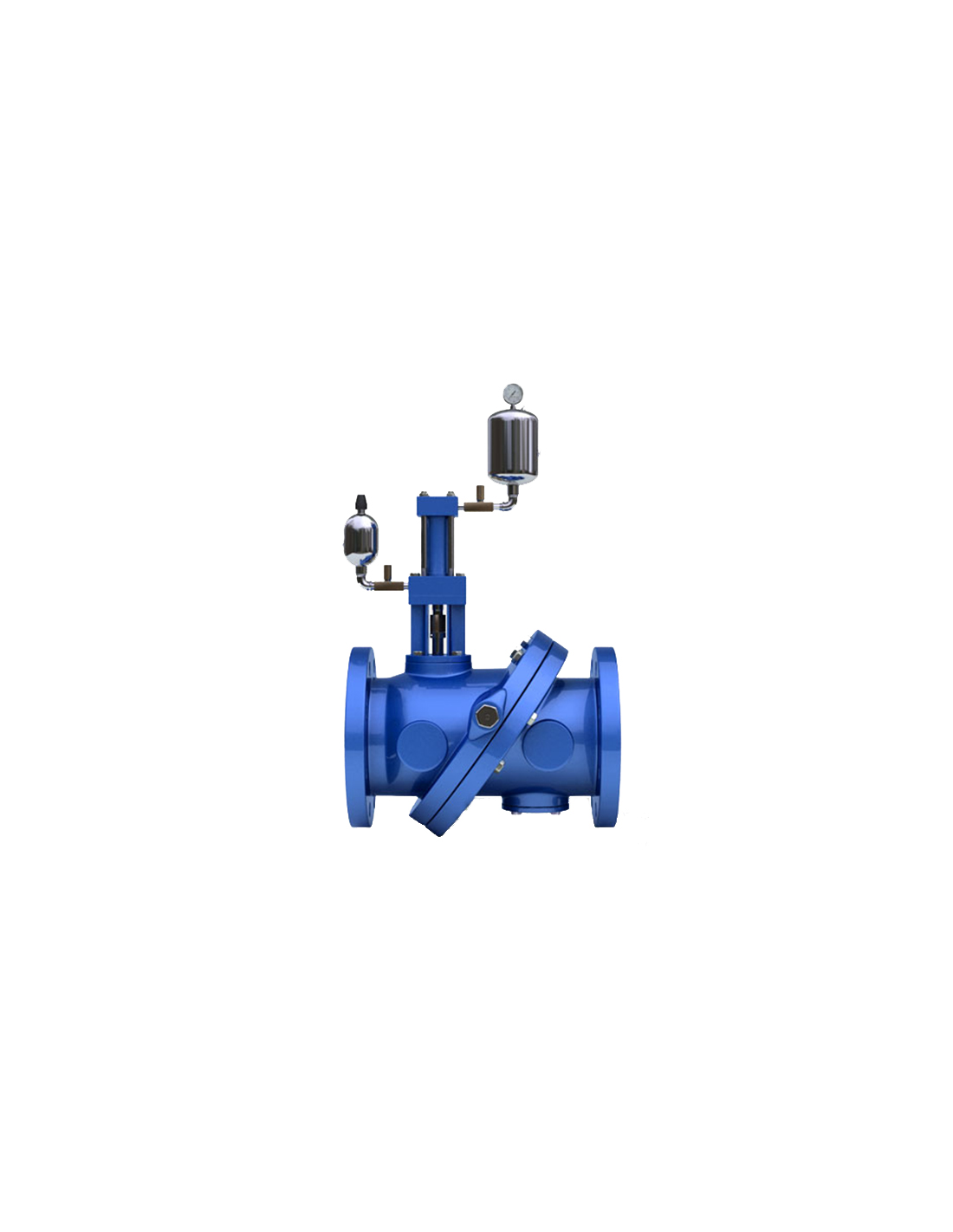
The Cla-Val 586 Series Pivoting Disc Check Valve provides superior flow characteristics with lower head loss than any other comparable hinged disc check valve. The two-piece body design allows for a 40% expanded cross-sectional flow area, compensating for the disc mass. The valve is available with top-mounted or bottom-mounted closing control features to meet a variety of applications.

Pivoting Disc Check Valve - 586 | Cla-Val
Cla-Val 586 Pivoting Disc Check Valve
The Cla-Val Series 586 is a flanged, pivoting disc check valve designed for pump discharge lines where reverse flow and disc closure dynamics influence system hydraulics. Available with ANSI flanges in pressure classes 125, 150, 250, and 300 lbs.
Construction
- Two-piece body: ductile iron ASTM A536 65-45-12
- Seat and disc rings: bronze ASTM B16 C36000
- Pivot pins: stainless steel ASTM A582 T303
- Disc: bronze alloy C90700 for 3"–10", ductile iron for 12"–14"
- Seat sealing: metal-to-metal
- Internal/external coating: two-part epoxy, FDA-approved for potable water contact
Operation
The disc rotates off the seat under normal flow and returns when upstream flow ceases. Body geometry increases flow area at the seat zone, reducing head loss compared to conventional hinged disc check valves.
Closure Control Variants
586CB – Bottom Mounted Buffer
Free opening, with controlled final closure over the last ~10% of stroke. Used where rapid flow reversal and risk of slam or hydraulic shock are present.
586CT – Top Mounted Oil Dashpot
Hydraulic oil mechanism provides controlled opening and closing. Selected for applications requiring slower flow initiation and field-adjustable closure timing.
Typical Applications
- Vertical turbine pump discharge
- Booster pump stations in high-rise buildings
- House pump systems
- Discharge lines requiring water hammer mitigation
Installation and Maintenance
Install horizontally or vertically with upward flow, aligning the body arrow with flow direction. Prior to commissioning, piping must be cleaned of debris and flange alignment checked, as pipe stresses can cause seat leakage.
Datasheet and documents
Description
Tap to zoom