

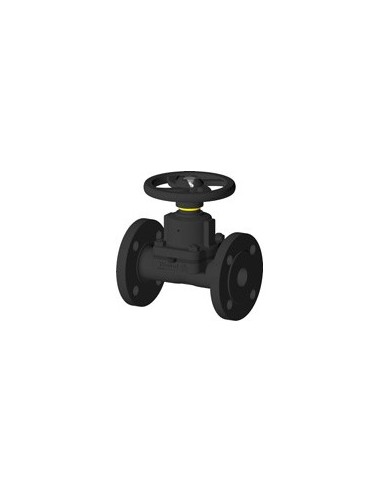


Diaphragm valve straight through - DIAVAL Fig. S | Comeval | Philippopoulos s.a.

Diaphragm valve straight through - DIAVAL Fig. S | Comeval

Diaphragm Valve DIAVAL Fig. S Straight-Through

The Comeval DIAVAL Fig. S is a straight-through diaphragm valve designed for flow isolation in water networks, liquid processing, and abrasive media. Its seatless, bidirectional construction with a bolted bonnet and diaphragm sealing ensures the medium does not contact the operating mechanism. It is intended for on/off operation, not flow regulation.

Technical Specifications

  • Body: EN-JS 1030 / GGG40 ductile iron or EN-JL 1040 / GG25 cast iron.
  • Connections: Flanged DIN / ANSI, EN 1092-2 PN10/16 up to DN150 and PN10 for DN200–DN300, with optional ASA150 drilling.
  • Sizes: Up to DN300.
  • Pressure Limits: PS 10 bar for DN15–100, PS 6 bar for DN125–150, PS 3.5 bar for DN200–300, depending on body, lining, and diaphragm.
  • Standards: EN 13397, EN 12516, EN 558 Series 1 / Series 7, EN 19, EN 12266-1 Rate A, PED 2014/68/EU, and Machinery Directive 2006/42/EC.

Diaphragm and Lining Selection

Selection is based on medium, temperature, corrosiveness, and presence of suspended solids. Available diaphragms include Natural Rubber, EPDM, Butyl, NBR, Neoprene, Hypalon, Viton, Linatex, and PTFE combinations. Body linings include hard/soft rubber, butyl, EPDM, neoprene, Hypalon, PFA, FEP, ETFE, Halar, and Linatex.

Applications

Suitable for:

  • Water and wastewater treatment facilities,
  • Slurry or abrasive liquids,
  • Chemical processes with compatible materials,
  • Isolation lines in auxiliary industrial networks.

The straight-through geometry reduces pressure drop compared to weir type valves and is preferred when free passage or reduced solid accumulation is required.

Handling and Maintenance

Basic operation with rising handwheel. Optional pneumatic or electric actuators, limit switches, sealed bonnet, padlocking, and interlocking are available. Maintenance focuses on leakage inspection, bonnet/body tightening, lining condition, and diaphragm replacement. The witness hole aids in diaphragm failure detection.

Standard (Options)
  • DIN
  • ANSI
Connection (Options)
  • Flanged
Material (Options)
  • EN-JS 1030 (GGG40) Ductile Iron
  • EN-JL 1040 (GG25) Cast iron
Pressure Rating (Options)
  • PN 10

Description

Diaphragm valves straight through type DIAVAL® Fig. S

Diaphragm valves straight through type Fig. S

Fig. SStraight through type diaphragm valves, bidirectional, for stopping the flow of the service fluid in abrassive applications, water treatment plants or process industry. Valves are bolted bonnet, seatless design, with a diaphragm as closure element, with rising handwheel. Easy and inexpensive maintenance, by change of diaphragm. Operated by handwheel or actuator.

Specification of the range: Diverse design combinations by materials of construction of bodies, linings and diaphragms, nominal size range (up to DN300), design pressure range (up to PN16), as well as operation style and accessories.

Other typical denominations: Diaphragm valves straight through type

Applications: Water, process, abrasive media, etc.

Certifications: Diaphragm valves weir type straight through typedeclaration of conformity atex, Diaphragm valves weir type straight through type declaration of conformity, Eac declaration 010, Eac declaration 032

Certificates