
Flanged
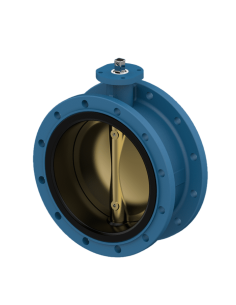
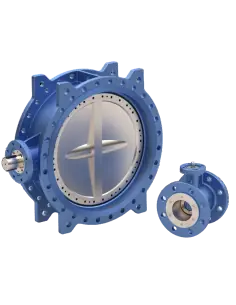
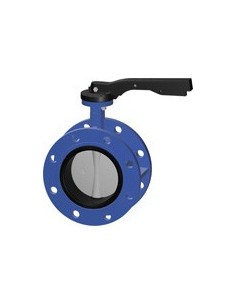
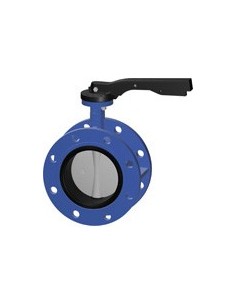
Flanged butterfly valves are used for shut-off duty and limited throttling in water distribution, HVAC, industrial water, cooling circuits, compressed air, inert gas and other process fluids compatible with the seat and disc materials. A double-flanged body provides an independent mechanical connection to each pipe flange and is generally preferred in larger diameters or where improved alignment, rigidity and pipe support are required compared with wafer-type installation.
This category includes flanged and double-flanged concentric butterfly valves from Alfa Europe, TTV and Comeval, available to DIN, ANSI and JIS drilling standards. Pressure classes include PN 6, PN 10, PN 16, PN 25, PN 40, ANSI Class 150/300 and JIS 5K/10K. Body materials include ductile iron EN-JS 1030 / GGG40, cast iron EN-JL 1040 / GG25, EN-GJL-250, EN-GJS-400-18U-LT, EN-GJS-500, ASTM A216 WCB, ASTM A351 CF8M, 1.4408 stainless steel, carbon steel and aluminium bronze BS 1400 AB2.
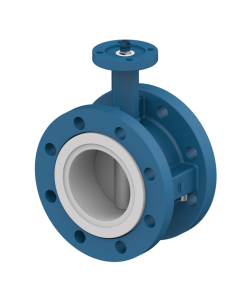
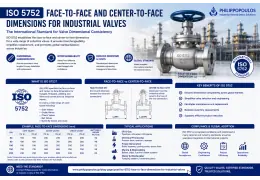
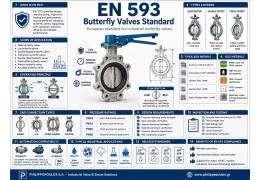
Seat materials include EPDM, NBR, FKM/Viton, silicone and elastomer/PTFE combinations, selected according to temperature, chemical compatibility and shut-off requirements. PTFE-lined versions are specified in sizes DN50 to DN600, with EN 1092 PN10/16 and ASME Class 150 flange patterns, temperature range -40°C to +200°C, and face-to-face dimensions to EN 558 Series 13, ISO 5752 Series 13, API 609 Category A and EN 593.
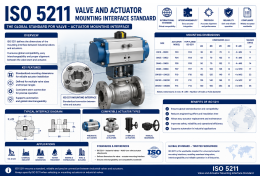
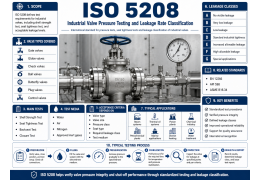
Double-flanged TTV versions are listed from DN32 to DN2000, with flange standards including ISO 7005, DIN 2501, BS 4504 and ANSI B16.5. Top flange mounting is to ISO 5211. Test standards include ISO 5208 and API 598. Maximum allowable working pressure is up to 20 bar for DN32 to DN600 and up to 16 bar for larger sizes.
Valve selection should consider nominal size, flange drilling, pressure rating, differential pressure, operating torque, disc and shaft materials, seat compatibility with the process medium, and actuator interface for lever, worm gear, pneumatic or electric operation. For throttling service, Kvs/Cv, opening angle, flow velocity, cavitation risk, noise generation and wear between disc edge and resilient seat should be reviewed. Maintenance assessment should also include seat replaceability, stem sealing arrangement, external leakage control and shut-off tightness class under expected operating conditions.