
Double Offset
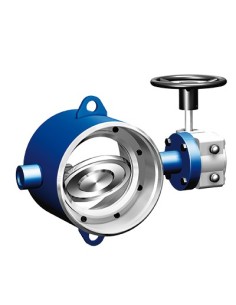
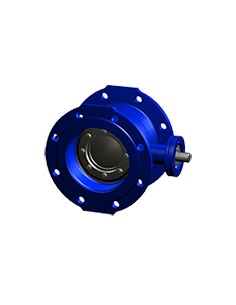
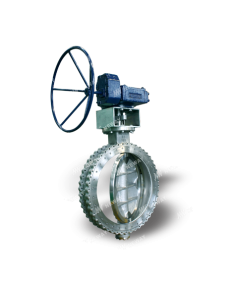
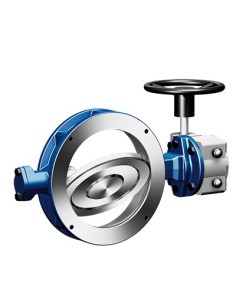
Double offset butterfly valves are used in isolation duties and controlled throttling service where a conventional concentric butterfly valve develops increased disc-to-seat friction. The shaft offset in two planes moves the disc away from the seat during the initial opening travel, reducing seat wear, break torque, and sealing stress under repeated operating cycles.
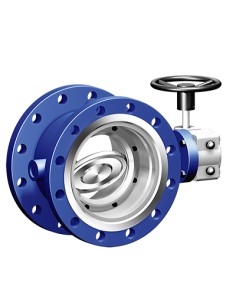
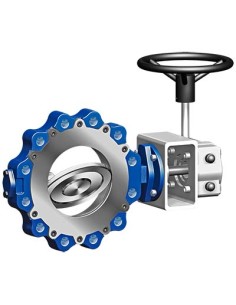
This range includes ARI ZEDOX 120, 121, 122 and 123, Comeval UNIWAT VF791, and Neway designs, with DIN standardization and wafer, lug, double-flanged, flanged, and butt-weld end connections. Available pressure classes typically cover PN 6 to PN 40, depending on end connection, valve size, and body material. Body materials include cast steel, ductile iron, and stainless steel grades such as 1.0619+QT, 1.0619+N, 1.0425, 1.0565, 1.4307, and 1.4408.
Seat selection defines the valve’s temperature capability and shut-off performance. For ARI ZEDOX, PTFE+C seats are specified for -40°C to +180°C with leakage rate A to EN 12266-1. Stainless steel metal seats are specified for -40°C to +260°C, with leakage rate B as standard and leakage rate A as an option. Differential pressure must be checked against DN, pressure direction, and seat design, with published values up to 25 bar for bi-directional tight shut-off and up to 40 bar for specific metal-seated configurations.
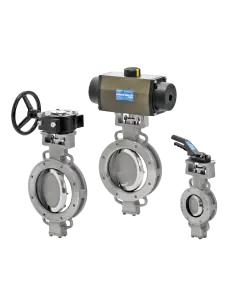
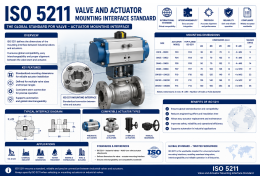
For steam, thermal oil, process water, condensate, gases, chemicals, and energy distribution systems, valve selection should consider Kvs/Zeta, operating Δp, thermal cycling, cavitation risk, noise generation, fire-safe requirements to ISO 10497 / BS 6755, and stem emissions to ISO 15848-1 or TA-Luft where applicable. Actuation options include lever, gearbox, pneumatic, electric, and hydraulic actuators. Actuator sizing should be based on break torque, seat material, maximum differential pressure, and the required fail-safe position.