

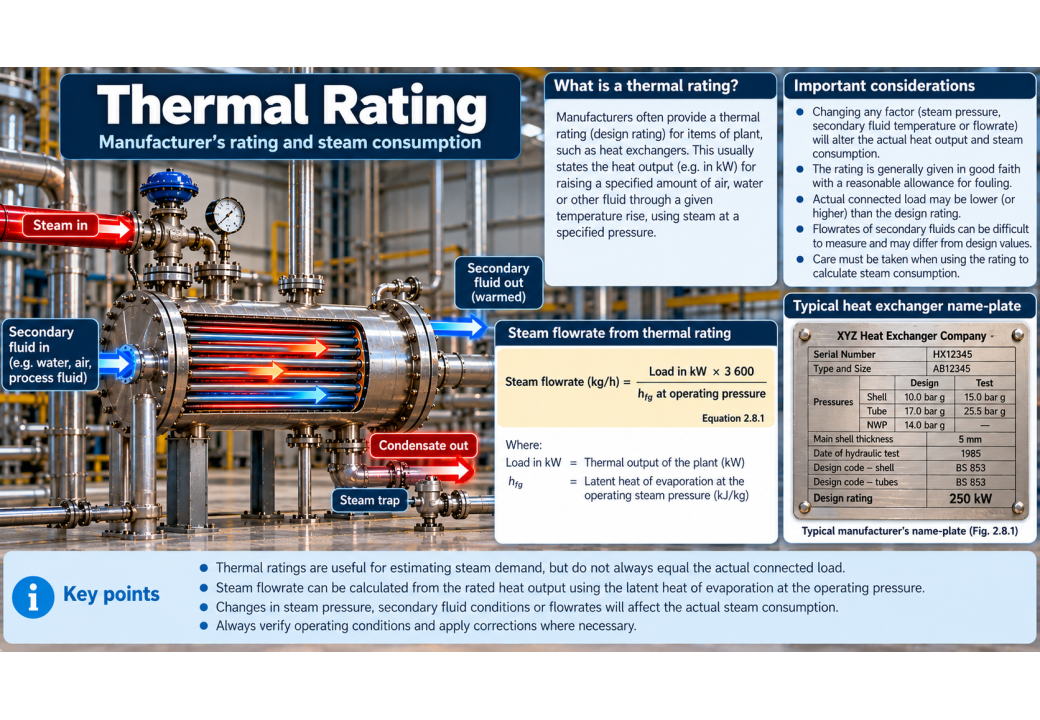
The thermal output stated on a heat exchanger nameplate or technical datasheet is useful only when interpreted in the...
ISO 9606 is the international standard specifying the qualification testing requirements for welders performing fusion welding on metallic materials. It demonstrates that a welder has the practical skills required to produce sound welds that meet defined quality and safety requirements.
The standard is widely applied in the manufacture of industrial valves, pressure vessels, piping systems, boilers, heat exchangers, structural steelwork, shipbuilding and power generation equipment.
What is ISO 9606?
ISO 9606 establishes qualification testing procedures, acceptance criteria, qualification ranges and certification requirements for welders. It provides internationally recognized evidence of a welder's competence for specific welding processes, materials and welding positions.
Structure of the Standard
| Part | Scope |
|---|---|
| ISO 9606-1 | Steels |
| ISO 9606-2 | Aluminium and Aluminium Alloys |
| ISO 9606-3 | Copper and Copper Alloys |
| ISO 9606-4 | Nickel and Nickel Alloys |
| ISO 9606-5 | Titanium, Zirconium and Their Alloys |
Purpose of Welder Qualification
- Verify practical welding competence
- Ensure consistent weld quality
- Improve safety of pressure equipment
- Support compliance with PED and international codes
- Reduce the risk of welding defects
Qualification Procedure
- Select the welding process.
- Prepare the test coupon.
- Perform the weld under examination conditions.
- Carry out visual inspection.
- Perform destructive and/or non-destructive testing.
- Issue the welder qualification certificate.
Welding Processes Covered
- 111 – Shielded Metal Arc Welding (SMAW/MMA)
- 141 – Gas Tungsten Arc Welding (GTAW/TIG)
- 131 – Metal Inert Gas Welding (MIG)
- 135 – Metal Active Gas Welding (MAG)
- 136 – Flux-Cored Arc Welding (FCAW)
- 121 – Submerged Arc Welding (SAW)
Main Qualification Variables
| Variable | Examples |
|---|---|
| Base Material | Carbon Steel, Stainless Steel |
| Material Thickness | 3 mm – 50 mm |
| Pipe Diameter | DN25 – DN600 |
| Welding Position | PA, PB, PC, PF, H-L045 |
| Welding Process | TIG, MAG, MMA, FCAW, SAW |
Qualification Testing Methods
- Visual Testing (VT)
- Radiographic Testing (RT)
- Ultrasonic Testing (UT)
- Bend Testing
- Fracture Testing
- Macro Examination
Typical Industrial Applications
- Industrial Valves
- Pressure Vessels
- Industrial Piping
- Boilers
- Heat Exchangers
- Oil & Gas
- Power Generation
- Shipbuilding
Related Standards
| Standard | Scope |
|---|---|
| ISO 9606 | Welder Qualification Testing |
| ISO 15614 | Welding Procedure Qualification (WPQR) |
| ISO 3834 | Quality Requirements for Fusion Welding |
| EN 13445 | Unfired Pressure Vessels |
| EN 13480 | Industrial Metallic Piping |
| PED 2014/68/EU | Pressure Equipment Directive |
Benefits of ISO 9606 Qualified Welders
- Consistent welding quality
- Reduced risk of defects
- Compliance with international standards
- Improved equipment reliability
- Acceptance in international EPC projects
Frequently Asked Questions
What does ISO 9606 certify?
It certifies a welder's practical ability to produce high-quality welds using specific welding processes, materials and positions.
Is ISO 9606 the same as ISO 15614?
No. ISO 9606 qualifies the welder, while ISO 15614 qualifies the welding procedure (WPS/WPQR).
Where is ISO 9606 required?
It is widely required in the manufacture of pressure vessels, industrial piping, valves, boilers, structural steelwork and equipment subject to PED requirements.
Conclusion
ISO 9606 is the internationally recognized standard for welder qualification testing. By verifying the competence of welders, it supports the production of safe, reliable and compliant welded components used in industrial, energy and process applications.