

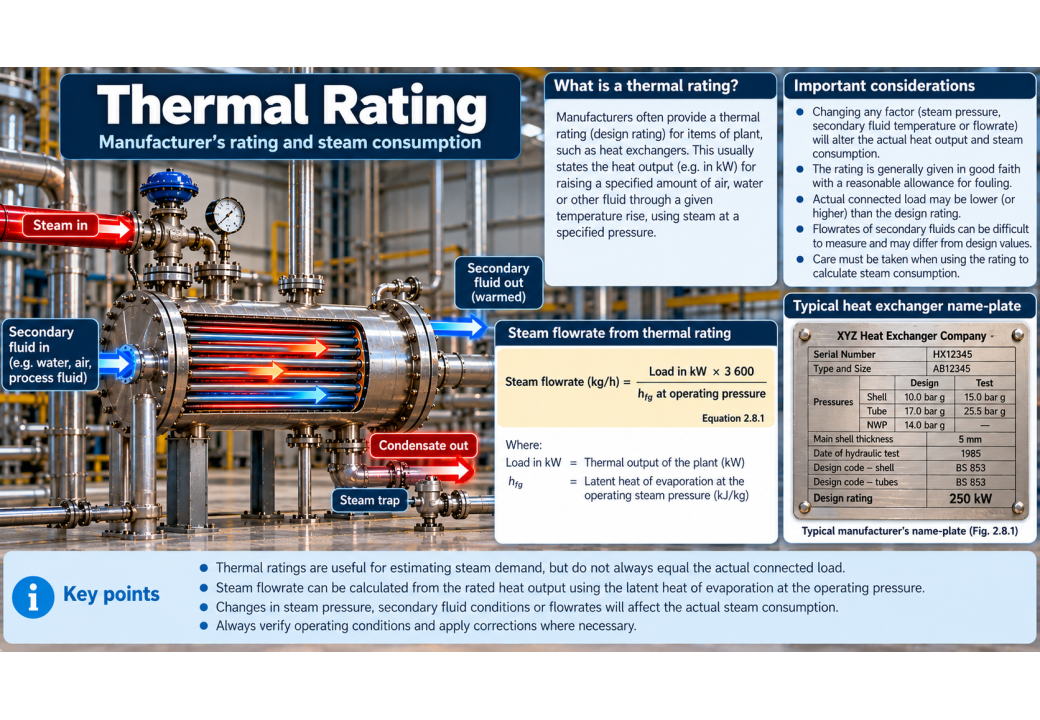
The thermal output stated on a heat exchanger nameplate or technical datasheet is useful only when interpreted in the...
ISO 4126 is the international standard that specifies the design, manufacturing, testing and certification requirements for safety valves, pressure relief valves, bursting disc devices and other equipment used to protect pressure systems against excessive pressure.
The standard is intended to ensure the safe protection of pressure vessels, boilers, piping systems, heat exchangers and industrial process equipment by automatically relieving excess pressure before hazardous conditions occur.
What is ISO 4126?
ISO 4126 is a multi-part international standard covering pressure relief devices used in industrial pressure systems. It provides requirements for valve design, performance, sizing principles, testing, certification and installation.
Structure of the Standard
| Part | Scope |
|---|---|
| ISO 4126-1 | Safety Valves |
| ISO 4126-2 | Bursting Disc Safety Devices |
| ISO 4126-3 | Safety Valve and Bursting Disc Combinations |
| ISO 4126-5 | Controlled Safety Pressure Relief Systems |
| ISO 4126-7 | Common Data |
| ISO 4126-9 | Application and Installation |
Purpose of Pressure Relief Devices
Pressure relief devices automatically release pressure when the system exceeds the predetermined set pressure, preventing catastrophic equipment failure.
- Protection of pressure vessels
- Boiler overpressure protection
- Pipeline protection
- Heat exchanger protection
- Pump protection
- Process safety
Types of Devices Covered
- Conventional Safety Valves
- Balanced Bellows Safety Valves
- Pilot Operated Safety Valves
- Pressure Relief Valves
- Safety Relief Valves
- Bursting Disc Devices
Key Operating Parameters
| Parameter | Description |
|---|---|
| Set Pressure | Pressure at which the valve begins to open |
| Overpressure | Pressure increase required to achieve rated capacity |
| Blowdown | Pressure difference between opening and reseating |
| Relieving Pressure | Pressure during full relieving capacity |
| Rated Capacity | Certified discharge capacity |
Testing Requirements
- Seat Tightness Test
- Set Pressure Verification
- Capacity Certification
- Back Pressure Test
- Mechanical Strength Test
- Operational Performance Test
Typical Industrial Applications
- Steam Systems
- Boiler Plants
- Power Generation
- Oil & Gas
- Petrochemical Plants
- Chemical Processing
- Food & Beverage Industry
- Pharmaceutical Manufacturing
- LNG Facilities
- Hydrogen Systems
- Marine Applications
Related Standards
| Standard | Scope |
|---|---|
| ISO 4126 | Pressure Relief Devices |
| API 520 | Sizing and Selection |
| API 521 | Pressure Relief Systems |
| API 526 | Flanged Steel Safety Relief Valves |
| PED 2014/68/EU | Pressure Equipment Directive |
Benefits of ISO 4126 Compliance
- Improved plant safety
- Reliable overpressure protection
- Compliance with international regulations
- Protection of personnel and equipment
- Reduced risk of catastrophic failure
- Global acceptance in EPC projects
Frequently Asked Questions
What does ISO 4126 cover?
It covers safety valves, pressure relief valves, bursting discs and other devices used to protect pressure systems from excessive pressure.
Does ISO 4126 apply only to safety valves?
No. It also includes bursting disc devices, combined relief systems and installation requirements.
What is the difference between ISO 4126 and API 520?
ISO 4126 is a comprehensive international standard for pressure relief devices, while API 520 primarily focuses on the sizing and selection of pressure relief valves.
Conclusion
ISO 4126 is the principal international standard for pressure relief devices. By establishing requirements for design, testing, certification and application, it helps ensure safe operation of pressure equipment in industrial, energy and process installations.