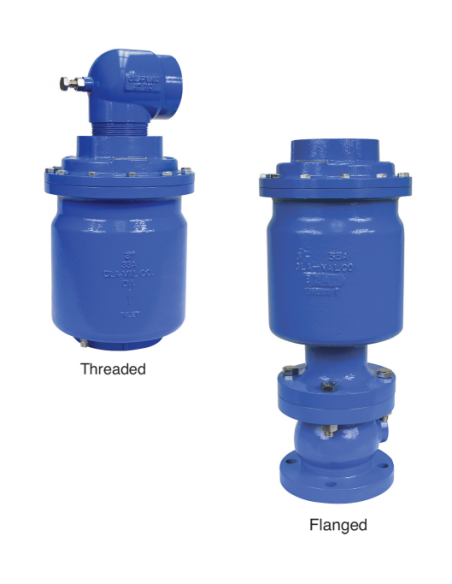


Cla-Val 33AWS Well Service Air Valves regulate air discharge from the pump column to prevent shock and air entering the system with each start. Conversely, with each pump stop, full flow unrestricted air is allowed back into the column to avert vacuum formation (which can damage pump seals) as well as to stop the pump from restarting against a full head in the column if a vacuum condition prevented the pump column from draining.


Well Service Air Release & Vacuum Breaker Valve type 33AWS | Cla-Val
Cla-Val 33AWS for Well Pump Columns
The Cla-Val 33AWS is an air release and vacuum breaker valve engineered for pump columns in well installations. It controls air discharge from the pump column during startup to minimize hydraulic shock and prevent air ingress into the distribution system. On pump shutdown, it allows unrestricted air intake into the column, preventing vacuum formation and reducing mechanical stress on pump seals.
Technical Specifications
- Type: Well service air release & vacuum breaker
- Body: ASTM A536 ductile iron
- Connections: NPT or flanged
- Standard: ANSI
- Pressure Classes: 150 lbs / 300 lbs
- Operation: Controlled air release at startup, full air admission at shutdown
- Applications: Water wells, irrigation, potable water pumping
Industrial Applications
- Vertical turbine pump installations
- Potable water wells
- Irrigation pumping stations
- Pump stations with frequent start/stop cycles
- Columns requiring complete drainage after shutdown
Difference from Cla-Val 33A
The 33A is a general-purpose air release and vacuum breaker valve for pipeline networks. The 33AWS is specifically configured for well service, providing controlled air management in pump columns and preventing pump restart against full static head when the column is not drained.
FAQ
What does it protect?
Pump column, pump seals, and downstream network during startup and shutdown cycles.
When is it selected?
For wells with vertical turbine pumps or installations with frequent cycling.
What parameters are considered in selection?
ANSI class, connection type, air flow capacity, static head, and pump operating cycle.
Datasheet and documents
Description
Certificates
Tap to zoom
