
Steam Ejectors
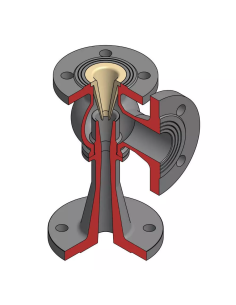
Steam and liquid ejectors are jet devices used for suction, evacuation, or transfer of fluids by means of a motive fluid, without rotating parts. Operation is based on conversion of pressure into velocity at the nozzle, generating a low-pressure zone that entrains the secondary fluid and discharges the mixed flow through the mixing chamber and diffuser. Typical duties include auxiliary steam systems, liquid draining, condensate removal, extraction of non-condensable gases, and services where a mechanical pump is unsuitable due to temperature, installation constraints, or maintenance requirements.
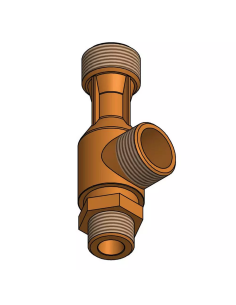
The range includes Valfonta types 248, 250, 252, and 253. Type 248 is a water and steam ejector, available in sizes DN15 to DN125, with EN flanged connections and body materials such as carbon steel ASTM A216 WCB or stainless steel ASTM A351 CF3M. Type 250 is a liquid ejector, available from 3/8” to 1-1/2”, with BSP threaded connections and construction in bronze or CF3M stainless steel. Types 252 and 253 are steam ejectors, supplied in sizes DN20 to DN80, with EN flanges and materials including WCB and CF3M. Depending on type and service conditions, configurations are available to DIN standards with pressure classes such as PN16 and PN25, and materials including brass, EN-GJS-400-18-LT, and ASTM A351 CF3M.
Selection should be based on motive pressure, suction flowrate, discharge pressure, available differential pressure, fluid temperature, phase, condensation risk, and allowable backpressure. In steam service, upstream drainage should be provided to prevent wet steam entry, together with a strainer at the inlet and piping arrangements that limit water hammer. The discharge side should be checked for pressure recovery and return or vent routing. Material selection must consider corrosion allowance, condensate chemistry, and compatibility with steam, water, or mixed-phase service. As ejectors have no dynamic seals, maintenance is mainly associated with nozzle fouling, erosion, blockage, and leakage at threaded or flanged joints.