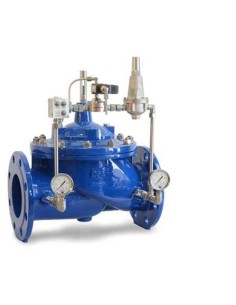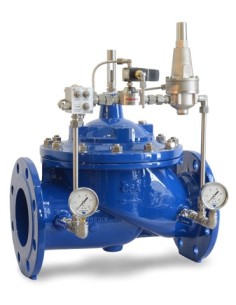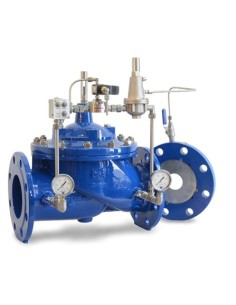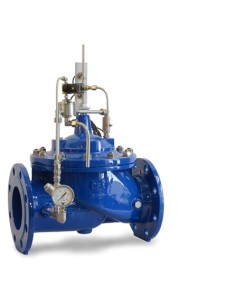

Solenoid control valves
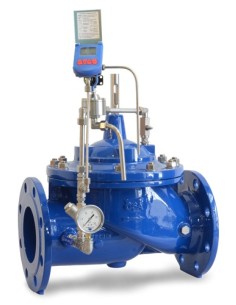
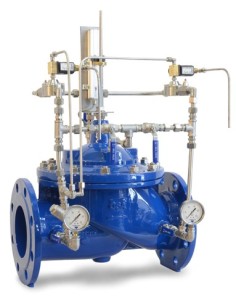
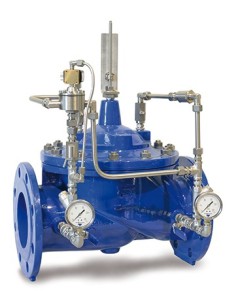
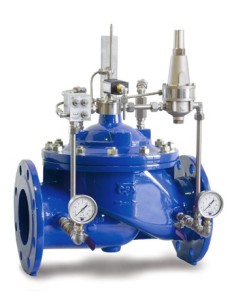
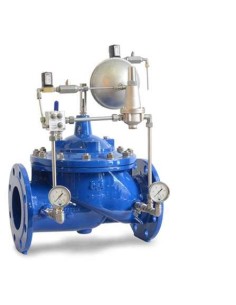
Solenoid-controlled water control valves are used in water distribution networks, pumping stations, reservoirs, pressure zones, and industrial process lines where opening, closing, or mode change must be initiated by an electrical signal. The solenoid command does not replace the hydraulic operating principle of the main valve; it acts on the pilot circuit, modifying control-chamber pressure and therefore the position of the diaphragm.
This category includes CSA XLC 310/410-T, 315/415, 325/425, 335/435, 350/450, 350/450-P, 353/453, 390/490, and 392/492 automatic control valves, manufactured to DIN standard, with flanged ends, ductile cast iron body construction, and pressure ratings PN 10, PN 16, or PN 25 depending on model.
The XLC 315/415 operates as a solenoid-controlled pressure reducing valve, reducing and stabilizing downstream pressure while permitting electrically commanded opening or closing. The XLC 325/425 operates as a pressure relief or pressure sustaining valve: installed in-line it maintains upstream pressure; installed on a bypass it relieves excess pressure. In both arrangements, remote opening or closing is achieved through the solenoid pilot.
The XLC 353/453 is a step-by-step solenoid-controlled valve for staged opening and closing based on signals sent to the solenoid valves in the control circuit. Typical duties include flow and pressure control, surge limitation in pumping stations during pump start or shutdown, and level control in systems where demand varies over time.
Selection should include verification of coil voltage, fail position, minimum pilot differential pressure, response time, surge protection requirements, strainers, needle valves, flow stabilizers, diaphragm and seat materials, and provision for manual override or bypass. Suspended solids, trapped air, or unstable electrical signals may lead to delayed response, hunting, or incomplete shut-off. Material compatibility with potable or raw water, operating temperature limits, and allowable leakage class should also be checked during specification and maintenance planning.