
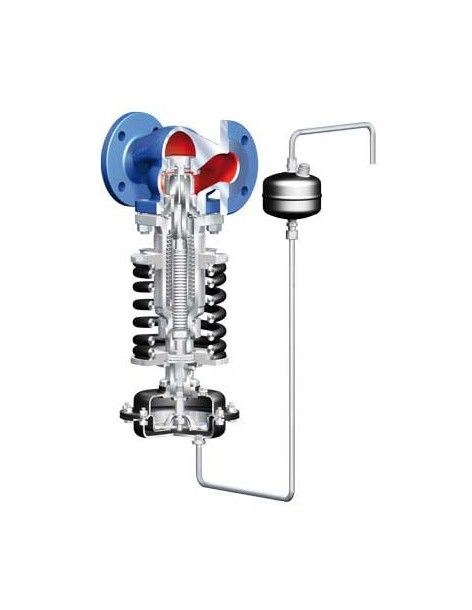
Pulse Line
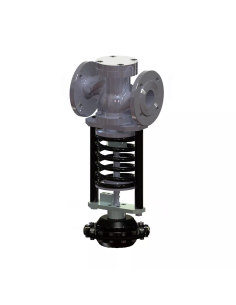
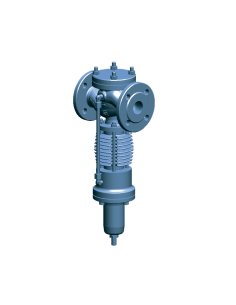
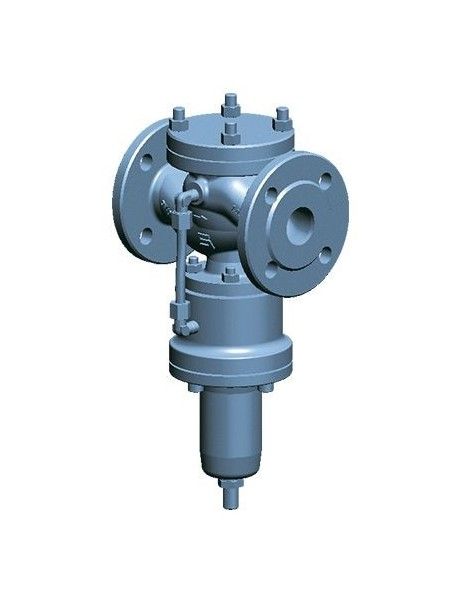
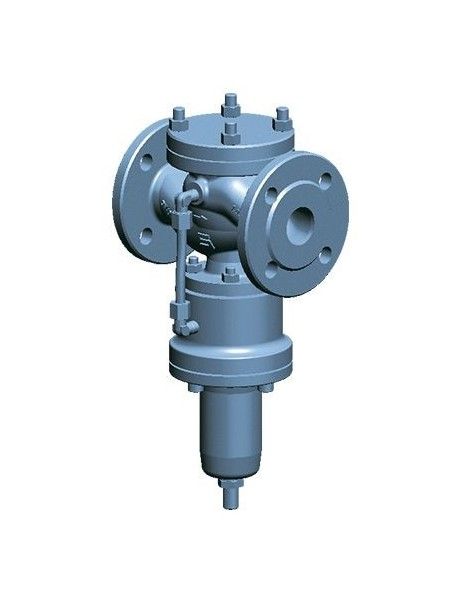
Direct-acting pressure reducing valves with feedback are used to stabilize downstream pressure in steam, compressed air, water, gases, and neutral liquid lines without an external pneumatic or electric actuator. A change in secondary pressure is transmitted to the sensing chamber through an impulse line or internal feedback path and directly changes valve opening, so the downstream pressure remains within the selected set range. This category includes ARI PREDU, Valfonta M1, Mankenberg DM/RP, and Miyawaki RE/REA series for steam, liquid, and gas service.
Valve selection is based on inlet pressure, required outlet pressure, reduction ratio, flow rate, Kvs, allowable pressure drop, medium temperature, phase condition, and load variation. In steam systems, the installation review should include upstream drainage, protection against water hammer, strainer installation, downstream impulse line arrangement, and the possible need for a condensate pot when temperature exceeds diaphragm limits. Direct-acting regulators are typically used for local pressure reduction, compact consumption stations, auxiliary networks, and applications where the control requirement does not justify a pilot-operated regulator or a fully automated control valve.
Available versions include DIN and ANSI designs with pressure classes PN16, PN25, PN40, PN63, PN100, PN315, Class 150, and Class 300, with BSP, NPT, and flanged end connections. Body materials include brass, grey cast iron EN-JL 1040, ductile iron EN-GJS, carbon steel 1.0460 and 1.0619, stainless steel 1.4408, ASTM A216 WCB, ASTM A351 CF3M, cast steel, and stainless variants. Indicatively, ARI PREDU covers DN15-DN150, outlet pressure ranges from 0.2 to 16 bar, and Kvs values from 0.1 to 280 m³/h, while Miyawaki series are specified for reduction ratios up to 25:1 and design temperatures up to 350-400 °C depending on body material and pressure class. Selection should also consider seat leakage, diaphragm and trim maintenance, and service compatibility under partial-load operation.