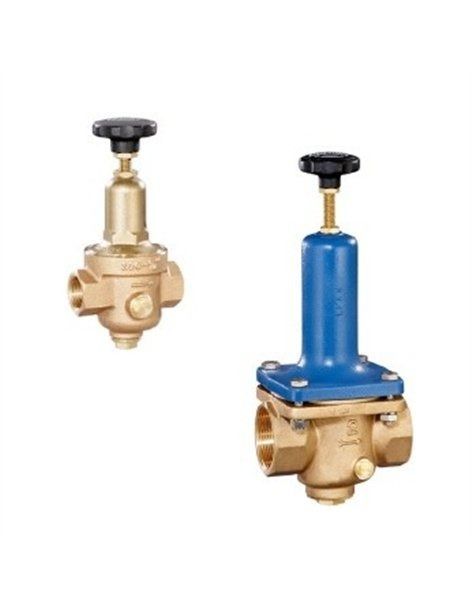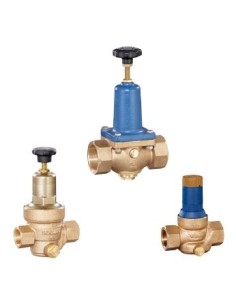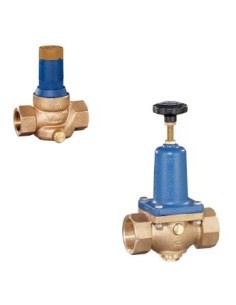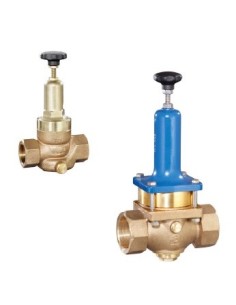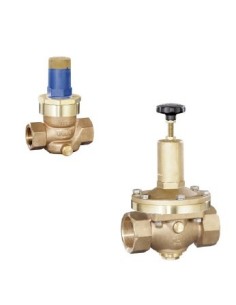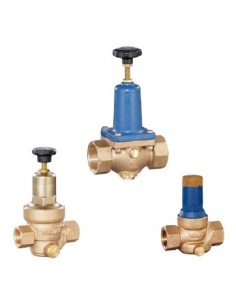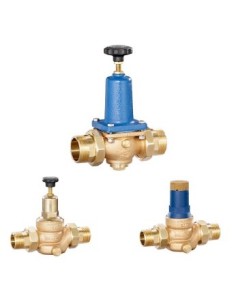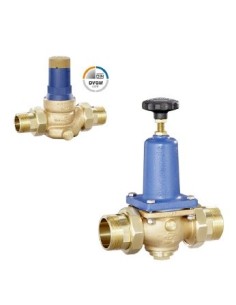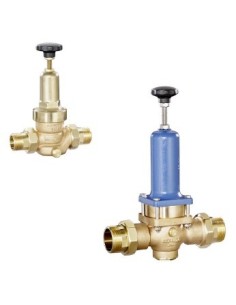

Pressure Reducing Valves
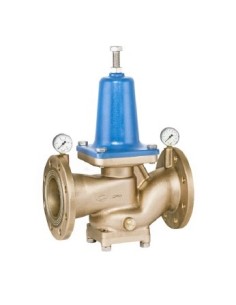
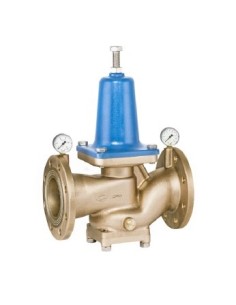
Pressure reducing valves are used in steam, water, compressed air, technical gas, and neutral industrial fluid systems to reduce a high inlet pressure to a controlled downstream pressure. Selection should be based on flow rate, inlet pressure p₁, required outlet pressure p₂, reduction ratio, Kvs/Cv, temperature, allowable pressure drop, body and seat materials, and required shut-off tightness.
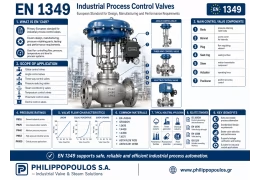
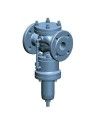
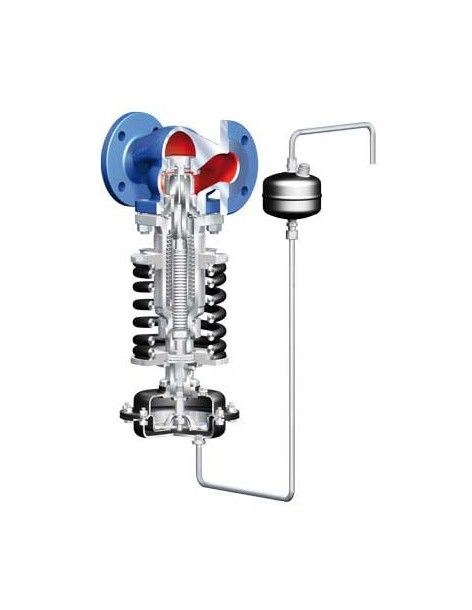
Direct-acting pressure reducers with feedback are applied where self-operated control is required without external power, using a sensing line for downstream pressure feedback. As an example, the ARI PREDU is a proportional direct-acting valve with DMA diaphragm actuator, stainless steel bellows for pressure balancing and stem sealing, DN15-DN150, PN16/25/40, outlet pressure range 0.2-16 bar, and Kvs values from 0.1 to 280 m³/h. Seat leakage is stated as Class I according to DIN EN 1349 or DIN EN 60534-4.
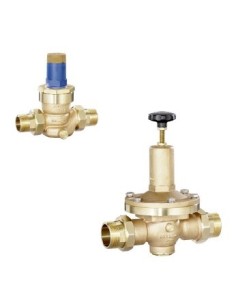
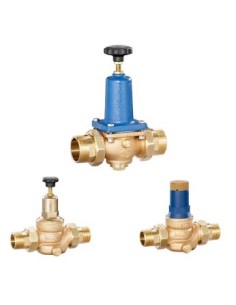
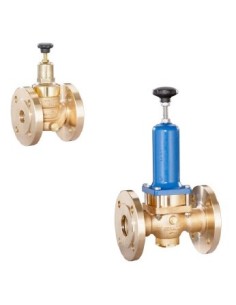
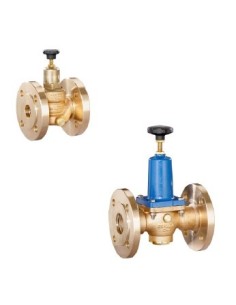
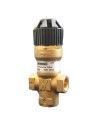
Simple direct-acting reducers, such as the Berluto DRV series, are used in smaller line sizes and in water or gas installations where mechanical adjustment by spring and diaphragm is sufficient. The DRV 200/200 G, for example, covers DN8-DN50, inlet pressure up to 25 bar, outlet pressure range 0.8-8 bar, and operating temperature from -15°C to 100°C.
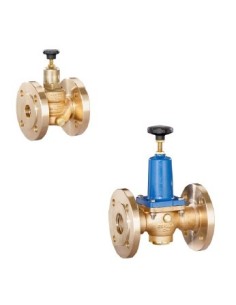
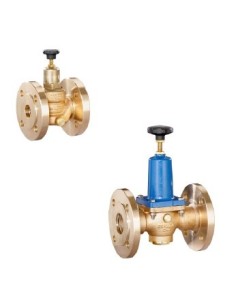
Pilot-operated pressure reducing valves are selected for higher flow rates, larger differential pressures, or where tighter downstream pressure stability is required under variable load. The Mankenberg DM 620 is specified with forged steel body, 1.4404/316L internals, soft or metallic sealing, DN15-DN50, PN16-PN315, p₁ up to 315 bar, p₂ from 2 to 160 bar, and Kvs 0.4-10 m³/h. For steam service, the Miyawaki RE10N is a pilot-operated reducer with JIS 10K/16K/20K flanged connection, maximum temperature 220°C, and minimum differential pressure 0.07 MPa.
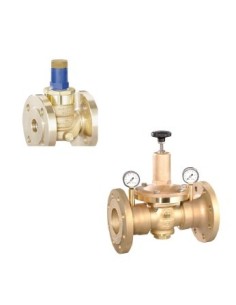
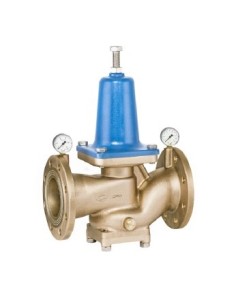
Installation should include a strainer upstream of the valve, inlet and outlet pressure gauges, a maintenance bypass, correct routing of the sensing line, condensate drainage in steam systems, and assessment of noise and cavitation risk in liquid service. Maintenance should focus on seat, plug, diaphragm, spring, pilot assembly, and sealing elements, since wear or contamination in these areas can cause hunting, outlet pressure creep, or loss of stable regulation.