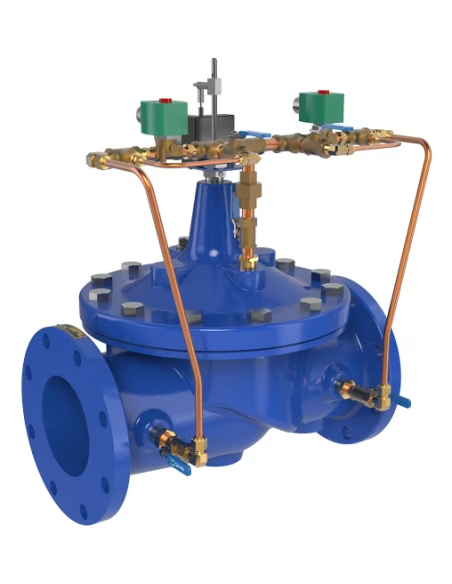


The Cla-Val Model 133-AW Multi-Function Electronic Interface Valve is a control system that accurately calculates and/or controls flow rate, position or pressure. The valve is designed to close in the event of a power failure. Using the VC-22D Electronic Controller, data from valve mounted pressure transmitter (X141-PT) and position transmitter (X117D) are assimilated into a proprietary algorithm program that is based on valve size and configuration to arrive at a flow measurement.

Electronic Multi-Function Electronic Interface Valve - 133-AW | Cla-Val
Cla-Val 133-AW Multifunction Electronic Interface Valve
The Cla-Val 133-AW is a hydraulically operated water control valve equipped with the VC-22D electronic controller. It monitors or calculates flow, valve position, and pressure using feedback from the X117 position transmitter and X141-PT pressure transmitter. In the event of power loss, the valve is designed to fail closed.
Main Assembly
- Main valve: Cla-Val 100-01 Hytrol
- Solenoid controls: CS2, normally open / normally closed
- Controller: VC-22D
- Position feedback: X117 Series
- Pressure feedback: X141-PT
- Connection: flanged
- Standard: ANSI
- Pressure classes: 150 / 300 lbs
- Body materials: brass, ASTM A216 WCB, ductile iron
Control Operation
The VC-22D uses valve position and pressure to calculate flow based on valve size and configuration. The calculated signal can be retransmitted or used for local/remote flow setpoint control. Supported interfaces include 4–20 mA, digital inputs, relay/solenoid outputs, and Modbus RTU/TCP.
Applications
- water transmission and distribution lines
- SCADA-based flow control
- retrofit for existing pilot-operated valves
- pressure reducing, pressure sustaining, flow limiting, or level control while retaining hydraulic fail-safe operation
- totalizing / batch volume control
133-AW vs 133-AV
The 133-AW is fail-close: it closes on loss of electrical power. This variant is selected when process safety requires flow interruption, such as tank protection, over-delivery limitation, or line isolation.
FAQ
What data is required for selection?
Voltage, DN, pressure class, min/max pressure, flow rate, and required fail position.
Is a flowmeter required?
Not always. Flow can be calculated from position and pressure, provided hydraulic conditions are suitable.
Description
Tap to zoom
