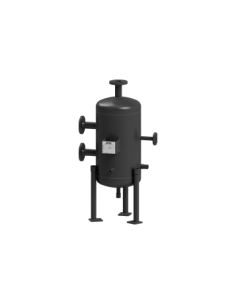

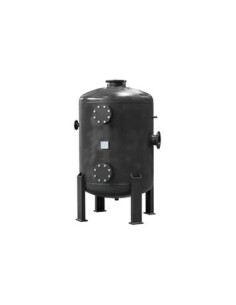
Blowdown Vessels
Blowdown vessels are used in boiler installations to provide controlled depressurization of blowdown water before discharge to drainage or routing to a recovery system. During bottom or continuous blowdown, hot boiler water enters the vessel at a higher pressure; part of the liquid flashes to steam, while the remaining water is cooled and depressurized to conditions suitable for safe disposal.
This category includes ADCA blowdown vessels, type BV and BEX, for boiler houses and industrial steam systems. Selection between the two types should be based on blowdown rate, boiler pressure, inlet temperature, vent arrangement, drain connection, and material requirements. Available configurations include DIN or ANSI standardization, flanged or threaded connections, PN 16 or ASME Class 150 interfaces, and construction in carbon steel or stainless steel depending on service conditions and media compatibility.
The ADCA BV type is available with EN PN16 or ASME flanged connections, in carbon steel or stainless steel, with a maximum allowable pressure of 7 bar and a maximum allowable temperature of 180 °C. The ADCA BEX type is supplied in carbon steel, with ISO 7 Rp or NPT threaded connections, or EN 1092-1 PN16 and ASME B16.5 Class 150 flanged connections, with a maximum allowable pressure of 0.5 bar and a maximum allowable temperature of 120 °C.
During specification, the engineer should verify flash steam volume, vent capacity, thermal loading, inspection access, sludge drainage, and personnel protection from steam release or hot water discharge. PN16 or Class 150 designations refer to the connection standard and mechanical interface; the actual allowable vessel pressure must be confirmed against the manufacturer’s pressure-temperature rating and design data.