
Back Pressure Regulators
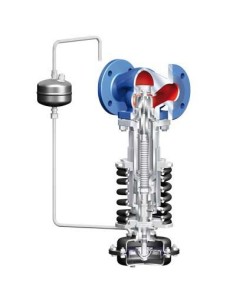
Inlet pressure sustaining valves, or back pressure regulators, are used to stabilize upstream pressure in steam, condensate, water, air, technical gas, thermal oil and general process lines. The valve remains closed or partially open until the inlet pressure exceeds the setpoint, then relieves flow to the downstream side, a bypass line or a return header.
Selection should be based on inlet pressure setpoint, maximum required flow, Kvs/Cv, differential pressure, temperature, fluid condition, required seat tightness and the dynamic response of the system. In steam service, condensate handling, thermal expansion and protection of the actuator or diaphragm must be considered when operating temperature exceeds the limits of the elastomer or membrane materials.
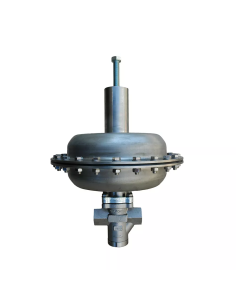
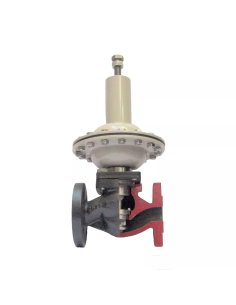
Self-acting spring- or diaphragm-operated designs, such as PREDEX, cover DN15-DN150, PN16-PN40, set ranges from 0.2 to 16 bar and Kvs values from 3.2 to 280 m³/h, with allowable temperatures up to 450°C depending on body material. Seat leakage is stated as Class I according to DIN EN 1349 / DIN EN 60534-4, which must be taken into account where tight shut-off is required rather than pressure regulation only.
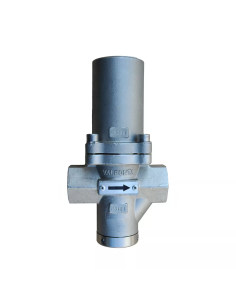
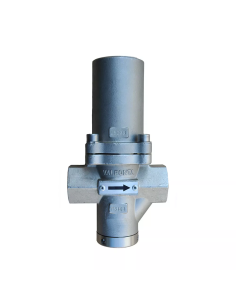
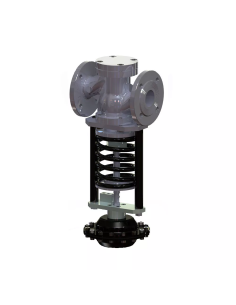
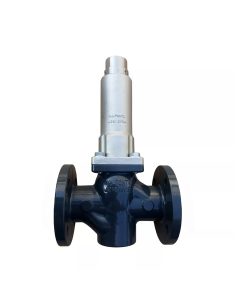
For smaller flow rates and stainless steel service, Valfonta PRV53 units are specified in DN15-DN25, PN25, AISI 316L, for liquids, gases and steam, with maximum inlet pressure of 12 barg and Kvs from 0.2 to 3.5 m³/h. For higher capacities, Mankenberg RP 820 regulators cover DN40-DN400, PN10-PN63, inlet pressure p₁ from 2 to 40 bar and Kvs from 20 to 900 m³/h, with pilot-operated control and no external power requirement.
Installation should include a strainer upstream of the valve, upstream pressure gauge, maintenance bypass, steam drainage provision and adequate straight pipe lengths. Maintenance typically focuses on the seat, plug, diaphragm or bellows, spring, pilot and sensing lines, since contamination or wear can lead to hunting, unstable control or unintended increase in upstream pressure.