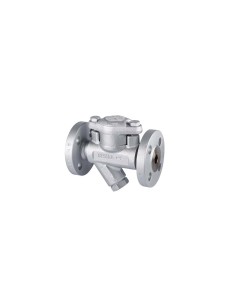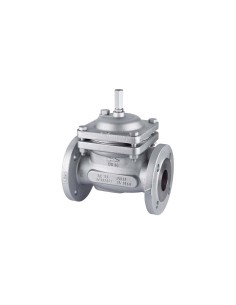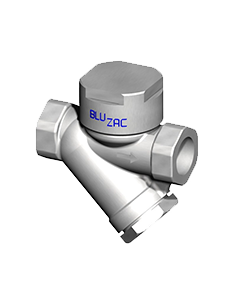

Thermostatic (Capsule)
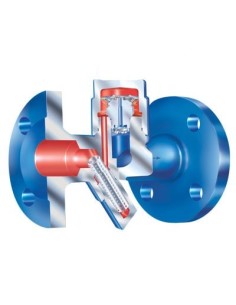
Thermostatic diaphragm steam traps are used for automatic discharge of condensate, air, and other non-condensable gases from saturated steam systems, including distribution lines, steam tracing, heat exchangers, and thermal processes where controlled condensate subcooling is acceptable. Operation is based on a thermostatic pressure capsule or diaphragm element that changes valve position as fluid temperature varies: open during cold start-up for venting and drainage, closed as steam saturation temperature is approached, and reopened when cooler condensate accumulates.
This category includes applications covered by ARI CONA M, Gestra MK, Gestra GK/TK for higher condensate loads, and BLU ZAC TSC. Selection is based on differential pressure, required condensate capacity, allowable subcooling, back pressure, installation orientation, start-up air venting requirements, and response under variable thermal load. In series such as CONA M, thermostatic elements are available for discharge close to saturation temperature or with subcooling of approximately 10 K, 30 K, and 40 K. GK/TK versions are typically applied where large, continuous condensate flowrates or low operating pressures are involved.
Available configurations include DIN and ANSI designs, with pressure ratings such as PN16, PN25, PN40, and Class 300. End connections include BSP, NPT, flanged, wafer, socket weld, butt weld, union weld ends, compression ring, and clamp. Body materials include EN-JL1040, 1.0460, 1.0619, 1.4301, 1.4305, 1.4404, 1.4541, 16Mo3, ASTM A105, ASTM A182 F316, and ASTM A216 WCB, selected according to pressure-temperature rating, corrosion allowance, and compatibility with steam and condensate chemistry.
For specification, attention should be given to leakage tightness near saturation temperature, resistance to dirt and waterhammer, maintainability of the thermostatic element, and suitability for applications where delayed condensate discharge does not impair heat transfer or condensate drainage stability.