
Thermodynamic
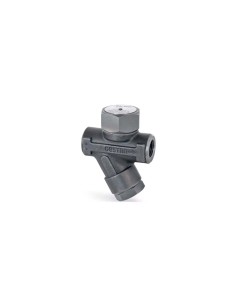
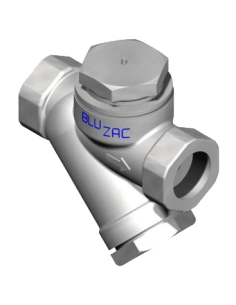
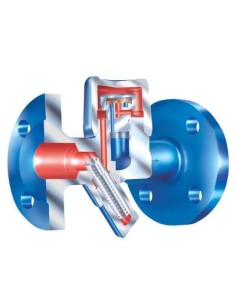
Thermodynamic steam traps are used for condensate drainage from steam distribution lines, steam tracing circuits, manifolds, low points in pipework, and auxiliary steam users where intermittent discharge is acceptable. Operation is based on a disc mechanism: condensate lifts the disc and allows discharge, while the arrival of steam creates rapid closing conditions that limit live steam loss. This category includes ARI CONA TD, Gestra DK, and BLU ZAC TTD series.
Selection is based on inlet pressure, differential pressure, condensate load, return-line backpressure, operating temperature, installation position, and the required degree of condensate subcooling. In duties with large load fluctuations, or where condensate backup ahead of the trap is not acceptable, such as certain heat exchangers, a float trap is generally considered instead of a thermodynamic design. For the CONA TD series, referenced features include cyclic operation, backflow protection, internal or external strainer options, and a thermal chamber in the cover to reduce the influence of wind, rain, and low ambient temperature on trap cycling.
Available configurations cover DIN and ANSI standardisation, with pressure classes PN 40 and PN 63, and BSP, NPT, flanged, socket weld, and butt weld connections. For the ARI CONA TD range, differential pressures up to 32 bar for PN 40 and up to 42 bar for PN 63 are specified, with connections according to EN 1092-1, EN 10226-1, ANSI B1.20.1, EN 12760, and EN ISO 9692. Materials include 1.4006, 1.0460, 1.4541, 1.5415, A743 CA40, and ASTM A105, selected according to pressure, temperature, and compatibility requirements for steam and condensate service.