
Pump Suction Control
Pump suction control valves for fire protection service are installed in the pump suction line or in the control arrangement of fire pump sets when the main water supply must be protected from excessive pressure reduction. Their operation is directly related to available suction head and to pump behavior during startup or during demand from the firewater network.
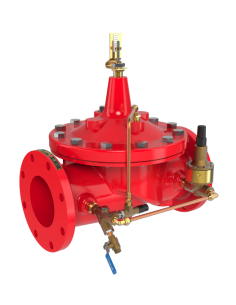
This category includes the Cla-Val 50B-5KG Pump Suction Control Valve. The valve is designed for fire pump suction control service in onshore industrial facilities such as refineries and process plants. It operates in a modulating manner so that suction pressure does not fall below a predetermined minimum setpoint, thereby maintaining pressure in the supply header and limiting conditions that may lead to reverse flow tendencies or hydraulic stress in the upstream network.
Available configurations are specified to ANSI standards, with flanged end connections, ductile iron body construction, and pressure classes 150 lb or 300 lb. For sizes 3 in to 10 in with standard disc guides, FM approval is referenced, which is relevant for fire protection installations where certified equipment is required by project specifications, insurer requirements, or authority having jurisdiction.
Valve selection should consider minimum allowable suction pressure, pump curve, design flow, supply network pressure, valve pressure loss, line size, and compliance with FM requirements for the fire protection system. The engineer should also verify operating pressure range, hydraulic stability at low demand, and compatibility with the water quality and service conditions of the installation.
Maintenance should include inspection of pilot lines, strainer, diaphragm, seat, setpoint calibration, and actual response during flow testing. Suspended solids, corrosion products, or incorrect adjustment can alter pilot operation and affect the suction pressure available to the fire pump. Leakage across the seat and degradation of elastomer components should also be checked as part of routine inspection.