
Pressure Relief Valves
Fire protection pressure relief valves are used in sprinkler networks, fire pump discharge lines, hydrant systems, foam systems, and seawater fire protection services to relieve overpressure to drain or atmosphere. Their function is to protect pumps, headers, piping, grooved couplings, flanges, and downstream equipment from pressure exceeding the allowable design limit.
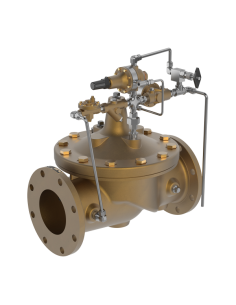
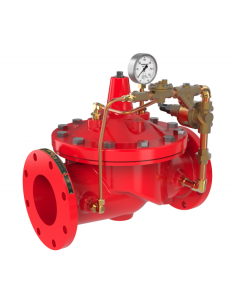
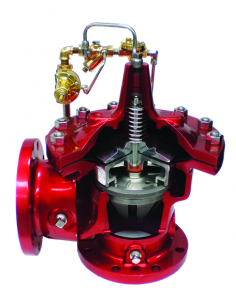
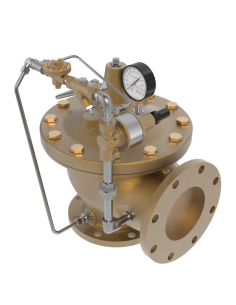
This category includes Cla-Val 50-20 valves for seawater service, 50-49 Pump Start, 50B-4KG1 / 2050B-4KG1, versions fitted with KO Anti-Cavitation Trim, and 55L / 55L-60 valves for pressure relief or pump casing protection. The pilot-operated 50-20 and 50B-4KG1 / 2050B-4KG1 maintain fire pump discharge pressure within a defined set range by relieving excess flow when system demand decreases or stops.
Model 50-49 is applied in fire pump start-up sequences where discharge pressure can rise under low-flow or no-flow conditions. The valve remains closed until inlet pressure exceeds the pilot setpoint, then opens to relieve excess pressure. Available configurations include ANSI patterns, Class 150 and Class 300 pressure ratings, and flanged, grooved, or NPT end connections depending on valve type and piping standard.
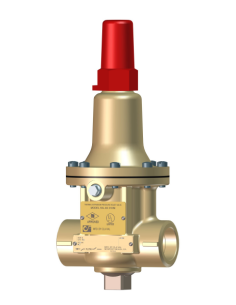
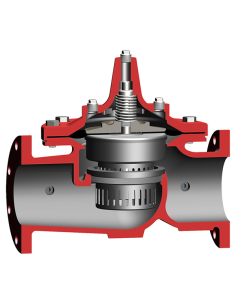
The 55L / 55L-60 are direct-acting, spring-loaded, diaphragm-type relief valves. The 55L-60 carries UL listing and FM approval for fire protection duty. These valves are used for local pressure relief or pump casing protection, can be installed in any orientation, and may be converted to angle pattern by changing the inlet plug arrangement.
In applications involving high differential pressure, discharge to atmosphere, or fire pump bypass service, KO Anti-Cavitation Trim reduces cavitation damage and noise by means of stainless steel 316 radial-slot trim elements. Valve selection should consider service medium, including fresh water or seawater, pressure class, relief destination, expected minimum flow, and cavitation risk. Maintenance typically includes inspection of pilot lines, strainers, orifices, diaphragm condition, seat tightness, set pressure, shutoff leakage, corrosion, and blockage from solids or salt deposits.