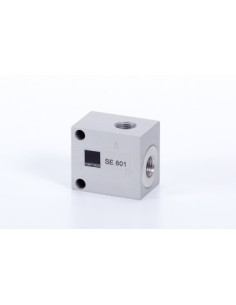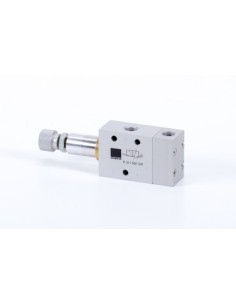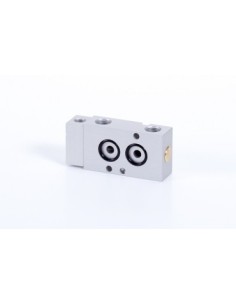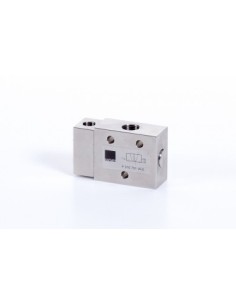

Pneumatically Actuated Valves
Hafner pneumatic valves are used in compressed-air circuits for directional control, shut-off, exhaust, and pneumatic logic signal handling to cylinders, air actuators, and automation mechanisms. Valve selection should be based on port/position function, instrument air pressure, required flow capacity, connection size, return method, and the circuit response under loss of supply pressure.
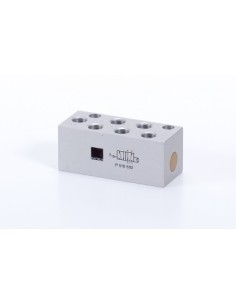
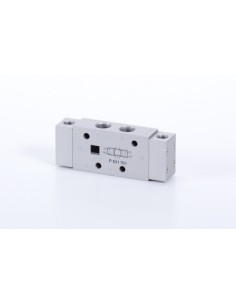
This category includes Hafner 3/2, 5/2, and 5/3 valves with pilot actuation, in single-pilot or double-pilot configurations, with monostable or bistable operation, and with air-spring or mechanical spring return. 3/2 valves are typically used for simple air commands, NC/NO functions, and control of single-acting actuators. 5/2 valves are applied to double-acting cylinders and pneumatic actuators. 5/3 valves are specified where a defined center position is required, such as centre closed, centre exhausted, or centre pressurized. Available sizes cover connections from M5 to G/NPT, with flow ratings from 180 to 6000 l/min and operating pressures typically in the 1-10 bar or 2-10 bar range, depending on valve design.
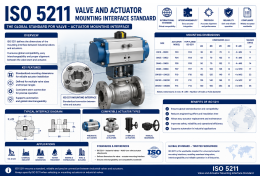
NAMUR versions are intended for direct mounting on rotary pneumatic actuators, reducing external tubing and potential leakage points. These are available in 3/2, 5/2, and 5/3 configurations, with NAMUR interface sizes 1/4" or 1/2", flow capacity up to 3000 l/min, and pilot-operated execution for monostable or bistable duty.
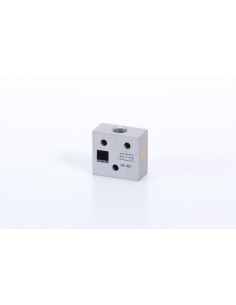
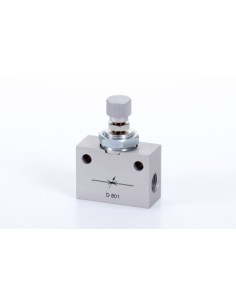
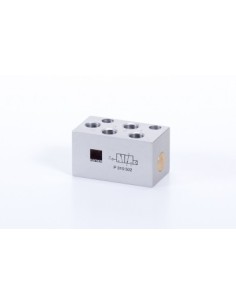
The range also includes pneumatic logic elements in OR/AND function, one-way and two-way flow control blocks, and quick-exhaust valves for localized rapid venting of air from cylinders or actuators. For hazardous areas, ATEX versions are available in 3/2, 5/2, and 5/3 formats, including single-pilot, double-pilot, and centre-position arrangements.
During installation, attention should be given to air quality and dryness, filtration, correct port assignment, exhaust routing, pilot pressure, response time, and maintenance access. Moisture, particulate contamination, or insufficient pilot pressure can result in delayed shifting, seat leakage, or incomplete return of the pneumatic circuit.