
Hydraulic Pump Control Valves
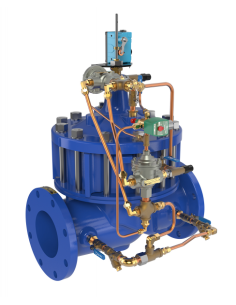
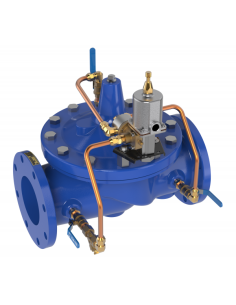
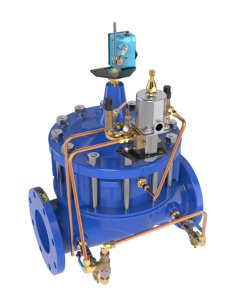
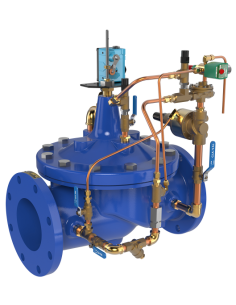
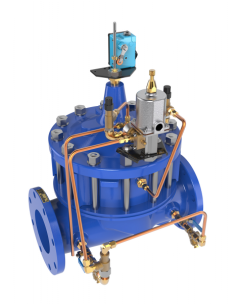
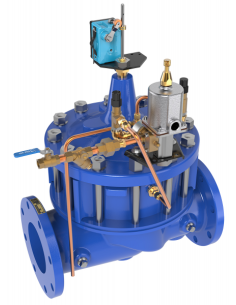
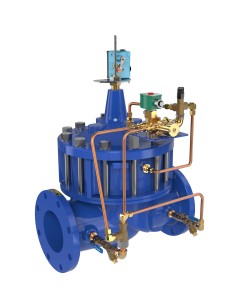
Hydraulic pump control valves are installed on the discharge side of booster pumps and deep well pumps to provide controlled pump start-up, shutdown, and isolation. Their function is to limit rapid changes in flow and pressure that can lead to hydraulic shock, reverse flow, reverse pump rotation, or mechanical loading on pipework and associated equipment.
This category includes hydraulically actuated Cla-Val valves for booster pump control, back pressure control, and deep well pump control, including series 60-08, 60-11, 60-19, 60-BY, 60-32 / 660-32, 60-73 / 660-73, 61-02 / 661-02, and 61-47. Available configurations include ANSI-pattern, flanged construction in Class 150 and Class 300, with bodies in bronze, ASTM A216 WCB carbon steel, or ductile iron. Material selection depends on pressure rating, water quality, corrosion allowance, and site operating conditions.
The Cla-Val 60-08 is applied on booster pump discharge lines as a pilot-operated pump control valve that reduces pipeline surge during pump starting and stopping. The 60-32 / 660-32 combines pump control with adjustable back pressure and incorporates lift-type check functionality for automatic closure on power failure or pressure reversal, protecting the pump against reverse rotation.
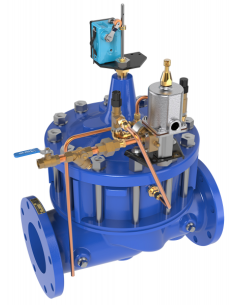
For deep well pump service, the 61-02 / 661-02 is a diaphragm-type valve with solenoid pilot control, independent opening and closing speed adjustment, and a stem-mounted limit switch for electrical interlock with the pump motor. The 61-47 operates automatically through a solenoid arrangement: when the pump starts, the valve closes gradually, initially discharging air, sand, and water from the pump column before diverting flow into the main line.
During selection and sizing, the engineer should review the pump curve, start/stop sequence, design flow, differential pressure, required back pressure, and the pilot circuit arrangement, including pilot lines, solenoids, strainers, needle valves, diaphragm, seat, and interlock logic. Incorrect sizing or contamination in the pilot circuit can result in delayed response, water hammer, unstable control, or incomplete valve closure. Maintenance planning should also consider seat leakage, diaphragm wear, pilot fouling, and accessibility for field adjustment and inspection.